


The political confrontation over the Special Intensive Revision (SIR) of electoral rolls has intensified in New Delhi, with opposition parties demanding the resignation of Chief Election Commissioner Gyanesh Kumar and raising concerns over the voter-list revision process.
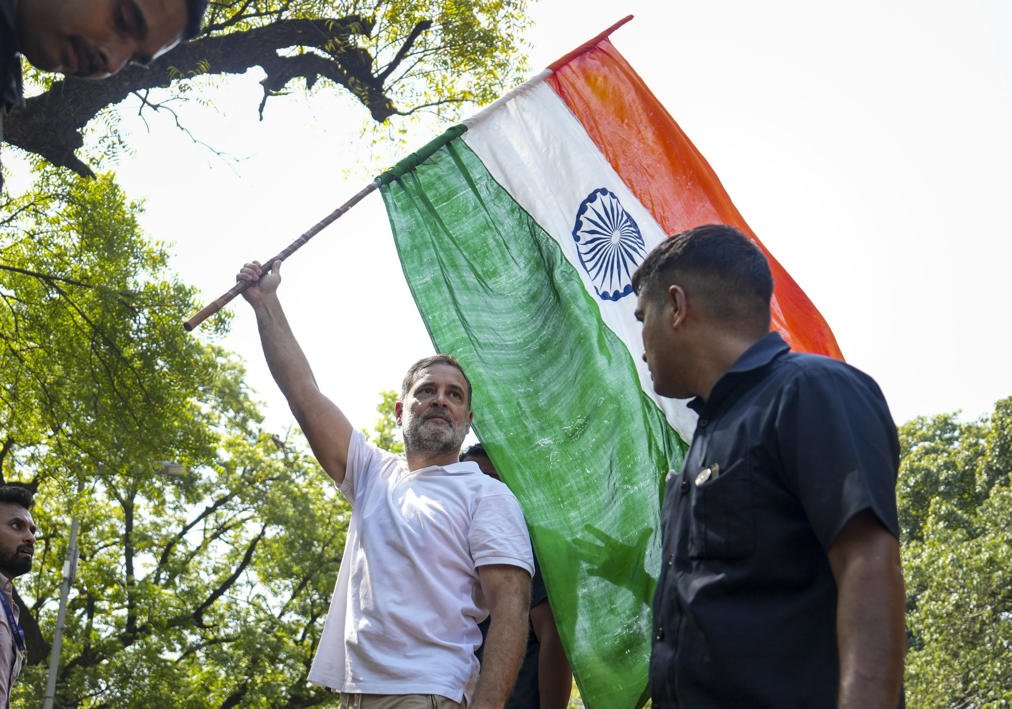
On October 6, opposition MPs led a march from Parliament towards the Election Commission headquarters. Police stopped the march and detained several opposition leaders, including Rahul Gandhi and Priyanka Gandhi Vadra.
The immediate question is not simply why the opposition protested, but whether some of the confrontation could have been avoided through earlier political and institutional engagement.
A Dialogue Could Have Addressed Opposition Concerns
One possible route would have been a structured dialogue between the government, opposition parties and the Election Commission before the protests escalated.
Opposition parties had raised concerns about voter-list revisions and the functioning of the Election Commission. The INDIA bloc subsequently announced a series of protests and demanded a meeting with constitutional authorities.
An early all-party meeting could have provided a formal platform for the government to hear these concerns and clarify the process. Such a discussion would not necessarily have required accepting the opposition’s demands, but it could have allowed disagreements to be addressed through political channels rather than street mobilisation.
Greater Transparency Over SIR
The SIR process has been at the centre of the controversy. Critics have raised concerns about eligible voters being removed from electoral rolls, while the Election Commission has maintained that the exercise is intended to identify duplicate, deceased and otherwise ineligible entries.
More detailed public disclosure about how names were removed, how voters could appeal and how disputed cases were being reviewed could have helped address some of the concerns.
A transparent, publicly accessible mechanism for checking deletions and submitting objections could also have reduced uncertainty among voters and political parties.
A Clear Grievance-Redressal Mechanism
One of the opposition’s major concerns has been the possibility of eligible voters being excluded from electoral rolls.
A stronger grievance-redressal mechanism could have allowed individuals to challenge deletions quickly. Opposition parties have also demanded an effective mechanism through which voters excluded from the rolls could appeal.
If such a mechanism had been prominently communicated and independently monitored, it could have provided an institutional route for addressing individual complaints without requiring mass political mobilisation.
Regular Engagement With Opposition Parties
The escalation also highlights the importance of sustained engagement between the government and opposition on issues affecting electoral institutions.
The INDIA bloc’s October 6 march followed several days of protests in Delhi and elsewhere. Opposition parties have accused the Election Commission of acting in favour of the ruling BJP, allegations that the commission and the government have rejected.
Regular consultations could have helped separate legitimate administrative questions from political allegations and allowed the government to put its position on record before the dispute reached the streets.
Keeping the Election Commission at the Centre
Another important consideration is the institutional position of the Election Commission.
The controversy has increasingly been framed by opposition parties as a dispute involving the government and the poll body. Maintaining a clear institutional distance between the executive and the Election Commission could therefore have been important in reducing perceptions of political interference.
The Election Commission has defended the SIR exercise and said its decisions were aimed at maintaining accurate electoral rolls.
Allowing the commission to independently explain the process, publish supporting data and respond directly to concerns could have kept the dispute focused more closely on electoral administration.
Protest Restrictions Added to the Tension
The manner in which demonstrations were handled also became part of the controversy.
Authorities imposed restrictions in central Delhi and deployed large numbers of police and security personnel. Earlier protests had also resulted in detentions, while access to areas around Jantar Mantar was restricted.
From the government’s perspective, restrictions can be justified on public-order grounds. At the same time, when political protesters are prevented from reaching their intended destination or are detained, the restrictions themselves can become an additional political issue.
A clearly communicated protest route, designated demonstration area and advance coordination with organisers could potentially have reduced confrontation.
The Dispute Is Now Larger Than SIR
The political confrontation has now expanded beyond the technical details of electoral-roll revision. Opposition parties are demanding accountability from the Election Commission, while the ruling BJP has accused the opposition of attempting to create instability.
The Supreme Court’s involvement has also added an institutional dimension to the controversy, with petitions challenging aspects of the Election Commission’s actions being considered by the court.
As a result, the dispute now involves questions about voter rights, electoral transparency, institutional independence and the relationship between the government and opposition.
What Could Have Prevented the Escalation?
There is no guarantee that any single step would have prevented the protests. The opposition had already decided to mobilise around the issue, and its demands go beyond the mechanics of SIR.
However, earlier consultation, greater transparency, an accessible appeals mechanism, direct engagement with political parties and clearly defined arrangements for peaceful demonstrations could have reduced some of the points of friction.
The continuing protests demonstrate that electoral-roll revisions are not merely an administrative exercise when they affect citizens’ ability to participate in elections. The SIR controversy has therefore become a test of how political disagreements over electoral institutions are managed through dialogue, transparency and established democratic mechanisms.