


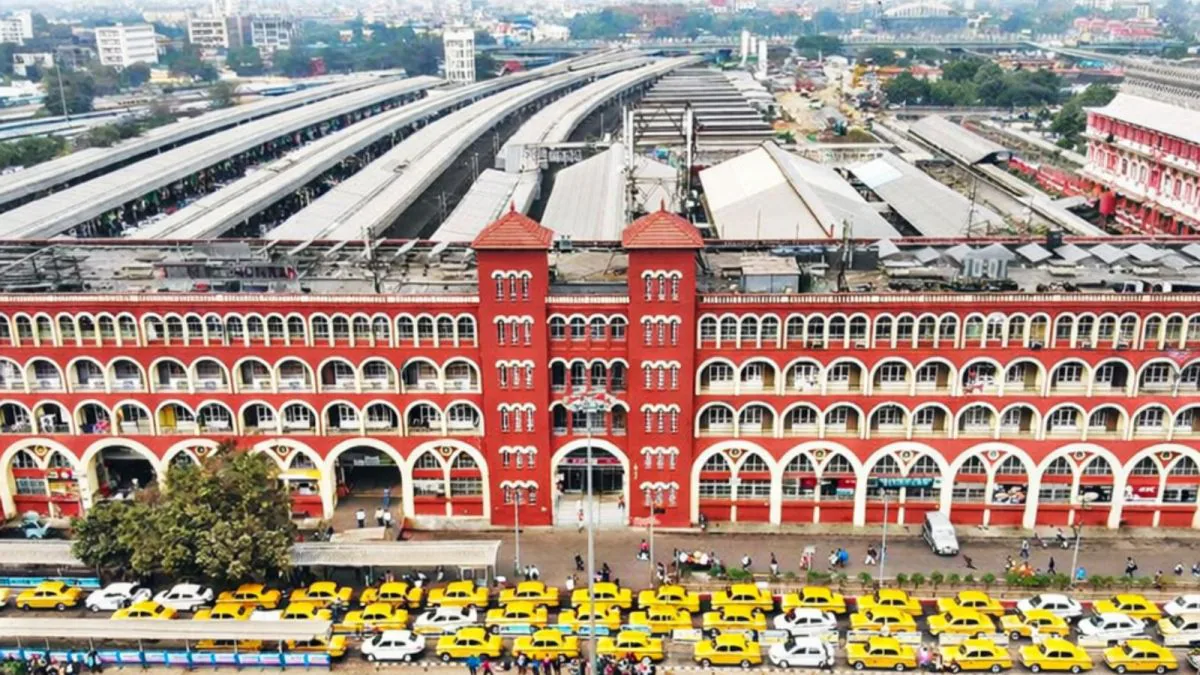
Howrah Station modernisation plans received a major push after Indian Railways officially unveiled a comprehensive redevelopment strategy for one of India’s busiest and most historic railway terminals. Meanwhile, railway authorities and infrastructure officials stated that the large-scale upgrade aims to improve passenger convenience, strengthen transport efficiency, and transform the station into a modern multi-modal transit hub. The announcement immediately generated strong public and commercial interest because Howrah Station serves millions of passengers and remains a critical transportation gateway for eastern India. Additionally, railway departments reportedly accelerated planning involving infrastructure redesign, passenger amenities, and operational modernization linked to the ambitious project.
The development emerged amid broader nationwide efforts to modernize railway infrastructure and improve passenger experience across major transit centers. Furthermore, transportation experts observed that railway station redevelopment increasingly plays a central role in urban mobility and economic connectivity planning.
Darjeeling Tea Production Faces Climate Pressure
New Town Tech Park Expansion Boosts Bengal IT Growth
Indian Railways Announces Mega Redevelopment Strategy
Railway authorities formally introduced the modernization blueprint for the historic Howrah terminal complex. Howrah Station modernisation discussions therefore rapidly intensified across transportation, infrastructure, and urban planning sectors.
Meanwhile, officials explained that the redevelopment plan may include upgraded passenger concourses, digital information systems, improved waiting facilities, advanced security infrastructure, and enhanced connectivity integration. Additionally, planners reportedly emphasized the importance of preserving the station’s historic identity while introducing modern transportation infrastructure.
Indian Railways representatives stated that the project seeks to accommodate rising passenger volumes and improve operational efficiency within one of the country’s most congested railway hubs. Furthermore, authorities indicated that passenger comfort and smart mobility integration remain key priorities within the redevelopment framework.
Earlier, commuters repeatedly raised concerns regarding overcrowding, congestion, and aging infrastructure at the station. Consequently, the modernization announcement generated optimism among travelers and transportation stakeholders.
At the same time, officials continued evaluating phased construction and operational continuity strategies during the redevelopment period.
Howrah Station Holds Strategic National Importance
The modernization initiative carries major significance because Howrah Station remains one of India’s busiest railway terminals. Howrah Station modernisation plans therefore extend far beyond regional infrastructure improvement alone.
Meanwhile, transportation experts observed that the station functions as a critical gateway connecting eastern India with multiple metropolitan and long-distance rail corridors. Additionally, millions of passengers rely on the terminal annually for suburban, regional, and interstate travel.
Several infrastructure analysts noted that aging transport hubs increasingly require modernization because passenger traffic and operational demands continue expanding rapidly. Furthermore, integrated railway infrastructure frequently strengthens broader urban mobility and economic activity.
Economic researchers also emphasized that major railway stations often influence tourism, commerce, logistics, and local business ecosystems. Consequently, redevelopment of Howrah Station gained strategic relevance within national transportation planning discussions.
However, urban planners stressed the importance of balancing modernization with heritage preservation due to the station’s historical significance.
Passenger Amenities and Smart Infrastructure Planned
Authorities indicated that passenger-focused infrastructure improvement remains a central objective of the redevelopment initiative. Howrah Station modernisation efforts therefore may significantly transform commuter experience and station accessibility.
Meanwhile, railway planners reportedly proposed wider platforms, improved crowd management systems, upgraded sanitation facilities, modern seating areas, and advanced digital passenger information networks. Additionally, accessibility improvements involving escalators, elevators, and navigation systems may support smoother movement for elderly and differently-abled passengers.
Railway technology experts explained that modern transit hubs increasingly depend on smart systems involving automated information management, surveillance networks, and digital ticketing infrastructure. Furthermore, passenger expectations continue evolving alongside rapid urban and transportation modernization trends.
Several mobility analysts highlighted that efficient station infrastructure often reduces congestion and improves travel reliability in densely populated cities. Consequently, passenger convenience remained a major focus within the redevelopment blueprint.
At the same time, authorities reportedly evaluated future expansion requirements linked to increasing rail traffic growth.
Urban Connectivity and Multi-Modal Integration Strengthened
The proposed redevelopment also aims to improve Howrah Station’s integration with wider urban transport systems. Howrah Station modernisation planning therefore became closely connected with Kolkata’s broader mobility and infrastructure strategy.
Meanwhile, officials explained that enhanced coordination involving metro services, bus networks, ferry systems, and road transport corridors may improve commuter movement surrounding the station area. Additionally, integrated transit planning may reduce traffic congestion and support smoother passenger transfers between transportation modes.
Urban mobility specialists observed that multi-modal transport integration increasingly shapes the efficiency of modern metropolitan infrastructure systems. Furthermore, seamless connectivity often improves economic productivity and commuter convenience within rapidly growing urban centers.
Several transportation researchers emphasized that redevelopment of major railway terminals frequently influences surrounding commercial and urban development patterns. Consequently, Howrah Station’s modernization gained wider significance within Kolkata’s evolving transportation ecosystem.
However, civic groups stressed the importance of minimizing traffic disruption during construction and infrastructure upgrade phases.
Economic Activity and Commercial Potential Expected to Rise
Experts suggested that the modernization project may significantly influence commercial and economic activity surrounding the Howrah region. Howrah Station modernisation efforts therefore carried broader economic implications beyond transportation infrastructure alone.
Meanwhile, business analysts observed that upgraded railway terminals frequently stimulate retail growth, hospitality investment, and commercial real estate activity near transit zones. Additionally, modern station infrastructure may attract higher passenger footfall and tourism-related economic opportunities.
Economic planners explained that transport infrastructure investment often creates direct and indirect employment during both construction and operational phases. Furthermore, efficient transit systems frequently strengthen regional trade and commercial mobility.
Several urban economists highlighted that large-scale infrastructure modernization projects can reshape city development and improve investor confidence. Consequently, local business communities closely monitored redevelopment progress and associated economic prospects.
At the same time, commercial stakeholders requested efficient planning to maintain business accessibility during construction activities.
Heritage Preservation and Modern Design Balance Discussed
The redevelopment proposal also sparked discussions regarding the preservation of Howrah Station’s historic architectural identity. Howrah Station modernisation debates therefore included both heritage conservation and infrastructure modernization perspectives.
Meanwhile, heritage experts emphasized that the station remains an important cultural and historical landmark representing Kolkata’s long railway history. Additionally, preservation advocates encouraged authorities to retain iconic structural and architectural features while introducing modern facilities.
Urban conservation specialists observed that successful redevelopment projects frequently combine historical preservation with functional modernization. Furthermore, integrating heritage-sensitive design may strengthen tourism appeal and cultural continuity.
Several infrastructure planners highlighted that adaptive modernization approaches increasingly guide redevelopment projects involving historically significant public infrastructure. Consequently, discussions surrounding design balance and cultural preservation gained prominence after the announcement.
At the same time, railway authorities continued reviewing architectural and engineering proposals linked to the modernization process.
Conclusion
Howrah Station modernisation plans advanced significantly after Indian Railways unveiled a large-scale redevelopment strategy aimed at transforming the historic terminal into a modern transit hub. Meanwhile, officials highlighted the project’s goals involving passenger convenience, smart infrastructure, and improved urban connectivity across eastern India’s busiest railway gateway. Experts emphasized that the modernization initiative may strengthen transportation efficiency, economic activity, and long-term urban mobility within the Kolkata metropolitan region. Ultimately, observers believe balancing modern infrastructure with heritage preservation will remain a central challenge throughout the redevelopment process.
FAQs
What was announced for Howrah Station?
Indian Railways unveiled a comprehensive modernization and redevelopment plan for the station.
Why is Howrah Station important?
It is one of India’s busiest railway terminals and a key transport hub for eastern India.
What upgrades are expected under the modernization project?
Plans include better passenger facilities, smart systems, accessibility upgrades, and improved connectivity.
Could the redevelopment improve urban transport integration?
Yes, authorities aim to strengthen coordination with metro, bus, and ferry networks.
Will the project affect local economic activity?
Experts believe modernization may boost commerce, tourism, and infrastructure investment nearby.
Are heritage concerns being considered?
Yes, officials are discussing ways to preserve the station’s historic identity during redevelopment.