


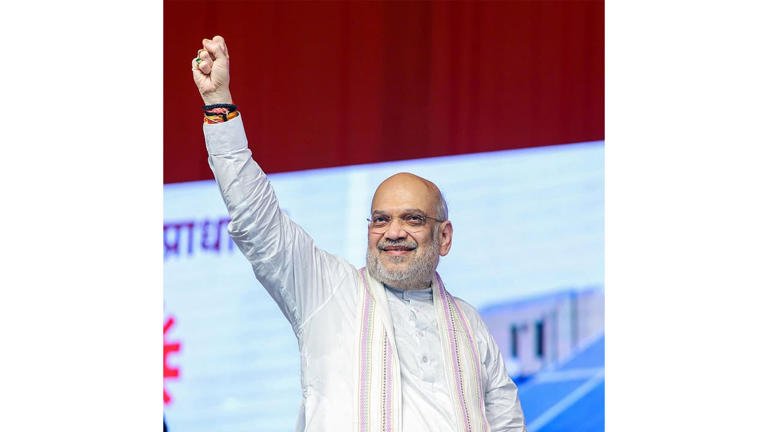
Union Home Minister Amit Shah paid tribute to the heroes of the historic Santhal Revolution on the occasion of Hul Diwas, honouring their courage, sacrifice, and unwavering commitment to resisting colonial oppression. Remembering the valiant tribal leaders who spearheaded one of India’s earliest organised uprisings against British rule, Shah said their struggle continues to inspire generations and occupies a special place in the country’s freedom movement.
Observed every year on June 30, Hul Diwas commemorates the beginning of the Santhal Hul, or Santhal Rebellion, of 1855. Led by tribal leaders Sidhu Murmu and Kanhu Murmu along with their brothers Chand and Bhairav and sisters Phulo and Jhano, the movement emerged as a powerful resistance against the oppressive policies of the British East India Company, exploitative moneylenders, and the zamindari system.
Paying homage to the revolutionaries, the Home Minister highlighted their invaluable contribution to India’s struggle for freedom and called upon citizens to draw inspiration from their dedication to justice, self-respect, and national pride.
Amit Shah Pays Tribute to Santhal Heroes
In his message on Hul Diwas, Union Home Minister Amit Shah remembered the extraordinary courage displayed by the Santhal revolutionaries who rose against colonial rule nearly two centuries ago.
He described the Santhal Hul as a defining chapter in India’s freedom movement and said the sacrifice of the tribal heroes would continue to inspire future generations to uphold the values of patriotism, courage, and social justice.
Shah noted that the determination shown by the Santhal community in defending their rights and dignity remains an enduring example of resistance against injustice.
He also paid respects to all those who laid down their lives during the historic uprising, acknowledging their role in strengthening India’s long struggle for independence.
Remembering the Santhal Hul of 1855
Hul Diwas commemorates the Santhal Rebellion that began on June 30, 1855, in the Santhal Pargana region, now spread across parts of present-day Jharkhand, Bihar, and West Bengal.
The uprising was led by Sidhu Murmu and Kanhu Murmu, who mobilised thousands of Santhal tribals against the exploitative colonial administration, oppressive taxation, moneylending practices, and the zamindari system.
The movement rapidly expanded into one of the largest tribal uprisings against British authority during the colonial period.
Although the rebellion was eventually suppressed by British forces, it became a symbol of tribal resistance and remains one of the most significant anti-colonial movements in Indian history.
Legacy of Courage and Resistance
The Santhal Revolution occupies a unique place in India’s freedom struggle because it represented the collective resistance of indigenous communities against exploitation and injustice.
The movement demonstrated the determination of tribal communities to defend their land, culture, and livelihoods despite overwhelming odds.
Historians regard the Santhal Hul as one of the earliest organised mass uprisings against British colonial rule, preceding several other major movements for independence.
Its legacy continues to inspire discussions on tribal rights, social justice, and the contributions of indigenous communities to India’s nation-building process.
The bravery of the Santhal leaders has become an enduring symbol of courage and resilience.
Recognition of Tribal Contributions
In his message, the Home Minister emphasised the invaluable role played by tribal communities in India’s struggle for independence.
He observed that many tribal movements across different regions challenged colonial authority long before the larger national freedom movement gathered momentum.
The sacrifices made by tribal freedom fighters, he said, deserve continued recognition and remembrance as part of the country’s shared historical heritage.
The government has consistently highlighted the importance of preserving and promoting the history of tribal leaders whose contributions significantly shaped India’s journey towards independence.
Officials noted that commemorative occasions such as Hul Diwas help ensure that these stories continue to reach younger generations.
Celebrations Mark Hul Diwas
Hul Diwas was observed in several parts of the country through tribute ceremonies, cultural programmes, seminars, and commemorative events organised by government institutions, educational establishments, and community organisations.
Floral tributes were paid to statues and memorials dedicated to the Santhal revolutionaries, while various programmes highlighted their contributions to India’s anti-colonial struggle.
Educational institutions also organised discussions and awareness activities focusing on the historical significance of the Santhal Hul and the role of tribal communities in the freedom movement.
The observance provided an opportunity for citizens to reflect upon the ideals of courage, unity, and resistance embodied by the Santhal leaders.
Preserving Tribal Heritage
The occasion also underscored the importance of preserving India’s rich tribal heritage and recognising the diverse contributions made by indigenous communities throughout history.
Officials have repeatedly stressed that tribal culture, traditions, languages, and historical movements form an integral part of the nation’s identity.
Efforts to document tribal history, promote cultural preservation, and increase public awareness have gained momentum in recent years through various educational and cultural initiatives.
Recognising tribal freedom fighters contributes to a more inclusive understanding of India’s struggle for independence and honours the sacrifices made by communities across the country.
Inspiration for Future Generations
The story of the Santhal Revolution continues to inspire generations with its message of courage, unity, and determination in the face of adversity.
The movement demonstrated how ordinary people, united by a common purpose, could challenge injustice and defend their rights despite immense challenges.
Leaders across the political spectrum have often referred to the Santhal Hul as an example of unwavering commitment to freedom, dignity, and social justice.
Educational programmes organised on Hul Diwas seek to encourage young people to learn about this important chapter of Indian history while appreciating the sacrifices of tribal heroes.
The values upheld during the Santhal Revolution continue to resonate in contemporary discussions on equality and constitutional rights.
Government Reiterates Commitment to Tribal Welfare
Alongside paying tribute to the heroes of the Santhal Revolution, the government reiterated its commitment to the welfare, empowerment, and inclusive development of tribal communities.
Officials stated that preserving tribal history while promoting education, healthcare, livelihood opportunities, and infrastructure development remains an important aspect of national development.
The government has consistently emphasised the need to ensure that tribal communities benefit from development initiatives while preserving their unique cultural identity and traditions.
Such efforts are viewed as a continuation of the respect owed to the sacrifices made by tribal freedom fighters throughout India’s history.
Honouring an Enduring Legacy
The observance of Hul Diwas serves as a powerful reminder of the extraordinary courage displayed by the heroes of the Santhal Revolution in their fight against colonial oppression. Union Home Minister Amit Shah’s tribute reaffirmed the nation’s gratitude to the tribal leaders whose sacrifices laid an important foundation in India’s long struggle for freedom.
As the country remembers the historic Santhal Hul, the legacy of Sidhu Murmu, Kanhu Murmu, Chand Murmu, Bhairav Murmu, Phulo, Jhano, and countless unnamed revolutionaries continues to inspire citizens with the ideals of bravery, unity, justice, and patriotism. Their remarkable contribution remains an enduring chapter in India’s history, reminding future generations of the resilience and determination that shaped the nation’s journey towards independence.