


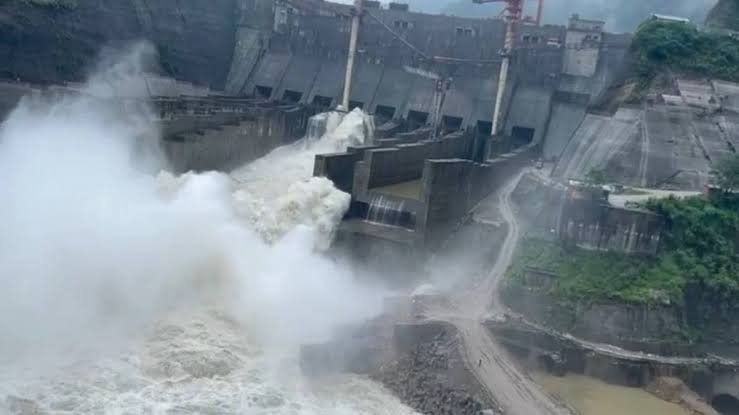
The Hydropower Progress at the 2,000 MW Lower Subansiri project has reached an important milestone after engineers completed a major tunneling stage. The development marks further progress on one of the region’s significant hydropower projects and advances construction of infrastructure required for future power generation.
The tunneling work represents a technically important part of the project because underground structures play a key role in managing water flow and supporting the power-generation system. Moreover, completing major excavation and tunneling activities can allow construction teams to move toward subsequent stages of project development.
The Lower Subansiri project spans the border region of Assam and Arunachal Pradesh and has attracted attention because of its scale and strategic importance to the region’s power infrastructure.
However, the available information does not specify which tunnel reached completion, its length, or the exact date of the milestone.
Organic Pineapple Push: Nagaland Cooperatives Flag Off First International Export Consignment
Hydropower Progress Advances Lower Subansiri Construction
The Hydropower Progress at the Lower Subansiri project reflects continued work on its extensive underground infrastructure.
Large hydropower facilities often require tunnels for diverting water, managing hydraulic flows, and connecting different components of the power system. Furthermore, tunneling in mountainous terrain can involve complex geological and engineering conditions.
Completing a major tunneling milestone therefore represents a significant stage in the construction process.
However, the available information does not identify the specific engineering method used or the geological conditions encountered during excavation.
Therefore, the technical significance of the completed tunnel requires additional project details.
Hydropower Progress Supports the 2,000 MW Project
The Hydropower Progress contributes to the development of the 2,000 MW Lower Subansiri project.
Once operational, a project of this scale could make a substantial contribution to regional electricity generation. Additionally, hydropower can provide a renewable source of electricity and support grid stability when properly integrated into the power system.
However, the completion of one tunneling milestone does not indicate that the entire project has reached operational readiness.
Several additional construction, installation, testing, and commissioning stages may remain.
The available information does not provide a confirmed completion or commissioning date.
Hydropower Progress Highlights Complex Engineering Work
The Hydropower Progress demonstrates the scale of engineering involved in constructing major hydropower infrastructure.
Tunnel construction in mountainous regions requires detailed geological assessment, structural planning, excavation, reinforcement, and safety management. Moreover, engineers must account for variations in rock conditions and underground water during construction.
The completion of a major tunneling stage indicates that project teams have advanced through an important part of this technical process.
However, the available information does not provide details about the total number of tunnels planned for the project or the remaining tunneling work.
Consequently, the overall status of underground construction cannot yet be determined.
Hydropower Progress Could Strengthen Regional Power Supply
The Hydropower Progress at Lower Subansiri could eventually contribute to the region’s electricity supply once the project becomes operational.
A 2,000 MW generating capacity could provide significant electricity to the regional and national power grid. Furthermore, hydropower projects can support electricity availability during periods when other generation sources face fluctuations.
However, actual power generation will depend on the project’s completion, commissioning, grid integration, water availability, and operational performance.
The current tunneling milestone alone does not establish when electricity generation will begin.
Therefore, further project updates will be necessary to determine the expected operational timeline.
Hydropower Progress Requires Further Construction
The Hydropower Progress represents one stage in a much larger construction programme.
After major tunneling work, project teams may need to complete structural works, install electrical and mechanical equipment, develop supporting infrastructure, and conduct extensive testing. Additionally, authorities and project agencies may need to complete remaining regulatory and safety requirements before commissioning.
The available information does not specify which of these stages remain outstanding.
Therefore, the latest milestone should be viewed as progress toward completion rather than completion of the entire project.
Further engineering updates can provide a clearer picture of the project’s overall status.
Hydropower Progress Has Wider Infrastructure Implications
The Hydropower Progress at Lower Subansiri could have implications beyond electricity generation.
Large infrastructure projects can support associated roads, transmission systems, local services, and employment during construction. Moreover, reliable electricity generation can support industrial and economic activity when adequate transmission infrastructure connects power to consumers.
However, the available information does not provide current employment figures, investment data, or details about associated transmission projects.
Consequently, the wider economic impact cannot be quantified from the tunneling milestone alone.
Hydropower Progress Highlights the Importance of Project Monitoring
The Hydropower Progress milestone also underscores the importance of monitoring large infrastructure projects.
Hydropower construction can involve substantial engineering, environmental, safety, and logistical considerations. Furthermore, regular progress assessments can help identify delays and ensure that major construction stages meet technical requirements.
The completed tunneling milestone provides a measurable indicator of advancement.
However, the available information does not include details about the project’s overall percentage of completion or its current construction schedule.
Therefore, additional official project updates remain necessary.
Hydropower Progress Could Support Long-Term Energy Planning
The Hydropower Progress at the Lower Subansiri project could contribute to India’s longer-term efforts to expand electricity generation capacity.
Large hydropower projects can provide substantial generating capacity and complement other renewable energy sources. Additionally, their ability to generate electricity according to grid requirements can make them useful components of a diversified energy system.
However, hydropower development also requires careful consideration of environmental and community-related factors.
The available information does not provide details about current environmental monitoring or community-related measures associated with this milestone.
Therefore, the project’s broader impact should be assessed using comprehensive official information.
Conclusion
The Hydropower Progress at the 2,000 MW Lower Subansiri project has reached a significant stage after engineers completed a major tunneling milestone. The achievement advances construction of critical underground infrastructure and represents continued progress on one of the region’s major power projects.
Moreover, successful completion of tunneling can allow construction teams to move toward additional structural, mechanical, electrical, and commissioning activities. However, the available information does not specify the tunnel completed, the remaining construction work, or a confirmed project commissioning date.
Overall, the Hydropower Progress at Lower Subansiri demonstrates continued advancement on a major hydropower development. Further construction and official progress updates will determine how quickly the project moves toward completion and eventual electricity generation.
FAQs
1. What is the Hydropower Progress at Lower Subansiri?
Engineers have completed a major tunneling milestone at the 2,000 MW Lower Subansiri hydropower project.
2. Why is tunneling important for a hydropower project?
Tunnels can form essential parts of water-management and power-generation infrastructure, depending on the design of the project.
3. Does the tunneling milestone mean the project is complete?
No. The milestone represents progress on one component of the project. Additional construction, installation, testing, and commissioning work may remain.
4. What is the capacity of the Lower Subansiri project?
The project has a planned generating capacity of 2,000 MW.
5. When will the project begin generating electricity?
The available information does not provide a confirmed commissioning date or electricity-generation timeline.