


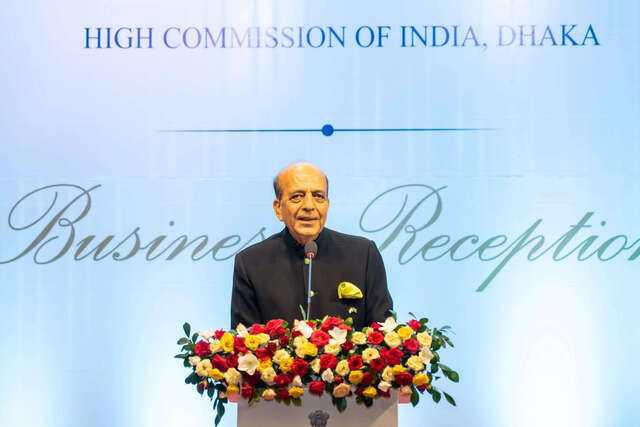
India is looking to strengthen ties with Bangladesh through dialogue, greater economic cooperation and stronger people-to-people connections, Indian High Commissioner to Bangladesh Dinesh Trivedi has said. His recent remarks in Dhaka underline New Delhi’s focus on rebuilding confidence and addressing differences through direct engagement.
Trivedi, who took charge as India’s High Commissioner to Bangladesh in 2026, has repeatedly stressed the importance of communication between the two neighbouring countries. He said India and Bangladesh share close historical and cultural links despite differences on several issues. According to him, direct meetings between political leaders can help both sides find solutions.
His comments come at a sensitive time for bilateral relations. Both countries are trying to address differences while also exploring opportunities in trade, connectivity, healthcare, education and employment. Trivedi has said the relationship should move towards what he described as a “golden chapter”.
Trivedi Stresses Importance of Dialogue
One of the key messages from Trivedi has been the need for regular dialogue. He said disagreements are natural between two sovereign countries. However, such differences should not prevent India and Bangladesh from maintaining communication.
Speaking in Dhaka, Trivedi said issues can be resolved through meetings and direct interaction. He also expressed hope that Bangladesh Prime Minister Tarique Rahman would visit India sooner rather than later.
The proposed visit could provide an opportunity for the two governments to discuss sensitive issues directly. High-level meetings can also help reduce misunderstandings and create space for practical solutions.
Trivedi has argued that India and Bangladesh should focus on their shared interests while managing their differences through diplomacy. This approach could help both sides prevent disagreements from affecting the broader relationship.
India Wants a Stronger Bilateral Partnership
The Indian envoy has highlighted several areas where the two countries can expand cooperation. Trade, business, healthcare, education, employment and connectivity remain important areas of potential growth.
India and Bangladesh share a long land and river border. Their geographical proximity creates opportunities for stronger economic links. Better connectivity can also help businesses reach markets in both countries more efficiently.
Trivedi’s remarks suggest that economic cooperation will remain an important part of India’s approach towards Dhaka. His experience in business and politics could also help him engage with Bangladeshi stakeholders on investment and commercial issues.
Greater Indian investment in Bangladesh could benefit both economies. At the same time, stronger trade ties can create jobs and encourage businesses to explore new opportunities.
People-to-People Relations Remain Important
Trivedi has also placed considerable emphasis on people-to-people ties. He described such connections as the “true beating heart” of the relationship between India and Bangladesh.
The two countries share strong cultural, linguistic and historical links. Families, businesses, students and communities on both sides have maintained connections for decades.
Educational exchanges, tourism and cultural programmes can further strengthen these links. Healthcare cooperation can also create opportunities for closer interaction between the people of the two countries.
The envoy has said that mutual goodwill and shared aspirations should remain at the centre of the bilateral relationship.
Proposed Tarique Rahman Visit in Focus
A possible visit by Bangladesh Prime Minister Tarique Rahman to India has emerged as an important diplomatic issue. Trivedi has expressed optimism about the visit and said it should take place sooner.
He has also indicated that India wants to give the Bangladesh Prime Minister an honourable reception. The visit could provide an opportunity for both leaders to discuss bilateral concerns and identify areas for cooperation.
Prime Minister Narendra Modi has also expressed a desire for Rahman’s proposed visit to India to be memorable, according to recent reports. The emphasis on the visit reflects India’s interest in maintaining direct political engagement with Bangladesh.
However, the timing of the visit remains subject to diplomatic discussions. Several sensitive issues continue to require attention from both sides.
Managing Differences Through Mutual Respect
Trivedi has acknowledged that India and Bangladesh have their own challenges and disagreements. However, he has argued that differences do not have to damage the overall relationship.
He stressed the importance of dignity and mutual respect between the two sovereign nations. According to the envoy, both sides need space to address their domestic concerns while continuing to work together on shared objectives.
This approach could prove important as the countries deal with difficult diplomatic questions. Rather than allowing individual disputes to dominate the relationship, both governments can continue cooperation in areas where their interests overlap.
Dialogue can also provide a mechanism for addressing disagreements before they become larger diplomatic problems.
Trade and Investment Could Drive Ties
Economic cooperation remains one of the most promising areas for strengthening India-Bangladesh relations. Both countries can benefit from increased investment, trade and business-to-business engagement.
Bangladesh is an important economic partner for India in South Asia. Its location also makes it significant for India’s connectivity plans in the Northeast.
Improved transport links can provide Indian businesses with greater access to Bangladesh and other regional markets. At the same time, Bangladesh can benefit from stronger links with India’s large consumer market.
Trivedi’s business background could become useful in encouraging such engagement. Reports on his appointment have highlighted his business experience and Bengali language skills as potential advantages in strengthening commercial relations with Dhaka.
Connectivity Remains a Major Opportunity
Geographical proximity gives India and Bangladesh a natural advantage in connectivity. Road, rail, waterways and port links can support trade while improving movement between the two countries.
Better connectivity can also benefit India’s northeastern states. Bangladesh provides an important geographical link between the Northeast and the rest of India.
For Bangladesh, stronger regional connectivity can create opportunities for trade and logistics. Therefore, cooperation on infrastructure can produce benefits beyond bilateral relations.
The two governments can also explore further cooperation in energy and transport. Such projects could strengthen economic interdependence and create long-term incentives for stable relations.
Healthcare and Education Can Build Trust
Trivedi has also pointed to healthcare and education as areas where the two countries can expand cooperation.
Healthcare partnerships can support knowledge sharing, medical training and access to specialised treatment. Education exchanges can bring students and researchers from both countries closer.
Such cooperation can create relationships that extend beyond government-to-government diplomacy. Students, doctors, academics and professionals can become important bridges between the two societies.
These links can also help strengthen mutual understanding at a time when political disagreements sometimes affect public perceptions.
Security Cooperation Remains Significant
India and Bangladesh also share interests in maintaining peace and security along their border. Cooperation between security agencies can help address cross-border crime, trafficking and other challenges.
A stable border benefits communities on both sides. It also creates a more favourable environment for trade and investment.
Continued communication between the two governments can therefore support both security and economic objectives. Strong bilateral mechanisms can help address problems without allowing them to disrupt wider relations.
A New Opportunity to Reset Ties
Trivedi’s appointment as High Commissioner comes at an important stage in India-Bangladesh relations. His political experience, familiarity with Bengal and Bengali language skills give him a distinctive profile for diplomatic engagement in Dhaka.
His recent remarks show a clear preference for dialogue rather than confrontation. He has repeatedly emphasised direct meetings, mutual respect and shared interests.
For India, rebuilding trust with Bangladesh could have strategic as well as economic importance. Bangladesh is an important neighbour and a key partner in India’s Northeast connectivity plans.
For Bangladesh, closer engagement with India can provide opportunities in trade, investment, healthcare, education and regional connectivity.
India-Bangladesh Relations at a Crucial Stage
Dinesh Trivedi’s recent comments point towards an effort to give India-Bangladesh relations a fresh direction. His emphasis on dialogue reflects the need to address disagreements without allowing them to overshadow areas of cooperation.
The proposed visit of Prime Minister Tarique Rahman to India could become an important opportunity for high-level engagement. Direct talks between the leaders could help both sides address sensitive issues and identify common ground.
At the same time, stronger trade, connectivity, healthcare, education and people-to-people ties can create a broader foundation for the relationship.
The road ahead may not be without challenges. India and Bangladesh have differences that require careful diplomatic handling. However, Trivedi’s message is that these differences can be managed through communication and mutual respect.
As both countries look towards the next phase of their relationship, sustained dialogue and practical cooperation could help open the way for a stronger and more stable India-Bangladesh partnership.