


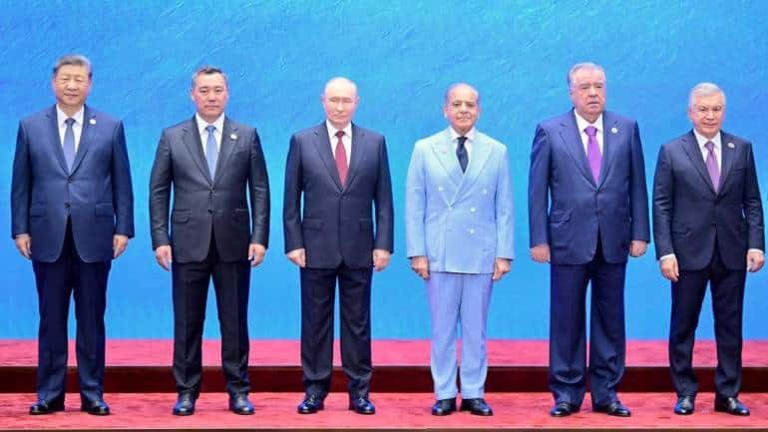
India called for lower trade costs, stronger supply chains and better connectivity among Shanghai Cooperation Organisation (SCO) members at a trade ministers’ meeting in Dushanbe, Tajikistan. The discussions focused on expanding regional trade and improving economic cooperation.
The 25th Meeting of SCO Ministers Responsible for Foreign Economic and Foreign Trade Activities took place on September 17. India highlighted “Security, Connectivity and Opportunity” as three key pillars for economic cooperation within the grouping.
Representing India, Commerce Ministry Additional Secretary Yashvir Singh called for practical measures to increase intra-SCO trade. He also stressed the importance of resilient supply chains and improved connectivity.
India Calls for Lower Trade Costs
India said the SCO’s economic potential should translate into stronger trade among member countries. Reducing the cost and time involved in cross-border commerce formed a key part of the Indian intervention.
India proposed simpler customs procedures to make international trade more efficient. It also called for paperless trade and electronic exchange of trade documents.
Such measures can reduce administrative delays for businesses. They can also make cross-border transactions easier for companies operating across multiple SCO markets.
India also highlighted the importance of stronger multimodal connectivity. Better transport links can help reduce transit times and improve the movement of goods across the region.
Focus on Resilient Supply Chains
Supply-chain resilience emerged as another major area of discussion.
India called for greater cooperation to diversify supply chains in strategic and emerging sectors. These include agriculture, critical minerals, pharmaceuticals, manufacturing and electronics.
The push comes as businesses and governments worldwide seek to reduce vulnerabilities caused by disruptions in international supply networks.
India also highlighted cooperation in energy security, renewable energy and green hydrogen. These areas have gained importance as countries seek more reliable and diversified sources of energy and industrial inputs.
Critical Minerals and Pharmaceuticals Among Key Sectors
India identified several sectors where greater cooperation could support SCO trade.
Critical minerals have become increasingly important for industries such as electronics, electric vehicles and renewable energy. Building reliable supply chains for these resources can support industrial production.
Pharmaceuticals also featured among the sectors identified by India. The country has a large pharmaceutical manufacturing base and has sought greater market access for its products in international markets.
Electronics and manufacturing were also highlighted as areas where SCO economies could strengthen cooperation.
Better Connectivity Seen as Essential
India placed connectivity alongside security and opportunity as a key pillar of economic cooperation.
Improved transport infrastructure can reduce the time required to move goods between countries. Multimodal connectivity can also provide businesses with more options for transporting products.
India called for stronger connectivity and shorter transit times across the SCO region. Such measures could support greater participation in regional trade and global value chains.
Connectivity remains particularly important for land-linked economies. Efficient transport routes can improve access to markets and reduce logistics costs.
Support for MSMEs and Start-ups
India also raised the concerns of smaller businesses.
The country highlighted digital payments, cross-border payments and easier access to trade finance as ways to help micro, small and medium enterprises (MSMEs) and start-ups participate more effectively in regional and global trade.
Smaller businesses often face greater difficulties when entering foreign markets. Complex payment systems, limited access to finance and administrative requirements can increase their operating costs.
India’s proposals seek to make cross-border trade more accessible to these businesses.
Push for Global Value Chains
India also called for greater participation by SCO economies in global value chains.
Global value chains divide production across multiple countries. Businesses can source raw materials, manufacture components and assemble finished products across different locations.
Greater participation can create opportunities for investment, manufacturing and exports.
India also reiterated its support for an open, inclusive and rules-based multilateral trading system. It highlighted the World Trade Organization (WTO) as the central institution for global trade rules.
SCO Adopts 2026-2030 Action Plan
The meeting produced several outcomes.
SCO trade ministers adopted a statement on foreign economic and foreign trade activities. They also agreed on an Action Plan for 2026-2030 to implement the SCO programme for multilateral trade and economic cooperation.
The action plan will now be submitted for further approval by the Council of Heads of Government of SCO member states.
The agreement provides a framework for further cooperation during the 2026-2030 period.
Creative Economy Gets Attention
The ministers also approved regulations for a special SCO working group focused on the development of the creative economy.
The move expands the scope of economic cooperation beyond traditional sectors.
Creative industries can include areas such as design, cultural products, media, entertainment and other knowledge-based activities. A dedicated working group could provide a platform for member countries to exchange ideas and explore cooperation.
The initiative adds another area to the SCO’s economic agenda.
India’s Three-Pillar Approach
India’s intervention at the meeting centred on three themes: Security, Connectivity and Opportunity.
Security relates to the need for stable economic and trade environments. Connectivity focuses on transport links, digital systems and easier movement of goods. Opportunity involves expanding trade and creating greater participation in regional and global markets.
India presented these pillars as a framework for translating the SCO’s economic potential into practical outcomes.
The approach also connects trade facilitation with wider economic cooperation.
Next SCO Trade Ministers’ Meeting in 2027
The meeting in Dushanbe brought together representatives from SCO member states to review economic and trade cooperation.
The next meeting of SCO ministers responsible for foreign economic and foreign trade activities is scheduled to take place in Uzbekistan in 2027.
In the meantime, member states will work through the agreed framework for economic cooperation. The proposed measures include trade facilitation, supply-chain diversification, digital payments and stronger connectivity.
India Seeks Practical Economic Cooperation
India’s intervention at the SCO meeting focused on reducing barriers to trade and strengthening regional economic links.
The proposals covered customs procedures, paperless documentation, multimodal connectivity and digital payments. India also sought deeper cooperation in critical minerals, pharmaceuticals, electronics, manufacturing, agriculture and clean energy.
The adoption of the 2026-2030 action plan provides a framework for taking these discussions forward. The proposed creative economy working group also expands the areas covered by SCO economic cooperation.
As member states work towards greater intra-SCO trade, India has called for measures that can lower costs, improve connectivity and build more resilient supply chains across the grouping.