

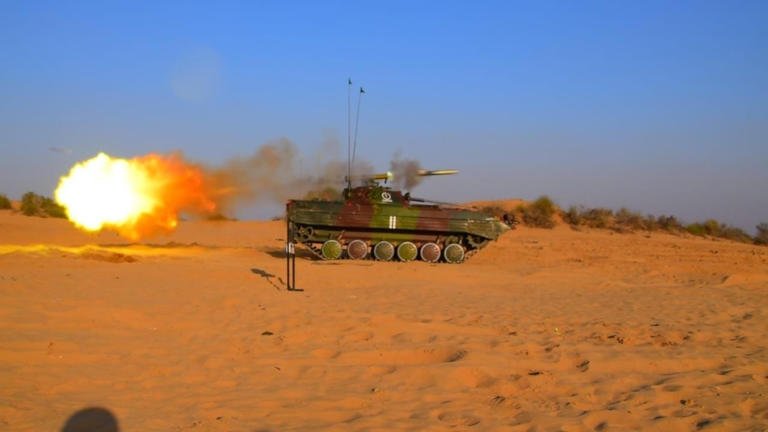
The Indian Army recently conducted a large-scale firepower exercise named ‘Amogh Fury’ in the Rajasthan desert. The drill aimed to test the preparedness, coordination, and operational capabilities of various units deployed in desert terrain. Officials emphasized that exercises like Amogh Fury are critical for enhancing combat efficiency and ensuring the armed forces remain mission-ready at all times.
The exercise demonstrated the army’s ability to execute complex maneuvers, manage logistics in harsh conditions, and operate advanced weaponry. It also allowed commanders to evaluate troop performance, reaction time, and coordination among infantry, artillery, and mechanized units.
Read More: Assam Mourns Zubeen Garg as Fans Await His Mortal Remains
Objective of the Amogh Fury exercise
The primary goal of the Amogh Fury exercise was to simulate real-time combat scenarios in a desert environment. Desert operations pose unique challenges, including extreme temperatures, difficult terrain, and limited water supply. Training in such conditions prepares soldiers to face similar challenges during actual missions.
Officials noted that the exercise tested both defensive and offensive operations. It included coordinated movements, live-fire drills, and tactical responses to mock threats. The exercise also helped in fine-tuning strategies for rapid deployment and sustainable logistics in remote areas.
Deployment of advanced weaponry
During the Amogh Fury exercise, the Indian Army deployed a range of modern weapon systems. Artillery units conducted precision firing exercises, while armored vehicles maneuvered through simulated combat zones. Infantry troops demonstrated small-unit tactics and rapid response capabilities.
The inclusion of advanced surveillance, communications, and targeting systems ensured that troops could integrate real-time data into decision-making. This integration is vital for improving battlefield efficiency and reducing risks during actual operations.
Focus on joint operations and coordination
A significant aspect of Amogh Fury was testing joint operations among different army units. Coordinated drills involved infantry, artillery, armored units, and logistics teams working seamlessly to achieve mission objectives.
Commanders assessed the effectiveness of communication channels, decision-making under pressure, and operational synchronization. The exercise highlighted the importance of teamwork and real-time adaptability, ensuring that all elements of the army function cohesively in complex combat scenarios.
Training for desert warfare
Desert warfare requires specialized training due to extreme weather, shifting sand dunes, and limited cover. The Amogh Fury exercise allowed soldiers to practice navigation, survival, and combat tactics specifically tailored for arid environments.
Troops were trained to maintain stamina and operational efficiency under high temperatures and strong winds. Additionally, the exercise emphasized water conservation, vehicle maintenance, and logistical planning—critical components for sustained operations in desert conditions.
Demonstrating readiness and deterrence
By conducting Amogh Fury, the Indian Army showcased its combat readiness to both national and international audiences. Such exercises serve as a deterrent, signaling that the armed forces are capable of responding swiftly to any threat along the borders or within national territory.
Officials stated that regular large-scale drills strengthen the morale of troops and improve confidence in leadership decisions. They also help in evaluating equipment performance, identifying gaps in training, and implementing corrective measures.
Civil-military engagement
While primarily a military exercise, Amogh Fury also involved interactions with local communities. Awareness programs were conducted to educate residents about the importance of national security and the army’s role in safeguarding the country.
These outreach initiatives foster trust and collaboration between the armed forces and local populations, which is especially important in border and desert areas where the army operates extensively.
Importance of continuous training
The Indian Army emphasizes that readiness is a continuous process. Exercises like Amogh Fury ensure that soldiers remain prepared for a wide range of contingencies, from conventional warfare to counter-insurgency operations.
Officials highlighted that continuous training is essential for maintaining strategic superiority and operational flexibility. Troops gain hands-on experience with new technologies, refine tactical maneuvers, and strengthen inter-unit coordination, all of which are crucial for national security.
Looking ahead
Following the success of Amogh Fury, the Indian Army plans to conduct similar exercises in diverse terrains across the country. Each exercise provides valuable lessons, improves operational efficiency, and reinforces the armed forces’ commitment to safeguarding the nation.
By investing in advanced training, modern equipment, and joint operations, the Indian Army continues to maintain a high level of preparedness. Exercises like Amogh Fury highlight the dedication, discipline, and professionalism of India’s armed forces.
The Amogh Fury exercise in the Rajasthan desert demonstrated the Indian Army’s operational strength, readiness, and ability to conduct coordinated firepower operations under challenging conditions. By simulating real combat scenarios, deploying advanced weaponry, and emphasizing joint operations, the army ensured that its troops remain prepared for any eventuality.
Such exercises are not only essential for troop training but also for strategic deterrence and national security. The success of Amogh Fury underscores India’s commitment to maintaining a well-equipped, skilled, and resilient military capable of defending its borders and safeguarding national interests.
Read More: Manipur Governor Reviews Security, Pays Tribute to Assam Rifles