


India’s book publishing market is projected to reach Rs 2 lakh crore by 2030-31, highlighting the strong growth potential of the country’s expanding knowledge and creative economy.
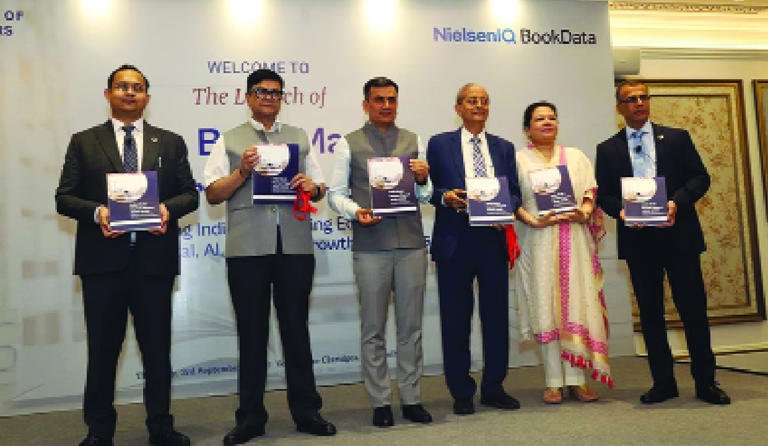
The projection comes from the India Book Market Report 2026-2030, which examines the size, structure and future direction of India’s publishing industry. The report was prepared by NielsenIQ BookData and published by the Federation of Indian Publishers (FIP). It was launched in New Delhi on September 3.
The report highlights several factors driving the expansion of the Indian publishing sector. These include the growth of education and research, rising demand for Indian-language content, increasing digital adoption and India’s large base of readers and learners.
India’s print book market is also growing at nearly 11 per cent compound annual growth rate, according to the report. The country currently has more than 26,000 publishers operating across different segments of the industry.
India Book Publishing Market Shows Strong Growth Potential
The projected growth to Rs 2 lakh crore by 2030-31 reflects the increasing importance of publishing in India’s knowledge economy.
Books continue to play a major role in education, professional learning, research and entertainment. At the same time, new digital formats are expanding the ways in which readers discover and consume content.
The report examines opportunities across print publishing, digital publishing, educational content and scholarly publishing.
India’s large population provides the publishing sector with a significant potential market. The country also has a growing number of students and researchers, creating sustained demand for educational and academic content.
The expansion of higher education and research could further support the growth of the publishing industry in the coming years.
The report suggests that India has the potential to emerge as a more significant global knowledge economy if the sector continues to develop sustainably.
Print Books Continue to Drive the Publishing Industry
Despite the rapid growth of digital platforms, print books continue to remain a major part of India’s publishing industry.
The report states that India’s print book market is growing at nearly 11 per cent CAGR.
This growth challenges the assumption that digital technology will completely replace physical books.
Instead, the Indian publishing market appears to be developing through the expansion of both print and digital formats.
Print books remain important in schools, colleges, universities and professional education.
Readers also continue to show strong demand for fiction, non-fiction, children’s books and other categories.
The growing print market could contribute significantly to the industry’s projected expansion over the coming years.
Indian-Language Publishing Creates New Opportunities
India’s linguistic diversity represents one of the biggest growth opportunities for the publishing sector.
The country has readers who consume content in English, Hindi and numerous regional languages.
Growing demand for books in Indian languages could help publishers reach a wider audience.
Regional-language publishing can also support local writers and creators.
It can make educational and literary content more accessible to readers across different parts of the country.
Digital platforms may further support this growth.
Publishers can use technology to reach readers in regions where traditional book distribution networks remain limited.
The report identifies Indian-language publishing as one of the important factors shaping the future of the industry.
Digital Publishing Expands the Reader Base
Digital adoption is also changing the Indian publishing industry.
E-books, audiobooks and digital learning platforms have created new ways for readers to access content.
Technology can make books available to readers without the need for physical distribution.
Digital formats can also improve accessibility.
Readers can access content through smartphones, tablets and computers.
Educational institutions are increasingly using digital resources to support teaching and learning.
However, the growth of digital publishing does not necessarily mean the decline of print.
The report indicates that print and digital formats can complement each other.
Publishers can use digital platforms for discovery, accessibility and distribution while continuing to serve readers who prefer physical books.
This combination could create new revenue opportunities for publishers and authors.
Education and Research Remain Key Growth Drivers
Education remains one of the strongest foundations of India’s publishing industry.
The country’s large student population creates substantial demand for textbooks, reference materials and other learning resources.
The expansion of higher education can further increase demand for academic and professional publishing.
Research growth may also create opportunities in scholarly journals and specialised publications.
The India Book Market Report examines the role of educational and scholarly publishing in shaping the sector’s future.
India’s growing focus on research and innovation could strengthen demand for quality academic content.
The publishing sector may therefore play an increasingly important role in supporting the country’s education and research ecosystem.
Publishers will need to adapt to changing learning methods and technological developments.
Digital learning tools and interactive content could become increasingly important alongside traditional books.
Artificial Intelligence Set to Transform Publishing
Artificial intelligence is emerging as another important factor for the publishing industry.
AI can support publishers in areas such as content discovery, production and accessibility.
However, the technology also raises concerns about copyright, creator rights, privacy and content quality.
The report examines the growing influence of artificial intelligence on the publishing ecosystem.
Industry stakeholders will need to adopt technology responsibly while protecting the interests of authors and other rights holders.
AI could improve efficiency across parts of the publishing value chain.
At the same time, human judgment and editorial standards will remain essential.
The future of publishing may depend on finding the right balance between technological innovation and the protection of creative work.
Copyright Protection Remains a Major Priority
As the India book publishing market expands, copyright protection will remain an important issue.
Publishers and authors depend on effective rights frameworks to protect their work.
Digital technology has created new opportunities for distributing content.
However, it has also created challenges related to unauthorised copying and the use of intellectual property.
The report highlights the importance of creator rights and sustainable publishing models.
A strong copyright framework can help ensure that authors, publishers and other rights holders receive fair value for their work.
The industry will also need reliable systems for licensing and rights management.
As content becomes available across multiple formats, effective intellectual property protection could become even more important.
India Could Strengthen Its Global Publishing Position
India already has a large publishing ecosystem.
The country now has more than 26,000 publishers, according to the report.
Its growing education sector, linguistic diversity and technological capabilities provide further opportunities for expansion.
India could also strengthen its position in global academic and scholarly publishing.
The country has the potential to expand beyond the domestic market through international publishing partnerships and rights agreements.
India could also develop as a major global printing hub.
Such growth could support employment and strengthen the country’s wider creative and knowledge economy.
However, sustained growth will require continued investment in quality, infrastructure and technology.
The industry will also need better data to support evidence-based decision-making.
Challenges Remain for India’s Publishing Sector
The growth outlook remains strong, but the publishing industry also faces several challenges.
Publishers must adapt to rapidly changing technology and reader preferences.
They also need to protect intellectual property in an increasingly digital environment.
The responsible use of artificial intelligence will become another major challenge.
Industry stakeholders will need to ensure that technology supports creators rather than undermining their rights.
Research quality and integrity will also remain important as academic publishing expands.
Strong policy frameworks can help the sector grow in a sustainable manner.
The industry will need cooperation between publishers, authors, technology companies, educational institutions and policymakers.
India’s Publishing Industry Enters a New Growth Phase
The projection of a Rs 2 lakh crore market by 2030-31 signals a major growth opportunity for India’s publishing industry.
Education, research, Indian-language content and digital technology are expected to shape the next phase of expansion.
The continued strength of print publishing also shows that physical books remain an important part of India’s reading culture.
At the same time, digital formats are creating new opportunities for publishers and readers.
India’s large reader base and linguistic diversity give the sector a unique advantage.
If publishers successfully adapt to technological change and strengthen copyright protection, the country could emerge as an even more influential global publishing and knowledge economy.
The India Book Market Report 2026-2030 presents an optimistic outlook for the sector.
With the market projected to reach Rs 2 lakh crore by 2030-31, India’s publishing industry appears set for a significant transformation in the years ahead.