


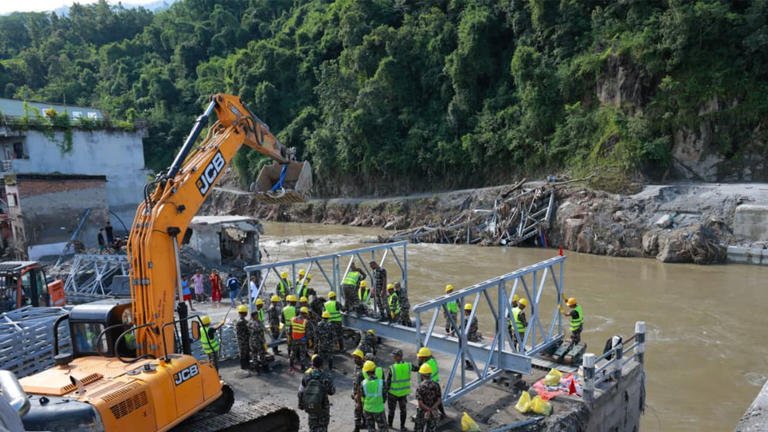
Nepal’s disaster response agencies and the Nepal Army have intensified rescue operations as devastating floods continue to affect several parts of the country. The Army has built rope bridges to reconnect isolated communities and has airlifted stranded people from areas where roads and conventional rescue routes remain inaccessible.
The scale of the disaster has continued to raise concern, with the reported death toll reaching 1,344. Rescue teams are still working in affected regions, while authorities assess the full extent of the damage.
Floodwaters have damaged roads, bridges and other essential infrastructure. Several communities remain difficult to access, making rescue operations more challenging.
The Nepal Army has deployed personnel and equipment to assist stranded residents and support relief efforts. Rope bridges and air rescue operations have become important tools in reaching areas cut off by damaged infrastructure and strong flood currents.
Nepal Army Builds Rope Bridges to Reach Isolated Areas
The Nepal Army has constructed rope bridges in affected areas to help people cross damaged or inaccessible routes.
Floods can wash away bridges and roads within a short period. When this happens, communities can become completely isolated from rescue teams and essential services.
Rope bridges provide a temporary solution in areas where permanent infrastructure has suffered extensive damage.
Army personnel can use these bridges to move people, supplies and emergency equipment across difficult terrain.
Residents can also use the temporary crossings to reach safer locations.
The construction of rope bridges has become particularly important in areas where floodwaters have disrupted regular transport links.
Rescue teams can reach affected communities more quickly when they establish temporary crossings.
Airlifts Help Rescue Stranded Residents
The Nepal Army has also used air rescue operations to evacuate stranded people.
Helicopters can reach locations that remain inaccessible by road.
This makes airlifts especially important in mountainous and flood-affected areas.
Rescue teams can evacuate people who face immediate danger and transport them to safer locations.
Helicopters can also deliver essential supplies to communities that remain cut off.
Food, drinking water, medicines and emergency equipment may reach isolated areas through air operations.
The use of helicopters has strengthened Nepal’s rescue response as ground teams continue to face damaged roads and difficult weather conditions.
Death Toll Reaches 1,344
The devastating floods have caused a major loss of life, with the reported death toll reaching 1,344.
The scale of the tragedy has created an urgent need for continued rescue and relief operations.
Authorities are still working to determine the full impact of the disaster.
The number of casualties may change as rescue teams reach isolated areas and receive new information.
Flood disasters can make it difficult for authorities to quickly verify casualties and identify missing people.
Communication networks may also suffer damage.
Families who have lost contact with relatives continue to wait for information.
The rising death toll has made the disaster one of the most serious humanitarian crises facing the country.
Floods Damage Roads and Essential Infrastructure
The floods have caused extensive damage to infrastructure across affected areas.
Roads and bridges are essential for connecting communities and delivering emergency assistance.
When floodwaters destroy these links, rescue operations become slower and more difficult.
Damaged infrastructure can also disrupt the supply of food, fuel and medical assistance.
Communities may face shortages when transport routes remain blocked.
Restoring road connectivity will become a major priority after immediate rescue operations.
Authorities will need to repair damaged bridges and roads to support long-term recovery.
The current use of temporary rope bridges highlights the urgent need to restore access to isolated communities.
Rescue Teams Face Difficult Conditions
Rescue operations are continuing under difficult conditions.
Strong currents, unstable terrain and damaged infrastructure can create serious risks for emergency personnel.
Teams need to carefully assess each location before attempting rescues.
Weather conditions can also affect helicopter operations.
Heavy rainfall and poor visibility may limit air rescue missions.
Despite these challenges, the Nepal Army and other emergency agencies continue to deploy teams to affected areas.
Their immediate priority remains locating stranded people and moving them to safer places.
Emergency workers are also helping vulnerable groups who may need urgent medical attention.
Relief Operations Continue for Affected Communities
Along with rescue operations, authorities are working to provide relief to affected communities.
People who have lost homes may require temporary shelter.
They also need food, clean drinking water and medical care.
Floodwaters can increase the risk of water contamination and disease outbreaks.
Relief agencies must therefore ensure that affected communities receive safe water and healthcare support.
Children, elderly people and people with disabilities may require additional assistance.
The disaster response will need to continue even after floodwaters begin to recede.
Many communities will face major challenges during the recovery period.
Nepal’s Geography Creates Additional Challenges
Nepal’s geography can make disaster response particularly difficult.
Mountainous terrain limits access to many remote communities.
Heavy rainfall can trigger floods and landslides at the same time.
Roads can become blocked or washed away, leaving communities isolated.
Rescue teams may need to travel long distances through difficult terrain.
Helicopters can provide a faster alternative, but air operations also depend on weather conditions.
The current disaster has highlighted the importance of maintaining emergency response capabilities that can operate in challenging geographical conditions.
Communities Begin Facing Long Recovery Process
The recovery process will begin after emergency teams complete the immediate rescue operations.
Families who lost homes will need support to rebuild.
Damaged roads and public facilities will require repairs.
Many people may also lose their sources of income.
Farmers and small businesses can suffer major losses during floods.
The government and relief agencies will need to plan for long-term rehabilitation.
Reconstruction will require significant financial resources and coordination.
The scale of the death toll and infrastructure damage suggests that recovery may take considerable time.
Need for Stronger Disaster Preparedness
The floods have once again highlighted Nepal’s vulnerability to extreme weather and natural disasters.
Better disaster preparedness can help reduce the impact of future emergencies.
Early warning systems can provide communities with more time to move to safer locations.
Stronger infrastructure can also improve resilience.
Bridges, roads and public facilities in vulnerable areas need designs that can withstand severe weather conditions.
Local communities can also benefit from disaster preparedness training.
Quick and coordinated action can save lives when floods and landslides occur.
The current response has demonstrated the importance of the Army and emergency agencies in reaching isolated areas.
Nepal Army Plays Key Role in Rescue Operations
The Nepal Army has emerged as a key part of the rescue response.
Its personnel have helped establish temporary crossings and evacuate stranded people.
The construction of rope bridges has restored limited access in areas where floodwaters damaged existing infrastructure.
Air rescue missions have also helped reach people who could not be safely evacuated by road.
These operations demonstrate the importance of combining ground and air resources during a major disaster.
The Army’s response will remain important as authorities continue searching for stranded and missing people.
Focus Remains on Saving Lives
The immediate priority remains saving lives and reaching communities that remain isolated.
The reported death toll of 1,344 underlines the devastating human cost of the disaster.
Rescue teams continue to work against difficult conditions.
The Nepal Army’s rope bridges and airlift operations have provided critical support to people stranded by floodwaters.
However, the humanitarian response will need sustained effort.
Relief agencies must continue providing food, water, shelter and medical assistance.
As floodwaters recede, attention will gradually shift towards rehabilitation and reconstruction.
For now, authorities remain focused on locating survivors, helping isolated communities and ensuring that emergency assistance reaches those who need it most.
The devastating Nepal floods have shown the destructive power of extreme weather. They have also highlighted the importance of rapid rescue operations, resilient infrastructure and effective disaster preparedness.
With the death toll reported at 1,344, Nepal faces a difficult humanitarian and recovery challenge in the days ahead.