

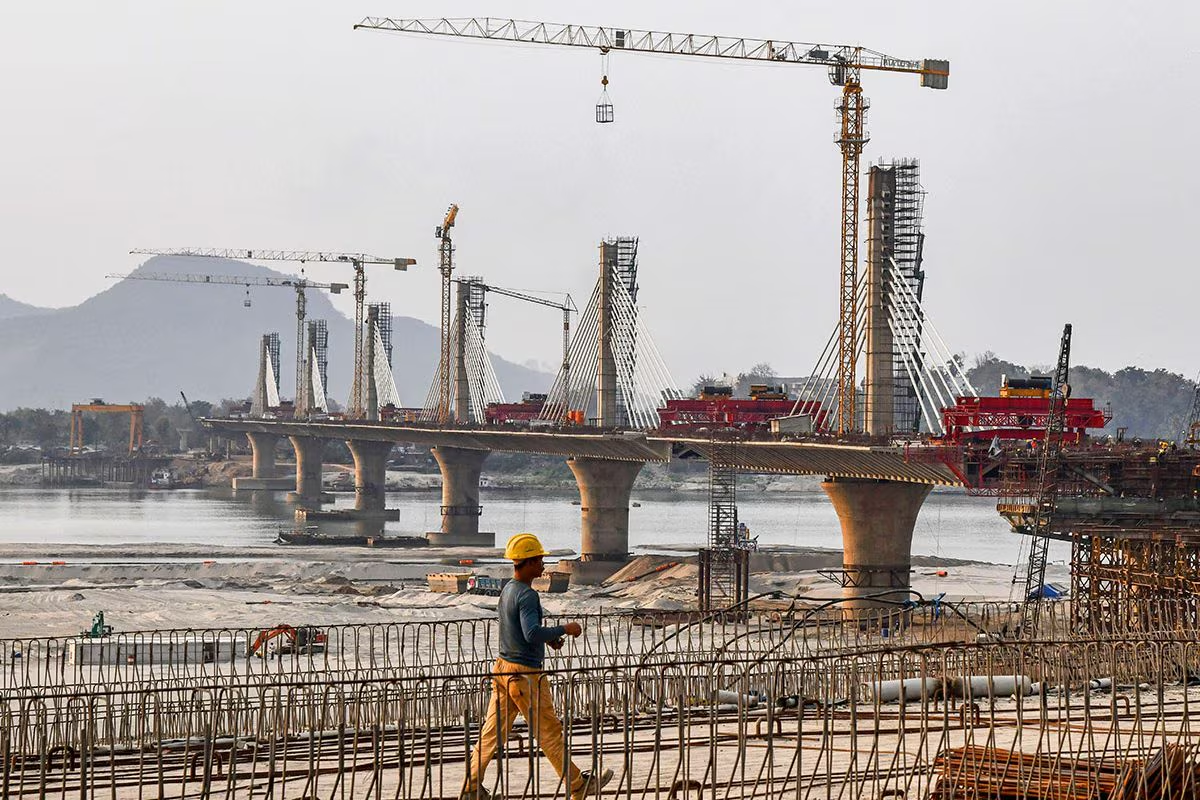
The Infrastructure Restoration Mandate gained momentum after the Union Cabinet fast-tracked a central rehabilitation pipeline for bridge reconstruction projects across Northeast India. The initiative aims to accelerate infrastructure restoration, improve connectivity, and strengthen disaster resilience in the region.
The Infrastructure Restoration Mandate marks a significant step toward rebuilding critical infrastructure in Northeast India. The Union Cabinet has approved an accelerated rehabilitation pipeline focused on reconstructing damaged and vulnerable bridges across the region. Moreover, the initiative is expected to improve transportation connectivity, enhance disaster resilience, and support long-term regional development.
Crop Damage Subsidies: Farm Unions Seek Relief After 180 Hectares of Crops Go Under Water
Infrastructure Restoration Mandate Accelerates Bridge Projects
The Infrastructure Restoration Mandate focuses on expediting bridge rehabilitation across the Northeastern states. Furthermore, the fast-tracked pipeline aims to restore vital transport links that support mobility and economic activity.
Reliable infrastructure remains essential for regional development. Consequently, the initiative seeks to improve connectivity between communities.
Moreover, faster reconstruction can minimize disruptions caused by damaged infrastructure. Therefore, bridge restoration has become a key priority.
Union Cabinet Approves Central Rehabilitation Pipeline
A major component of the Infrastructure Restoration Mandate is the Union Cabinet’s decision to accelerate a centrally supported rehabilitation pipeline. Furthermore, the initiative is designed to streamline the reconstruction of important bridge infrastructure.
Central support can help improve coordination among implementing agencies. Similarly, structured planning contributes to timely project execution.
Consequently, the rehabilitation pipeline is expected to strengthen infrastructure planning. Thus, coordinated implementation remains essential.
Bridge Reconstruction to Strengthen Regional Connectivity
The Infrastructure Restoration Mandate emphasizes the importance of rebuilding bridges that serve as critical transportation links. Moreover, improved connectivity can support the movement of people, goods, and essential services.
Well-maintained transport infrastructure contributes to economic development. Additionally, stronger connectivity enhances access to markets, education, and healthcare.
Consequently, bridge reconstruction supports broader regional growth. Therefore, infrastructure investment remains an important development priority.
Rehabilitation Initiative Supports Disaster Resilience
The Infrastructure Restoration Mandate also aims to improve the resilience of public infrastructure against natural disasters. Furthermore, reconstructed bridges can strengthen transportation networks during emergencies.
The Northeast frequently experiences heavy rainfall and flooding. Similarly, resilient infrastructure helps reduce disruptions during adverse weather conditions.
Moreover, long-term planning supports sustainable infrastructure development. Thus, disaster preparedness remains a key objective.
Northeast Infrastructure Development Continues
The Infrastructure Restoration Mandate reflects the continued focus on infrastructure modernization across Northeast India. Furthermore, transportation improvements remain central to regional development strategies.
Infrastructure investment encourages economic activity and better connectivity. Consequently, reconstruction projects can contribute to long-term growth.
Additionally, improved transport networks strengthen regional integration. Therefore, bridge rehabilitation remains a significant initiative.
Looking Ahead
The Infrastructure Restoration Mandate is expected to accelerate infrastructure recovery and improve transportation networks throughout the Northeast. Moreover, coordinated implementation may help complete reconstruction projects more efficiently.
As rehabilitation efforts progress, authorities are likely to continue monitoring project execution. Similarly, future infrastructure investments could further strengthen regional connectivity.
Consequently, the initiative reinforces the importance of resilient infrastructure for sustainable development. Thus, the rehabilitation pipeline represents an important step forward.
Conclusion
The Infrastructure Restoration Mandate demonstrates the Union Cabinet’s commitment to strengthening transportation infrastructure in Northeast India through accelerated bridge rehabilitation. The initiative seeks to restore connectivity while improving the resilience of critical public infrastructure.
Moreover, the centrally supported rehabilitation pipeline highlights the importance of coordinated planning and timely project implementation. Consequently, improved bridge networks can contribute to economic development and disaster preparedness.
Looking ahead, continued investment in infrastructure will remain essential for supporting growth and connectivity across the Northeast. Therefore, the Infrastructure Restoration Mandate represents a significant milestone in the region’s infrastructure development.
FAQs
1. What is the Infrastructure Restoration Mandate?
The Infrastructure Restoration Mandate refers to the Union Cabinet’s decision to fast-track a central rehabilitation pipeline for bridge reconstruction in Northeast India.
2. What is the main objective of the initiative?
The initiative aims to accelerate bridge reconstruction, restore connectivity, and strengthen infrastructure resilience.
3. Which region will benefit from the rehabilitation pipeline?
The bridge reconstruction initiative covers the Northeastern states of India.
4. Why is bridge rehabilitation important?
Reconstructed bridges improve transportation, support economic activity, and enhance disaster preparedness.
5. How does the initiative support regional development?
It strengthens connectivity, facilitates the movement of people and goods, and promotes long-term infrastructure growth.