

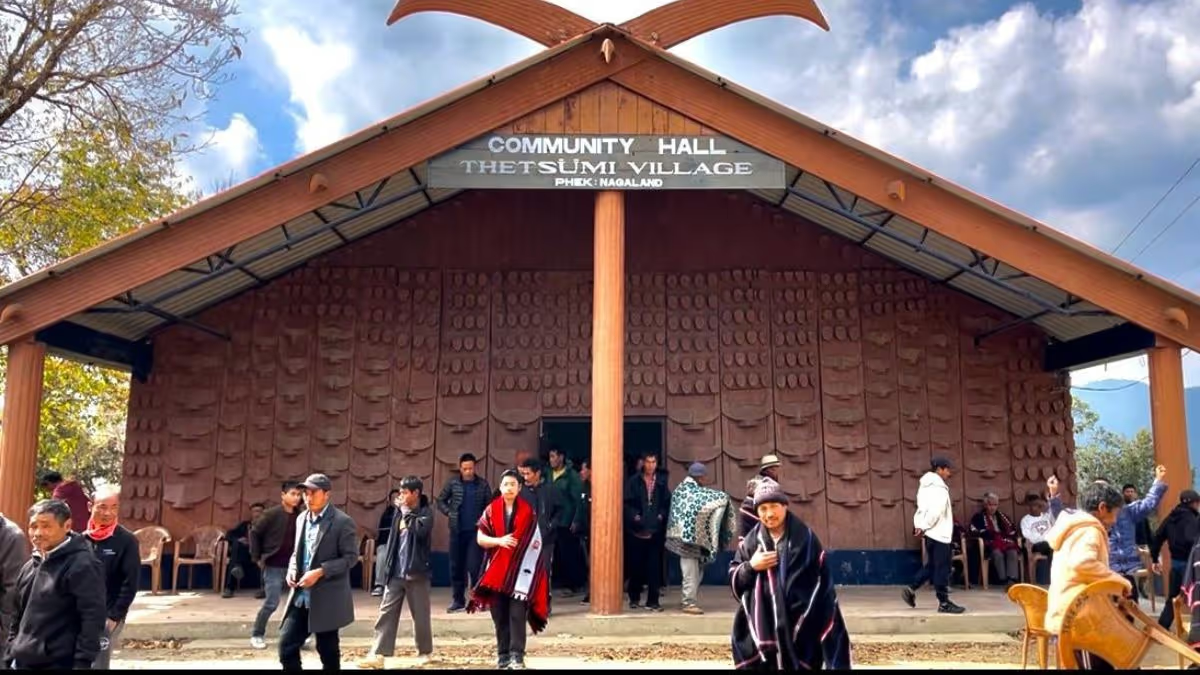
The Inter-Village Feud in Nagaland’s Phek district has reached a peaceful resolution after village councils settled a traditional boundary disagreement that had continued for nearly a decade. The settlement marks an important community-led effort to resolve a long-running local issue through dialogue and mutual understanding.
The dispute had involved traditional boundaries between villages, an issue that can carry significant social and administrative importance in rural communities. Moreover, the peaceful settlement demonstrates the role of village institutions in addressing local disagreements without prolonged confrontation.
The resolution could strengthen relations between the communities and create a clearer framework for managing the disputed area. However, the available information does not specify the names of the villages involved, the exact boundary under dispute, or the terms of the final settlement.
Ginger Processing Plant: Ri Bhoi Farmers Inaugurate Co-Operatively Run Mechanized Facility
Inter-Village Feud Ends After Decade-Long Disagreement
The Inter-Village Feud came to an end after village councils in Phek district reached an understanding over the traditional boundary issue.
Boundary disagreements can continue for years when communities hold different interpretations of traditional land limits. Furthermore, such disputes can affect relationships between neighbouring villages and create uncertainty over the use of particular areas.
The latest settlement provides an opportunity for the communities to move beyond the long-running disagreement.
However, the available information does not explain how the dispute originally began or identify the specific issues that prevented an earlier resolution.
Therefore, the historical background of the disagreement remains unclear.
Inter-Village Feud Resolved Through Community Dialogue
The Inter-Village Feud resolution highlights the importance of dialogue between local institutions.
Village councils can play a significant role in addressing community-level disputes because local representatives often understand traditional practices and relationships between neighbouring communities. Additionally, direct discussions can allow both sides to present their concerns and explore mutually acceptable solutions.
The peaceful outcome demonstrates the potential of community-led mechanisms in resolving longstanding disagreements.
However, the available information does not provide details about the number of meetings held or the individuals who participated in the negotiations.
Consequently, the exact process that led to the agreement remains unspecified.
Inter-Village Feud Highlights Traditional Boundary Issues
The Inter-Village Feud involved a traditional boundary disagreement, highlighting the continued importance of customary land understandings in some rural communities.
Traditional boundaries can reflect historical agreements, community practices, natural landmarks, and longstanding patterns of land use. Moreover, these arrangements may not always correspond neatly with modern administrative boundaries.
Resolving such differences can therefore require careful consultation and respect for local traditions.
However, the available information does not identify the specific traditional markers or historical agreements associated with the Phek dispute.
Therefore, the precise nature of the boundary disagreement cannot be established from the available details.
Inter-Village Feud Settlement Strengthens Community Relations
The peaceful resolution of the Inter-Village Feud could improve relations between the affected communities.
Long-running disputes can create tension between neighbouring villages even when communities continue to share social, economic, and cultural connections. Furthermore, a mutually accepted settlement can create opportunities for communities to cooperate on shared concerns.
The agreement may therefore provide a foundation for renewed cooperation.
However, the available information does not indicate whether the councils have established a formal mechanism for preventing future disagreements.
Consequently, the long-term effect on inter-village relations will become clearer over time.
Inter-Village Feud Resolution Protects Local Peace
The Inter-Village Feud settlement also demonstrates the value of peaceful conflict resolution.
Community dialogue can reduce the possibility of disagreements escalating into wider disputes. Additionally, local councils can help maintain social stability by bringing representatives together before tensions become more difficult to manage.
The peaceful settlement in Phek provides an example of local institutions addressing a longstanding issue through discussion.
However, the available information does not describe whether government officials or other authorities participated in the settlement process.
Therefore, the precise institutional role beyond the village councils remains unclear.
Inter-Village Feud Could Improve Land-Use Clarity
The Inter-Village Feud settlement could provide greater clarity regarding the traditional boundary between the affected communities.
Clearer understanding of boundaries can help reduce uncertainty over access, land use, cultivation, and other activities. Moreover, mutually accepted arrangements can make it easier for communities to manage shared areas and avoid future misunderstandings.
However, the available information does not provide the geographical details of the settled boundary.
Therefore, it remains unclear whether the agreement covers a specific location, multiple areas, or a broader traditional boundary.
Inter-Village Feud Shows Role of Village Councils
The Inter-Village Feud resolution highlights the role of village councils in local governance.
Village-level institutions can serve as important platforms for discussion and community decision-making. Furthermore, their familiarity with local customs and relationships can help them address issues that require a detailed understanding of community history.
The successful settlement demonstrates how these institutions can contribute to social harmony.
However, the available information does not indicate whether the councils will document the settlement formally or establish additional safeguards.
Consequently, the long-term administrative status of the agreement remains unclear.
Inter-Village Feud Settlement Offers Model for Future Disputes
The Inter-Village Feud resolution could provide a useful example for addressing similar community disagreements.
Long-running local disputes can require patience, repeated dialogue, and willingness from all sides to find common ground. Additionally, involving trusted community representatives can help build confidence during negotiations.
The Phek settlement demonstrates that traditional and community-based mechanisms can contribute to peaceful outcomes.
However, each dispute involves different historical and geographical circumstances.
Therefore, the approach used in this case may not automatically apply to every future boundary disagreement.
Conclusion
The Inter-Village Feud in Phek district has ended peacefully after village councils resolved a traditional boundary disagreement that had continued for around 10 years. The settlement represents an important community-led effort to address a longstanding issue through dialogue rather than confrontation.
Moreover, the agreement could strengthen relations between neighbouring communities and provide greater clarity over traditional boundaries. However, the available information does not identify the villages involved, the exact disputed area, or the detailed terms of the settlement.
Overall, the Inter-Village Feud resolution highlights the role of local institutions in maintaining community harmony and addressing longstanding disagreements. Continued dialogue and mutual cooperation can help ensure that the settlement remains effective and prevents similar disputes from resurfacing.
FAQs
1. What was the Inter-Village Feud about?
The Inter-Village Feud involved a traditional boundary disagreement between villages in Phek district that continued for approximately 10 years.
2. How was the dispute resolved?
Village councils peacefully settled the disagreement through a community-led resolution process.
3. Why are traditional boundaries important?
Traditional boundaries can reflect historical agreements, customary practices, and long-established patterns of land use within communities.
4. Can village councils resolve similar disputes?
Village councils can provide important platforms for dialogue and local conflict resolution, particularly when disputes involve customary practices and community relationships.
5. What could happen after the settlement?
The agreement could improve relations between the communities and reduce uncertainty surrounding the disputed boundary, provided both sides continue to respect the settlement.