

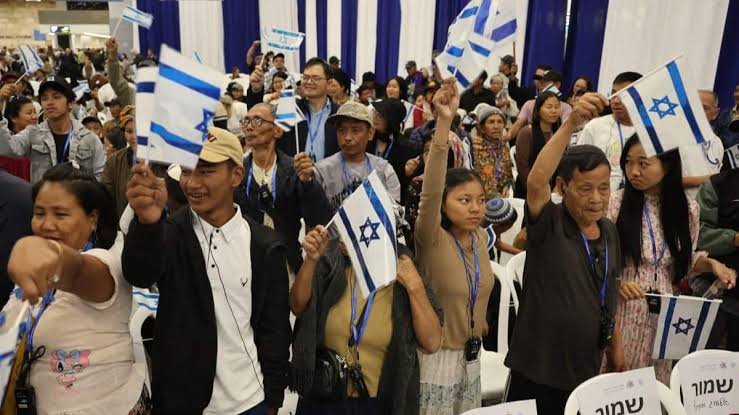
Israel has approved the immigration of approximately 600 additional members of the Bnei Menashe community from Northeast India, with a dedicated budget of NIS 45.1 million, equivalent to around ₹125 crore. The decision, announced on November 11, 2026, will support their relocation during the first half of 2027. Most members of the community live in Manipur and Mizoram. The latest approval marks another phase in Israel’s multi-year plan to bring the remaining Bnei Menashe families to the country and reunite relatives already living there.
Mizoram Student Protest Targets MPSC Chairman
Imphal Silchar Flight Resumption Restores Regional Connectivity
Israel Approves Immigration of 600 More Members
The Israeli government approved the latest immigration proposal following recommendations from Aliyah and Integration Minister Ofir Sofer. Finance Minister Bezalel Smotrich approved the dedicated budget for the initiative.
Under the decision, approximately 600 members of the Bnei Menashe community will move from Northeast India to Israel during the first six months of 2027.
The approval continues a programme designed to bring the remaining members of the community to Israel in stages. Earlier phases allowed groups from Manipur and Mizoram to begin their immigration process in 2026.
The latest allocation will help maintain the services required for immigration, conversion and settlement. It will also support the administrative arrangements needed to prepare families for relocation.
₹125 Crore Budget Allocated for Relocation
The Israeli government has earmarked NIS 45.1 million for the latest group. This amount converts to approximately ₹125.1 crore, depending on exchange rates.
The allocation will support the organised arrival and initial settlement of the 600 immigrants. It will also help authorities continue the preparation and absorption services required by the community.
The Aliyah and Integration Ministry will coordinate the process with other relevant government agencies.
Finance Minister Smotrich welcomed the approval and highlighted the importance of providing resources for a structured immigration programme. He also referred to the importance of helping community members reunite with relatives already living in Israel.
The funding forms part of a broader government effort to complete the immigration of the remaining Bnei Menashe population over the coming years.
Bnei Menashe Community Mainly Lives in Manipur and Mizoram
The Bnei Menashe community lives primarily in the northeastern Indian states of Manipur and Mizoram. Its members identify with the Jewish people and traditionally trace their ancestry to the biblical tribe of Manasseh, one of the Ten Lost Tribes of Israel.
According to their community tradition, their ancestors left the ancient Kingdom of Israel following the Assyrian exile more than 2,700 years ago. They believe their forebears travelled through parts of Asia before eventually settling in Northeast India.
Over several decades, members of the community have adopted Jewish religious practices and pursued immigration to Israel.
Their immigration process involves formal religious and administrative procedures. Israeli authorities require eligible candidates to complete the prescribed conversion process before receiving full immigrant status and citizenship.
The latest approval will allow another group to continue that process through an organised government programme.
Third Phase of Israel’s Multi-Year Immigration Plan
The approval represents the third phase of Israel’s multi-year initiative to bring the remaining Bnei Menashe members to the country.
The broader plan gained momentum under a government decision approved in November 2025. That initiative aimed to bring thousands of remaining community members from Northeast India to Israel by 2030.
The government has since arranged immigration in smaller groups. Earlier arrivals in 2026 formed part of the same effort.
The phased approach allows Israeli authorities to prepare accommodation, religious conversion arrangements, language training and other essential services before each group arrives.
It also helps families coordinate their relocation with relatives who have already settled in Israel.
The latest approval therefore extends an existing programme rather than introducing an entirely new immigration policy.
Families to Receive Priority During Immigration
Israeli authorities have outlined a process intended to keep families together and reunite relatives separated by earlier immigration.
A rabbinical delegation headed by Israel’s Chief Rabbi has approved the list of candidates in coordination with the Population and Immigration Authority.
Officials will determine the arrival schedule according to each candidate’s readiness for the conversion process.
The government also intends to give priority to bringing entire families together. Authorities will consider cases involving relatives who already live in Israel.
This arrangement aims to reduce prolonged family separation and make the relocation process more manageable for new arrivals.
Hebrew Classes and Conversion Process in Israel
After reaching Israel, the new immigrants will enter designated absorption centres. They may stay at these facilities for up to six months while completing the initial integration programme.
During this period, participants will attend intensive Hebrew language classes. They will also undergo the formal conversion process required under the government’s arrangements.
The programme will help newcomers understand Israeli society and prepare for their transition into permanent communities.
Once they complete the required conversion procedures, eligible participants will receive new immigrant status and Israeli citizenship.
They will then move from absorption centres into permanent accommodation in local municipalities.
The programme also aims to connect new arrivals with the support systems needed for education, employment and everyday life.
Family Reunification Remains a Key Objective
Family reunification remains one of the central objectives of the Bnei Menashe immigration initiative.
Many community members have relatives who moved to Israel under earlier government programmes. The latest phase will create another opportunity for families to reunite.
The relocation plan also involves cooperation between government ministries, religious authorities and organisations supporting the community.
The government wants to maintain continuity in the services that help newcomers complete their immigration and integration process.
For members still living in Manipur and Mizoram, the latest approval provides a pathway for another group to begin the next stage of relocation.
Conclusion
Israel has approved the immigration of 600 additional Bnei Menashe members from Northeast India and allocated NIS 45.1 million, worth approximately ₹125 crore, for their relocation and absorption. The group is expected to arrive during the first half of 2027. The decision continues Israel’s multi-year plan to bring the remaining community members from Manipur and Mizoram. The programme will include family reunification, Hebrew classes, formal conversion procedures and accommodation at absorption centres before eligible immigrants move into permanent housing.
FAQs
1. How many Bnei Menashe members has Israel approved for immigration?
Israel has approved approximately 600 additional members of the community for immigration during the first half of 2027.
2. How much money has Israel allocated for the programme?
The government approved NIS 45.1 million, equivalent to approximately ₹125 crore.
3. Where does the Bnei Menashe community live in India?
The community lives mainly in Manipur and Mizoram in Northeast India.
4. When are the newly approved immigrants expected to arrive?
The group is expected to arrive in Israel between January and June 2027.
5. What is the Bnei Menashe community’s traditional ancestry?
Members traditionally trace their ancestry to the biblical tribe of Manasseh, one of the Ten Lost Tribes of Israel.
6. What support will the immigrants receive after arriving in Israel?
They will receive accommodation at absorption centres, Hebrew language instruction and assistance with the formal conversion and integration process.