

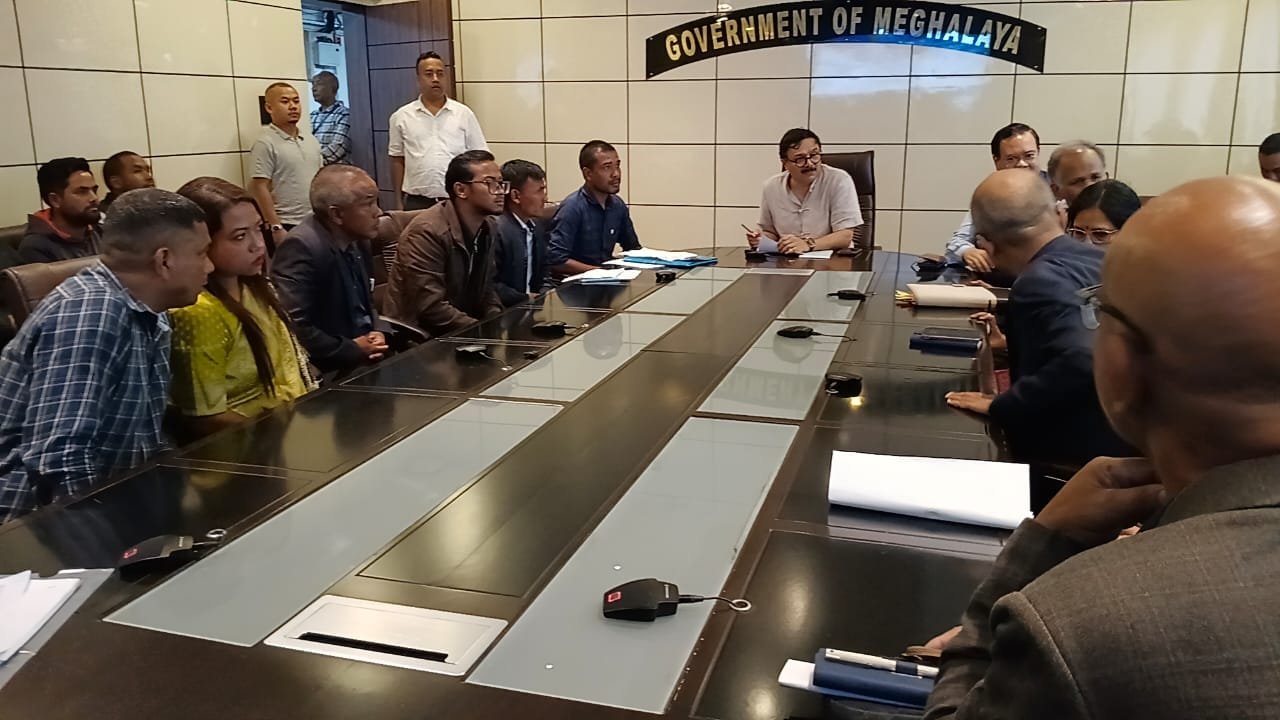
The Jaintia Coal Owners Association’s hunger strike has entered its 20th day in Meghalaya, continuing protests over the state’s mining policy. The agitation reflects growing dissatisfaction among coal stakeholders regarding regulatory and operational issues affecting mining activities. Moreover, the prolonged protest has drawn attention from administrative authorities and civil society groups. Demonstrators have maintained their demands for policy reconsideration while continuing peaceful protests.
Agartala-Bound IndiGo Flight Struck by Lightning at Kolkata Airport
Assam Tightens Security Networks Significantly for Upcoming National Competitive Re-Examinations
Hunger Strike Enters 20th Day Amid Mining Policy Concerns
Jaintia Coal Owners Association hunger strike hits Day 20 in Meghalaya as members continue their protest over mining policy regulations. Consequently, the agitation has become one of the longest-running demonstrations in the region in recent months.
The protesters have raised concerns regarding restrictions and operational challenges affecting coal mining activities. Moreover, they argue that the existing policy framework has impacted livelihoods and economic stability in mining-dependent areas. Therefore, the association has been demanding policy review and corrective measures.
The hunger strike has been carried out peacefully under supervision of local authorities. Furthermore, participants have reiterated their commitment to continue the protest until their demands are addressed. As a result, the situation remains under close observation by district administration officials.
Meanwhile, discussions around mining regulations continue to attract attention from various stakeholders. Consequently, the issue has become a focal point of debate in the state’s resource management discourse.
Mining Policy Remains Central to Ongoing Dispute
The ongoing protest highlights concerns related to Meghalaya’s mining policy framework. Moreover, coal mining has historically played a significant role in the local economy, particularly in the Jaintia Hills region. Therefore, policy decisions have a direct impact on livelihoods and economic activity.
Authorities have implemented regulations aimed at ensuring environmental compliance and sustainable practices. Consequently, these measures have affected traditional mining operations in several areas. Such changes have led to differing viewpoints among stakeholders.
Furthermore, stakeholders have called for clearer guidelines and improved implementation mechanisms. As a result, discussions around balancing environmental protection with economic needs have intensified.
Meanwhile, government representatives have previously engaged with various groups to address concerns. Similarly, efforts to streamline policy implementation continue to be explored.
Economic Impact and Stakeholder Concerns Continue
The Jaintia Coal Owners Association hunger strike hits Day 20 in Meghalaya amid ongoing concerns about the economic impact of mining restrictions. Consequently, stakeholders argue that livelihoods linked to coal mining have been affected.
Coal mining has historically supported a significant portion of employment in the region. Moreover, any disruption in operations can have a ripple effect on allied sectors. Therefore, the issue remains economically sensitive.
Furthermore, association members have emphasized the need for policy clarity and stability. As a result, they continue to press for dialogue with authorities to resolve outstanding issues.
Meanwhile, civil society groups have urged peaceful resolution through structured discussions. Consequently, attention is being drawn toward finding a balanced approach that addresses environmental and economic considerations.
Authorities Continue Monitoring Situation in Jaintia Hills
Local administration officials continue to monitor the situation as the Jaintia Coal Owners Association hunger strike enters its 20th day. Moreover, efforts are being made to ensure that law and order are maintained during the protest period.
Authorities have encouraged dialogue between stakeholders and government representatives. Therefore, structured communication is seen as essential for resolving the ongoing dispute. Such engagement may help reduce tensions and facilitate policy discussions.
Furthermore, health and safety of the protest participants remain a priority for local officials. As a result, monitoring mechanisms have been put in place to ensure their well-being during the hunger strike.
Meanwhile, the issue continues to be discussed at various administrative levels. Similarly, stakeholders await further developments regarding potential policy review or dialogue initiatives.
Conclusion
Jaintia Coal Owners Association hunger strike hits Day 20 in Meghalaya, reflecting ongoing concerns over mining policy and its economic implications. Moreover, the protest highlights the challenges of balancing regulatory frameworks with local livelihoods.
The situation remains under observation as authorities and stakeholders continue to explore possible avenues for resolution. Therefore, dialogue and consultation are expected to play a key role moving forward.
As the Jaintia Coal Owners Association hunger strike hits Day 20 in Meghalaya, attention remains focused on potential policy discussions and efforts to address the concerns of affected communities.
FAQs
1. Why is the Jaintia Coal Owners Association on hunger strike?
They are protesting against Meghalaya’s mining policy and its impact on coal mining operations.
2. How long has the hunger strike been going on?
The hunger strike has entered its 20th day.
3. What is the main demand of the protesters?
They are demanding a review and reconsideration of the mining policy.
4. Why is coal mining important in Meghalaya?
Coal mining supports livelihoods and economic activity, especially in the Jaintia Hills region.
5. What is the government’s response?
Authorities are monitoring the situation and encouraging dialogue between stakeholders.