

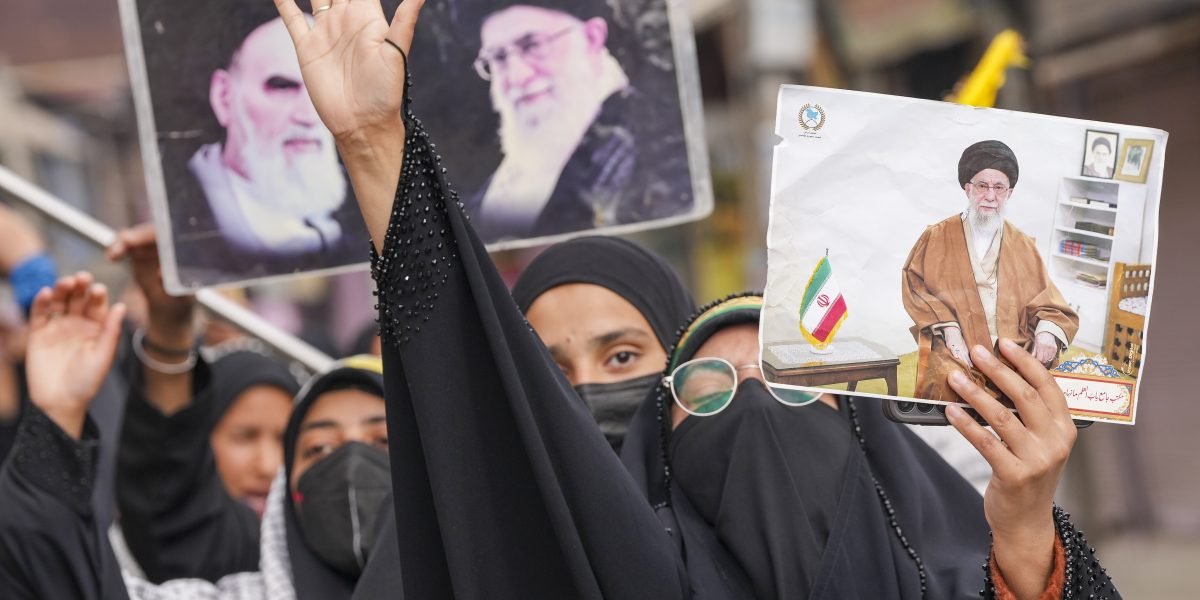
Protests continued across parts of Kashmir and Ladakh’s Kargil district for the fourth consecutive day following the reported assassination of Iran’s Supreme Leader Ayatollah Ali Khamenei. Demonstrations, mourning gatherings, and processions have taken place in several Shia-majority areas, prompting authorities to maintain heightened security and impose precautionary restrictions.
The ongoing Khamenei assassination protests have drawn thousands of people onto the streets, where mourners expressed grief and anger over the killing of the influential Iranian leader. Protesters carried black flags, held portraits of Khamenei, and raised slogans condemning the attack, which reports say occurred during a joint U.S.–Israeli strike on Iranian targets.
Authorities have been closely monitoring the situation as demonstrations spread across various parts of the region. While most protests have remained peaceful, security forces have been deployed in sensitive areas to prevent clashes and maintain public order.
Read More: Tripura Raises ST Student Stipend to Rs 100
Fourth Day of Khamenei Assassination Protests
The Khamenei assassination protests entered their fourth day as groups of demonstrators gathered in Srinagar, Budgam, and other areas of the Kashmir Valley. Similar rallies were also reported in Kargil, a district in Ladakh with a significant Shia population.
Participants organised mourning processions and religious gatherings to pay tribute to the Iranian leader. Many demonstrators described Khamenei as a major spiritual and political figure for Shia Muslims worldwide.
In several localities, shops remained closed and traffic movement was limited as people joined protest marches and community gatherings. Residents also held majlis (religious assemblies) and recited traditional mourning chants to express solidarity with Iran.
The demonstrations highlight the strong emotional and religious connections felt by some communities in the region toward Shia leadership in Iran.
Security Restrictions Across Kashmir
In response to the protests, authorities have imposed a series of precautionary measures across parts of the Kashmir Valley. Security personnel have been deployed at major intersections and public squares to prevent unrest.
Educational institutions in several districts were temporarily closed as a preventive step to ensure safety. Officials also limited mobile internet speeds in some areas to reduce the spread of misinformation and maintain control over the situation.
Although protests continued in certain localities, government officials said the overall situation remained under control due to appeals for calm issued by political leaders and community representatives.
Authorities emphasised that restrictions were temporary and aimed at maintaining peace while allowing people to express their views peacefully.
Demonstrations in Kargil
In Ladakh’s Kargil district, large groups of residents participated in protest marches and mourning events. Religious organisations and community leaders called for peaceful demonstrations to condemn the assassination and honour the deceased Iranian leader.
Participants gathered at mosques and public spaces before marching through the streets with banners and flags. Speeches and prayers were held to remember Khamenei and highlight his influence within the Shia world.
Observers noted that Kargil has historically witnessed strong public reactions to developments affecting Shia religious figures. The current demonstrations reflect both religious solidarity and political sentiment within the community.
Global Reactions to Khamenei’s Death
The assassination of Ayatollah Ali Khamenei has sparked reactions far beyond India. Across several countries in the Middle East and South Asia, protests and demonstrations have taken place following the news of his death.
Khamenei served as Iran’s Supreme Leader for decades and played a central role in shaping the country’s political and religious policies. For many Shia Muslims worldwide, he was considered both a political leader and a spiritual authority.
The incident has intensified geopolitical tensions in the region, with analysts warning that the situation could escalate into a broader conflict involving multiple countries.
Calls for Calm
Political leaders and religious figures in Kashmir and Kargil have urged protesters to maintain peace and avoid confrontations with security forces. They emphasised that demonstrations should remain peaceful and within the framework of law.
Local administrations have also appealed to residents to cooperate with authorities and refrain from spreading unverified information that could increase tensions.
Community elders in several areas held meetings encouraging people to express their grief through prayer gatherings rather than street clashes.
Situation Remains Tense but Controlled
Despite the continuing demonstrations, officials said the situation in both Kashmir and Kargil remained largely under control. Security agencies continue to monitor developments closely while maintaining deployments in sensitive areas.
The Khamenei assassination protests reflect the strong emotional response triggered by the killing of one of the most influential figures in the Shia Muslim world. However, authorities hope that ongoing appeals for restraint will help prevent the situation from escalating further.
As the fourth day of protests unfolded, the focus remained on maintaining public order while allowing communities to express their sentiments. The coming days will determine whether the demonstrations gradually subside or continue to shape the political and social atmosphere in the region.
Read More: West Asia Crisis May Hit Karnataka Economy