


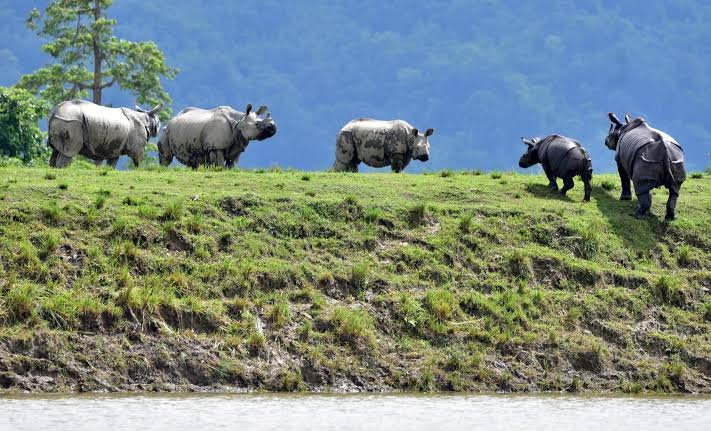
The Kaziranga Submergence situation remains a major wildlife concern as officials confirmed that large portions of Kaziranga National Park remain submerged. The flooding has forced animals to move toward the higher Karbi Anglong hills in search of safer ground.
The Kaziranga Submergence highlights the impact of Assam’s ongoing monsoon conditions on one of India’s most important wildlife habitats. Rising water levels have covered extensive areas of the park, reducing the availability of dry ground for animals.
Kaziranga naturally experiences seasonal flooding, which plays an important role in maintaining its grasslands and wetlands. However, severe flooding can create immediate challenges for wildlife movement, food availability, and access to safe elevated areas.
Wildlife officials continue monitoring animal movement as animals migrate toward higher ground. Moreover, coordination between forest teams and nearby communities remains important as wildlife moves beyond the park’s flooded areas.
Mining Contradiction: CM Sarma Rejects Claims Linking Local Coal Mining to Assam Floods
Kaziranga Submergence Forces Wildlife Toward Higher Ground
The Kaziranga Submergence has affected large portions of the national park, according to wildlife officials. As floodwaters cover low-lying areas, animals have moved toward elevated zones, including the Karbi Anglong hills.
Moreover, Kaziranga’s wildlife depends on a combination of grasslands, wetlands, and forested areas. Consequently, extensive flooding can alter normal movement patterns and push animals toward areas outside their usual habitats.
The movement toward Karbi Anglong provides animals with access to higher terrain during periods of severe flooding. Furthermore, wildlife teams can monitor important movement routes and respond when animals approach roads or human settlements.
The available information does not provide details about the number of animals that have migrated toward the hills or the current water levels inside individual sections of the park.
Wildlife Officials Monitor Animals During Kaziranga Submergence
The Kaziranga Submergence has increased the importance of wildlife monitoring and protection measures. Forest personnel can track animal movements and identify areas where wildlife faces additional risks during the flood.
Additionally, animals moving toward higher ground may encounter roads, vehicles, or nearby settlements. This situation requires careful monitoring to reduce human-wildlife conflict and ensure safe movement.
Kaziranga’s wildlife includes several species that depend on the park’s floodplain ecosystem. Meanwhile, elevated areas in the surrounding landscape can provide temporary refuge during periods of high water.
The available information does not indicate any specific increase in wildlife casualties or rescue operations linked to the current flooding. Therefore, the immediate update focuses on widespread submergence and animal movement toward the Karbi Anglong hills.
Kaziranga Submergence Highlights Importance of Wildlife Corridors
The Kaziranga Submergence demonstrates the importance of maintaining safe wildlife movement corridors between protected areas and higher landscapes. Seasonal flooding can naturally encourage animals to move beyond low-lying sections of the park.
Moreover, connectivity between Kaziranga and surrounding hill areas can provide wildlife with alternative habitats during extreme weather. Consequently, protecting these movement routes can strengthen long-term conservation efforts.
Wildlife corridors also require careful management because animals may cross roads and enter areas where human activity remains high. Furthermore, public awareness and responsible driving can help reduce risks when wildlife moves through surrounding areas.
Kaziranga’s annual flooding supports its ecosystem, but extreme water levels can create significant short-term challenges. Therefore, conservation planning must account for both the ecological benefits of seasonal flooding and the risks associated with severe flood events.
Conclusion
The Kaziranga Submergence has forced wildlife to seek safer terrain as large portions of Kaziranga National Park remain underwater, according to wildlife officials. Many animals have moved toward the higher Karbi Anglong hills during the ongoing flooding.
Furthermore, monitoring wildlife movement remains essential as animals travel through areas outside their normal ranges. Protecting movement corridors and reducing human-wildlife conflict can help safeguard animals during the flood.
Overall, the Kaziranga Submergence highlights the powerful role of seasonal flooding in Assam’s landscape while emphasizing the need for effective wildlife monitoring and habitat connectivity during extreme monsoon conditions.
FAQs
1. What is the latest Kaziranga Submergence update?
Large portions of Kaziranga National Park remain submerged, according to wildlife officials, prompting animals to move toward higher areas.
2. Where are the animals moving?
Many animals are moving toward the Karbi Anglong hills, which provide higher terrain during flooding.
3. Is flooding normal in Kaziranga?
Yes. Seasonal flooding forms part of Kaziranga’s natural ecosystem. However, severe flooding can create additional challenges for wildlife.
4. Why do animals move toward Karbi Anglong?
The hills provide higher ground that can offer safer conditions when low-lying parts of the national park become submerged.
5. What risks do migrating animals face?
Animals can encounter roads, human settlements, and other hazards when they move beyond their usual habitat. Wildlife monitoring can help reduce these risks.