


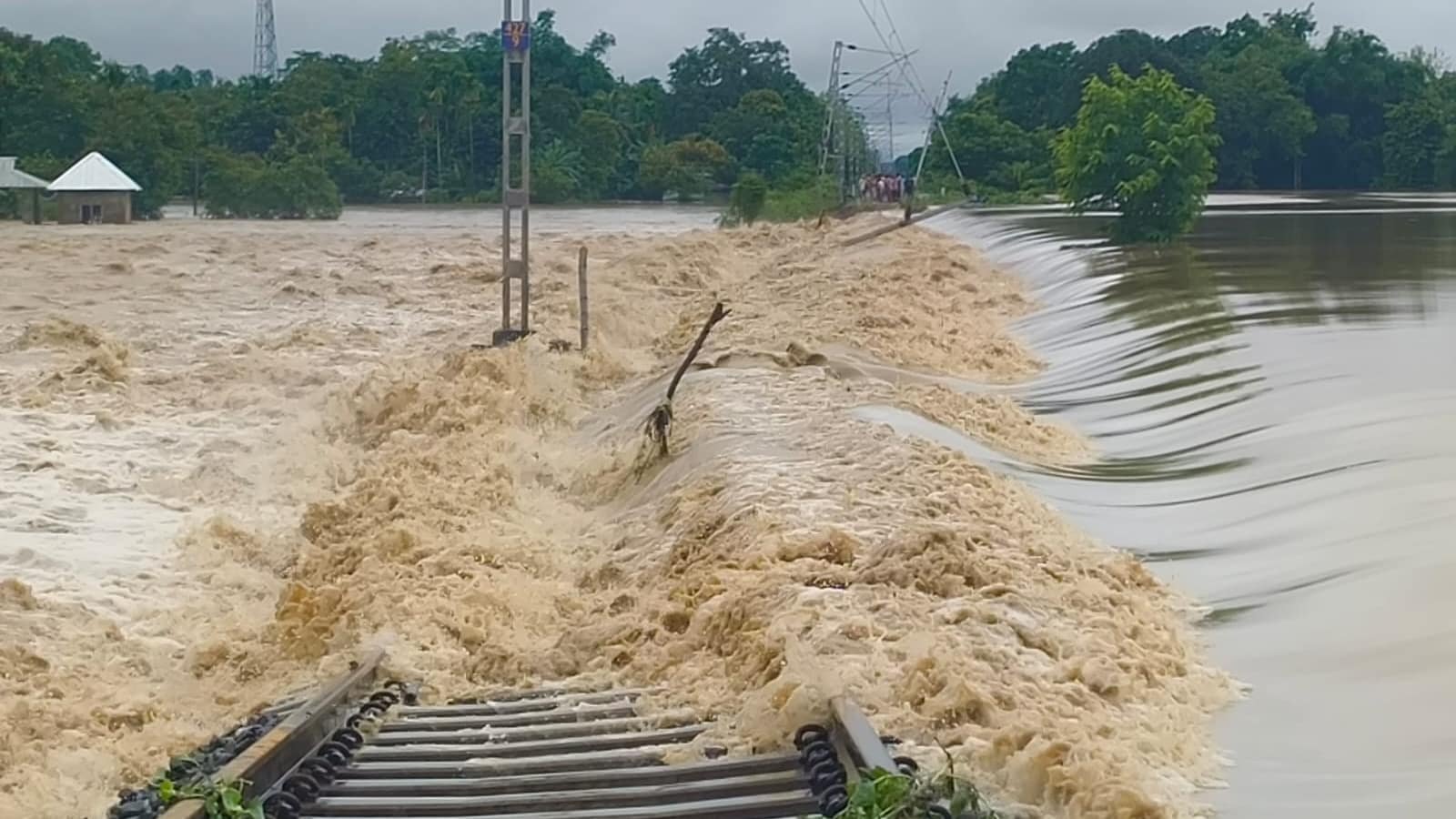
The Mining Contradiction has emerged amid Assam’s ongoing flood situation as Chief Minister Himanta Biswa Sarma publicly dismissed claims that local coal mining caused the floods. Instead, Sarma pointed toward environmental factors originating across the border as a contributing factor.
The Mining Contradiction has added a new dimension to discussions surrounding the causes of flooding in Assam. The chief minister’s remarks challenge claims that local mining activities directly triggered the current flood conditions.
Flooding across Assam can result from multiple factors, including intense rainfall, river-level increases, drainage constraints, and environmental conditions beyond individual districts. Moreover, the role of cross-border environmental factors can become particularly significant in regions sharing river systems and mountainous terrain.
The comments have therefore shifted attention toward the broader environmental and geographical factors affecting Assam’s flood situation. However, determining the precise contribution of different factors requires detailed scientific and hydrological assessment.
Assam Displacement Crisis: Over 1.6 Lakh Residents Remain in Relief Camps Across 14 Districts
Mining Contradiction Sparks Debate Over Flood Causes
The Mining Contradiction centres on disagreement over whether local coal mining contributed to the current flooding. Chief Minister Himanta Biswa Sarma rejected claims that mining activities within Assam caused the widespread flooding.
Instead, Sarma attributed greater significance to environmental factors across the border. According to his remarks, conditions outside Assam may have influenced the movement of water and contributed to the situation.
Moreover, Assam shares river systems and ecological connections with neighbouring regions. Consequently, environmental changes upstream can potentially influence downstream water conditions.
The available information does not provide a detailed scientific assessment supporting one specific cause of the flooding. Therefore, the chief minister’s statement represents a political and administrative position rather than a complete independent hydrological analysis.
Cross-Border Factors Become Focus of Mining Contradiction
The Mining Contradiction has directed attention toward environmental conditions beyond Assam’s immediate boundaries. Sarma pointed toward cross-border factors instead of accepting local coal mining as the primary explanation for the floods.
Additionally, rivers can carry water and sediment across administrative boundaries, making flood management a regional issue. This interconnected nature of waterways can require cooperation between neighbouring authorities.
Environmental changes in upstream areas can also influence downstream communities. Furthermore, heavy rainfall and changes in water flow can compound existing flood vulnerabilities across river basins.
However, the available information does not identify a specific cross-border event, location, or environmental process that authorities have officially confirmed as the direct cause of the current flooding.
Therefore, further technical assessments will remain important for establishing the relative contribution of rainfall, river dynamics, land use, mining, and other environmental factors.
Mining Contradiction Highlights Need for Scientific Assessment
The Mining Contradiction demonstrates the complexity of assigning responsibility for major flood events. Flooding rarely results from a single factor, particularly in geographically diverse regions such as Assam.
Moreover, scientific assessments can examine rainfall patterns, river discharge, sediment movement, land-use changes, and drainage conditions. Consequently, comprehensive data can provide a clearer understanding of how different factors interact during major floods.
The debate also highlights the importance of transparent environmental monitoring. Similarly, independent assessments can help policymakers develop stronger flood-management strategies and address concerns surrounding natural-resource extraction.
Assam’s recurring flood challenges require both immediate emergency response and long-term environmental planning. Therefore, understanding the causes of individual flood events remains important for developing effective mitigation measures.
At the same time, claims about environmental responsibility require supporting evidence. Public statements can shape the debate, but detailed hydrological and environmental studies can provide stronger conclusions.
Conclusion
The Mining Contradiction has emerged after Chief Minister Himanta Biswa Sarma rejected claims that local coal mining caused the Assam floods and instead pointed toward cross-border environmental factors.
Furthermore, the debate highlights the complex relationship between rainfall, river systems, environmental changes, land use, and human activity. Establishing the precise causes requires detailed scientific and hydrological assessments rather than relying on a single explanation.
Overall, the Mining Contradiction has broadened the discussion surrounding Assam’s flood crisis and placed greater emphasis on cross-border environmental conditions and evidence-based flood management.
FAQs
1. What is the Mining Contradiction in Assam?
The Mining Contradiction refers to the dispute over claims that local coal mining contributed to the current Assam floods.
2. What did CM Himanta Biswa Sarma say?
Sarma publicly dismissed claims that local coal mining caused the floods and pointed instead toward environmental factors across the border.
3. Can cross-border environmental factors influence Assam’s floods?
Yes. Assam shares interconnected river systems with neighbouring regions, so upstream environmental and hydrological conditions can influence downstream areas.
4. Has a scientific study confirmed the exact cause?
The available information does not cite a detailed scientific assessment that establishes one specific cause of the current flooding.
5. Why is identifying the cause important?
Understanding the contributing factors can help authorities improve flood management, environmental regulation, infrastructure planning, and disaster preparedness.