

The Kohima Smart City solid waste plant is once again at the centre of efforts to improve municipal waste management in Nagaland’s capital. However, current records do not support the claim that a new high-efficiency processing unit has recently opened. Instead, authorities and the Nagaland Legislative Assembly are working toward the revival of the existing solid waste management plant at Lerie, which has faced operational problems.
The development comes as Kohima generates around 80–90 tonnes of municipal waste every day, increasing the need for effective collection, segregation, processing and scientific disposal.
Moreover, a recent inspection examined the Lerie waste management facility and the Dzürüzou landfill under the Solid Waste Management Rules, 2026. The review highlighted the need to strengthen the city’s waste-processing system rather than suggesting that a completely new plant has already become operational.
Pashchim Kanchanmala Cattle Theft Leaves Three Livestock Farmers Distressed
Kohima Smart City Solid Waste Plant Faces Revival Push
The existing solid waste management facility at Lerie was developed as a major waste-processing and disposal facility for Kohima. According to the Nagaland Urban Development Department, the facility includes a 50-tonne-per-day compost plant, a sanitary landfill, a leachate treatment system, a weighbridge, laboratory facilities and supporting infrastructure.
The facility was created under the Asian Development Bank-assisted North Eastern Region Urban Development Programme. Its design aimed to provide Kohima with an integrated system capable of processing biodegradable waste while supporting safer disposal of residual material.
However, the plant has struggled to operate consistently. The Committee on Environment & Climate Change of the Nagaland Legislative Assembly reported in September 2026 that the Kohima Solid Waste Management Plant had remained non-functional since 2019. The committee recommended its revival.
The committee identified several factors behind the prolonged operational problems, including manpower shortages, road damage caused by landslides and inadequate segregation of wet and dry waste by residents. Therefore, simply restoring machinery would not address every problem affecting the facility.
The revival process consequently requires improvements across the entire municipal waste chain. Collection, transportation, segregation and processing must work together if Kohima is to reduce the pressure on landfill facilities.
New Waste Rules Increase Pressure for Better Processing
The push to improve the Lerie facility comes alongside the implementation of the Solid Waste Management Rules, 2026. The Nagaland government held a state-level meeting in May to discuss compliance with the new rules and directions issued by the Supreme Court.
Chief Secretary Sentiyanger Imchen directed departments to prepare comprehensive roadmaps and time-bound action plans in coordination with district administrations, urban local bodies, rural local bodies and communities. The government also stressed that compliance with the rules is a statutory requirement.
Furthermore, Principal Secretary for Environment, Forest and Climate Change Y. Kikheto Sema emphasised segregation at source, public awareness and coordination among departments. These measures directly affect the efficiency of waste-processing facilities because mixed waste makes recovery and treatment more difficult.
Kohima officials have subsequently begun reviewing the city’s existing infrastructure. On August 10, 2026, Advisor for School Education Dr Kekhrielhoulie Yhome, Kohima Deputy Commissioner B. Henok Buchem and Kohima Municipal Council CEO Alemyapang Longchar inspected the Lerie waste plant and the Dzürüzou landfill.
The inspection formed part of the District Level Implementation and Monitoring Committee’s work under the Solid Waste Management Rules, 2026. Officials examined existing arrangements and assessed the challenges involved in efficient waste processing and scientific disposal.
Material Recovery and Segregation Remain Important
The waste-management system at Lerie is not limited to composting. Kohima also has a Material Recovery Facility intended to support the recovery and reuse of materials from municipal waste.
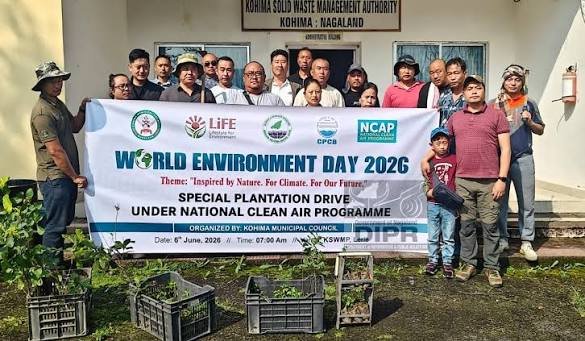
During a World Environment Day programme in June 2026, Kohima Municipal Council councillors visited the Material Recovery Facility at the Lerie plant. The visit was intended to provide officials with a closer understanding of waste-processing and resource-recovery practices.
Such facilities can help separate recyclable materials from other waste streams. Consequently, effective segregation at household and collection points becomes an important part of the overall system.
The city’s daily waste generation makes this particularly significant. Official project information cited by the district administration places Kohima’s municipal waste generation at approximately 80–90 tonnes per day.
This volume creates continuous pressure on collection and disposal infrastructure. If recyclable and biodegradable material enters disposal areas without adequate separation, the processing potential of the system decreases while landfill pressure increases.
Therefore, the proposed revival of the Kohima Smart City solid waste plant needs to operate alongside stronger source segregation. Residents, municipal workers, private operators and local authorities all have roles in making the system more effective.
The challenge also extends beyond the Lerie facility. Officials inspected the Dzürüzou landfill during the August review, showing that Kohima’s waste-management strategy must address both processing and final disposal.
Kohima Seeks More Scientific Municipal Waste Management
The revival discussion reflects a wider shift toward scientific municipal waste management in Kohima. Rather than relying primarily on disposal, authorities are seeking stronger systems for collection, segregation, recovery, composting and environmentally safer treatment.
The ADB-assisted facility was originally designed with several components to support this approach. The Urban Development Department lists the compost plant, sanitary landfill, leachate treatment plant, laboratory, firefighting arrangements and internal roads among the facility’s infrastructure.
Leachate treatment is particularly important at landfill and composting facilities because contaminated liquid generated during waste decomposition requires controlled treatment. The original Lerie project included a treatment capacity of 75,000 litres per day.
However, infrastructure alone cannot guarantee effective waste management. The recent Assembly committee findings demonstrate how operational issues can prevent an existing facility from delivering its intended benefits.
Moreover, Kohima’s difficult terrain creates additional logistical challenges. Landslides and road damage can disrupt access to waste facilities, while the city’s hilly geography can make collection and transportation more demanding.
The state government’s implementation of the 2026 waste-management rules therefore places greater emphasis on planning, monitoring and accountability. Departments must coordinate with local bodies and communities to ensure that waste moves through the system efficiently.
At present, the most significant development is the renewed institutional focus on bringing the existing Lerie plant back into effective operation. The September recommendation for revival provides a formal direction, while inspections and compliance reviews indicate that authorities are assessing what improvements are required.
It would therefore be inaccurate to describe the development as the opening of a new high-efficiency processing plant. The available evidence instead points to a revival and strengthening effort involving existing infrastructure.
Conclusion
The Kohima Smart City solid waste plant is undergoing renewed scrutiny as Nagaland seeks to address persistent gaps in municipal waste management. The Lerie facility already has significant infrastructure, including a 50-tonne-per-day compost plant, sanitary landfill, leachate treatment system and Material Recovery Facility.
However, the plant has faced prolonged operational difficulties, and the Nagaland Legislative Assembly’s Committee on Environment & Climate Change has recommended its revival.
Meanwhile, Kohima generates an estimated 80–90 tonnes of municipal waste each day, making reliable processing capacity increasingly important.
Therefore, the current priority is not the opening of a new plant but the effective revival, maintenance and integration of existing facilities. Stronger source segregation, reliable collection, better transportation and scientific disposal will remain essential if Kohima is to reduce its municipal environmental burden.
FAQs
What is the Kohima Smart City solid waste plant?
The Kohima Solid Waste Management Plant at Lerie is an integrated municipal waste facility containing a compost plant, sanitary landfill, leachate treatment system and other supporting infrastructure.
Has a new high-efficiency waste plant opened in Kohima?
Available 2026 evidence does not confirm the opening of a new high-efficiency plant. Instead, authorities are working toward the revival and strengthening of the existing Lerie facility.
Why does Kohima need better waste processing?
Kohima generates around 80–90 tonnes of municipal waste daily, creating a substantial requirement for effective collection, segregation, processing and scientific disposal.
What problems affected the Lerie waste plant?
The Nagaland Legislative Assembly committee cited manpower shortages, landslide-related road damage and inadequate segregation of wet and dry waste among the factors affecting the plant’s operation.
What are officials doing to improve waste management?
Officials have inspected the Lerie plant and Dzürüzou landfill, reviewed processing and disposal arrangements and are implementing the Solid Waste Management Rules, 2026 through stronger coordination, monitoring and planning.