

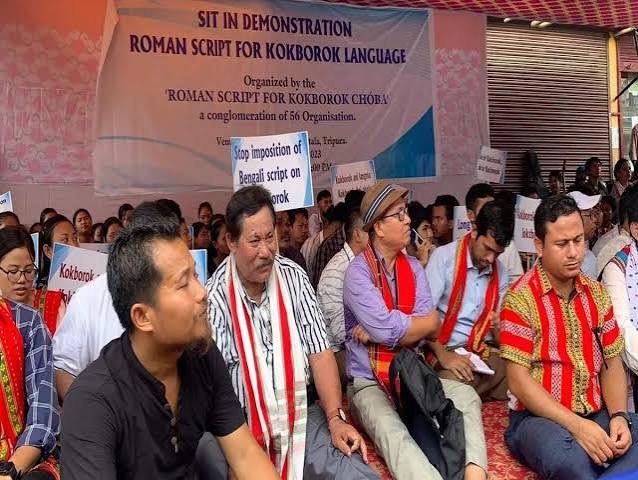
The Kokborok Roman Script Debate has resurfaced in Tripura’s political discourse as parties prepare for upcoming local body campaigns. Political factions have renewed discussions over the official adoption of the Roman script for Kokborok, one of the state’s important indigenous languages. Moreover, the debate has emerged alongside demands for broader financial autonomy, adding another layer to the political issues expected to shape the campaign. The renewed discussion highlights the continuing importance of language, identity and governance among Tripura’s indigenous communities.
FM Sitharaman Asks Banks to Boost Financial Literacy for MUDRA Beneficiaries
Kokborok Roman Script Debate Returns to Political Discourse
Political groups in Tripura have restarted discussions surrounding the script used for the Kokborok language.
Furthermore, supporters of the demand are seeking official adoption of the Roman script for Kokborok.
The issue has appeared repeatedly in Tripura’s political discourse because language and script can carry significant cultural and identity-related importance.
Moreover, political parties may use local campaigns to present their positions on issues that directly affect indigenous communities.
The Kokborok Roman Script Debate therefore has the potential to become an important topic during the upcoming local body campaign.
Additionally, renewed political attention could encourage wider public discussion about the future development and official recognition of Kokborok.
Kokborok Roman Script Debate Links Language and Identity
Kokborok holds an important place in the cultural and linguistic landscape of Tripura.
Moreover, debates surrounding its script involve questions about education, communication, cultural identity and official usage.
Supporters of the Roman script have continued to raise the issue as part of broader discussions concerning the language.
However, different political and community groups may hold different views regarding the most appropriate script and the process for official adoption.
Consequently, the debate can involve both cultural considerations and political positions.
Meanwhile, renewed discussion during the election period could bring the issue to a wider audience across the state.
Kokborok Roman Script Debate Joins Financial Autonomy Demands
The script issue has resurfaced alongside demands for broader financial autonomy.
Furthermore, the combination of language-related demands and questions about financial powers reflects wider discussions concerning indigenous representation and self-governance.
Financial autonomy can influence the ability of local institutions to plan and implement development programmes according to their priorities.
Additionally, political groups may connect cultural and economic issues when presenting their agendas to voters.
The Kokborok Roman Script Debate consequently forms part of a broader political conversation rather than standing as an isolated language issue.
However, the specific proposals and positions of individual political factions may differ, making the campaign an important period for voters to examine competing viewpoints.
Kokborok Roman Script Debate Could Shape Local Campaigns
With local body campaigns approaching, political parties are expected to focus increasingly on issues that resonate with communities.
Moreover, the renewed debate over the Kokborok script could become a prominent topic in areas where language and indigenous identity hold particular significance.
Candidates may use campaign platforms to explain their positions on script adoption and related cultural issues.
Furthermore, discussions around financial autonomy could add an economic and administrative dimension to the campaign.
Voters will ultimately assess the proposals presented by competing political groups during the electoral process.
Therefore, the Kokborok Roman Script Debate could influence campaign narratives as parties attempt to address cultural, linguistic and governance-related concerns.
The renewed political focus also demonstrates how language policy can remain closely connected to broader questions of identity, representation and development in Tripura.
Conclusion
The Kokborok Roman Script Debate has returned to the political spotlight ahead of Tripura’s upcoming local body campaigns. Political factions have renewed discussions over the official adoption of the Roman script for Kokborok while also raising demands for broader financial autonomy. Moreover, the issues are likely to remain part of the wider campaign discourse as political groups present their positions on language, indigenous identity and governance.
FAQs
1. What is the Kokborok Roman Script Debate about?
The debate concerns the proposed official adoption of the Roman script for the Kokborok language in Tripura.
2. Why has the script issue resurfaced?
Political factions have renewed the discussion ahead of upcoming local body campaigns.
3. What other demand has emerged alongside the script issue?
The debate has emerged alongside demands for broader financial autonomy.
4. Why is Kokborok significant in Tripura?
Kokborok holds an important place in Tripura’s indigenous linguistic and cultural landscape.
5. Could the Kokborok Roman Script Debate influence the elections?
It could become an important campaign issue as political parties present their positions on language, identity and governance.