


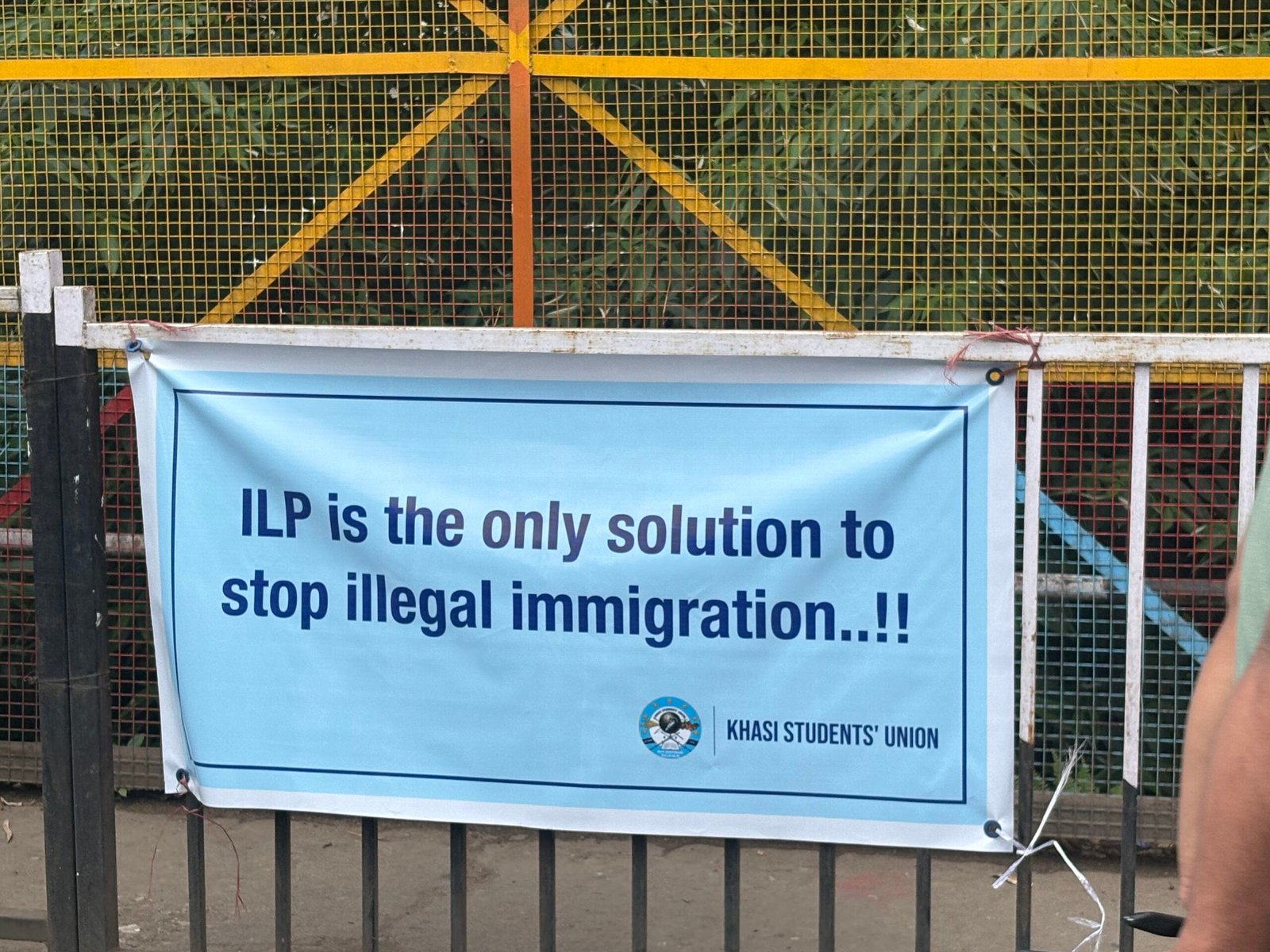
The ILP demand Meghalaya issue was brought back into sharp focus as the Khasi Students’ Union (KSU) staged strong demonstrations and renewed its call for the implementation of the Inner Line Permit (ILP) system during Union Home Minister Amit Shah’s visit to Shillong. The protest highlighted long-standing concerns over migration, identity protection, and regulatory control in the state. Moreover, the timing of the agitation added political significance to the visit and the broader discussions on governance in the Northeast.
Nagaland Expands Administrative Team as Five MLAs Sworn In as Advisors
Assam Meghalaya Border Cultivation Agreement Reached in Lapangap Area
KSU Revives Long-Pending ILP Demand
The Khasi Students’ Union has once again intensified its demand for the implementation of the Inner Line Permit system in Meghalaya.
Moreover, the protest was strategically timed during the Union Home Minister’s visit to ensure national-level attention.
Consequently, the issue of ILP demand Meghalaya has resurfaced in political discourse.
Focus on Identity and Migration Concerns
A key reason behind the ILP demand is concerns related to migration and cultural identity.
Furthermore, student organizations argue that regulatory mechanisms are needed to protect indigenous communities.
Therefore, the ILP is seen by supporters as a safeguard for demographic balance and cultural preservation.
Protest During High-Profile Visit
The demonstrations coincided with Amit Shah’s official visit to Shillong for the North Eastern Council (NEC) plenary session.
Moreover, such timing is often used by protest groups to amplify visibility and political pressure.
As a result, the demand gained heightened attention at a national level.
Historical Context of ILP Demand
The ILP system has been a long-standing demand in Meghalaya from various civil society groups.
Furthermore, it is already implemented in other northeastern states like Arunachal Pradesh, Nagaland, and Mizoram.
Consequently, Meghalaya’s exclusion from the system remains a key point of debate.
Political Sensitivity of the Issue
The ILP demand Meghalaya is politically sensitive due to its implications for governance, migration, and economic activity.
Moreover, any decision regarding ILP requires balancing local sentiments with national policy considerations.
Therefore, the issue continues to remain unresolved despite repeated appeals.
Role of Student Organizations
Groups like the Khasi Students’ Union play a major role in shaping public discourse in the state.
Furthermore, they often mobilize support for issues related to indigenous rights and regional identity.
As a result, their protests significantly influence political attention on ILP.
Impact on Centre–State Dialogue
The renewed agitation is expected to influence discussions between state and central leadership.
Moreover, such demands are often raised during high-level visits and policy review meetings.
Consequently, ILP remains part of the broader Northeast governance conversation.
Looking Ahead
The ILP demand Meghalaya is likely to continue being a major political issue in the state.
Furthermore, future discussions may determine whether a formal policy review is initiated.
Therefore, stakeholders will closely watch Centre–state engagement on the matter.
Conclusion
The Khasi Students’ Union’s renewed push for ILP during Amit Shah’s Shillong visit has once again brought the issue to the forefront of Meghalaya’s political landscape. The ILP demand Meghalaya reflects ongoing concerns over identity, migration, and regional autonomy, keeping it a central topic in Northeast political discourse.
FAQs
What is ILP?
The Inner Line Permit is a system regulating entry of outsiders into certain protected regions.
Who is demanding ILP in Meghalaya?
The Khasi Students’ Union (KSU) and other civil society groups.
Why is ILP being demanded?
To address concerns over migration and protect indigenous identity.
Which states already have ILP?
Arunachal Pradesh, Nagaland, and Mizoram.
Why is the issue important now?
It was highlighted during Amit Shah’s visit to Shillong, increasing political attention.