


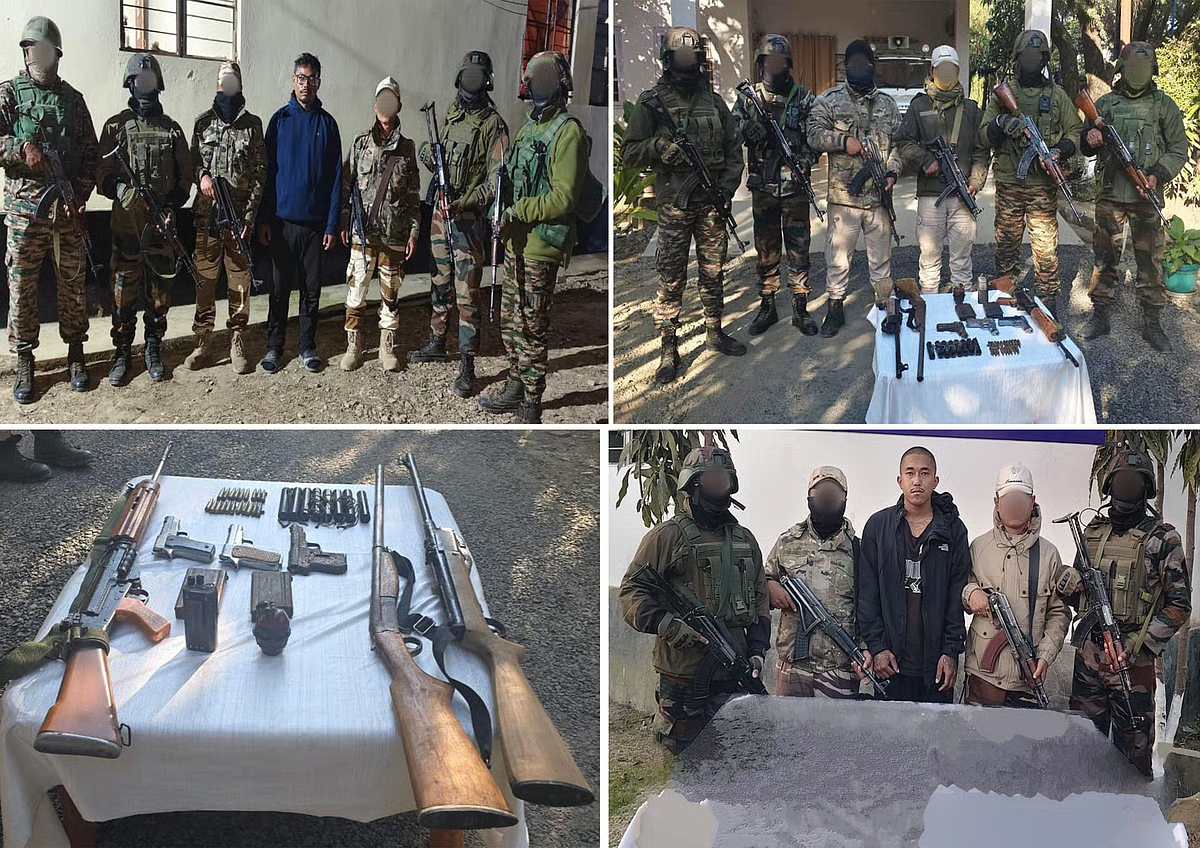
The Manipur drug economy crackdown has been intensified as the state government strengthens its multi-agency अभियान against illegal narcotics trade and suspected border-linked narco activities. The coordinated effort involves enforcement agencies working together to dismantle supply chains, disrupt trafficking routes, and curb the influence of organized drug networks in the region. Moreover, the campaign reflects a broader push to address both criminal and cross-border dimensions of the drug trade.
KSU Revives ILP Demand During Amit Shah’s Shillong Visit
MDA 2.0 Backs James Sangma for Rajya Sabha Nomination
Multi-Agency Strategy Strengthened
The Manipur drug economy crackdown is being carried out through coordinated action between multiple enforcement and security agencies.
Moreover, this integrated approach focuses on improving intelligence sharing, joint operations, and faster response mechanisms.
Consequently, authorities aim to reduce fragmentation in enforcement efforts.
Targeting Illegal Drug Networks
A key objective of the campaign is to dismantle illegal drug supply chains operating within and across the region.
Furthermore, authorities are focusing on identifying trafficking routes, production hubs, and distribution networks.
Therefore, sustained pressure is being applied to weaken organized drug operations.
Focus on Border-Linked Trafficking
The crackdown also addresses concerns related to cross-border trafficking.
Moreover, Manipur’s geographical location makes it vulnerable to transnational drug routes originating from nearby regions.
As a result, border surveillance and coordination efforts have been significantly strengthened.
Addressing Narco-Economy Influence
The Manipur drug economy crackdown also aims to curb the influence of illegal drug profits on local systems.
Furthermore, illicit financial flows can impact social stability, governance, and community safety.
Consequently, disrupting the financial backbone of these networks is a major priority.
Strengthening Law Enforcement Capacity
The campaign includes efforts to enhance the operational capacity of police and enforcement agencies.
Moreover, training, intelligence upgrades, and resource allocation are being prioritized to improve effectiveness.
Therefore, authorities are better equipped to handle complex drug-related cases.
Community Awareness and Support
Public cooperation is considered an important part of the anti-drug strategy.
Furthermore, awareness campaigns are being encouraged to educate communities about the risks of drug abuse and trafficking.
As a result, community involvement is expected to support enforcement efforts.
Link to Regional Security Concerns
The crackdown also intersects with broader security concerns in the region.
Moreover, illegal drug networks are often linked to wider criminal ecosystems that can affect stability.
Consequently, tackling the drug economy is seen as part of maintaining overall law and order.
Looking Ahead
The Manipur drug economy crackdown is expected to continue with sustained multi-agency coordination.
Furthermore, future operations may focus on deeper intelligence-led interventions and financial tracking of drug networks.
Therefore, authorities aim to achieve long-term disruption of illicit trade systems.
Conclusion
The intensified campaign against the illegal drug economy in Manipur highlights a strong multi-agency approach to tackling narcotics trafficking and related criminal networks. The Manipur drug economy crackdown reflects the government’s effort to strengthen security, reduce illegal financial flows, and restore stability in the region.
FAQs
What is the Manipur drug economy crackdown?
It is a coordinated multi-agency effort to combat illegal drug trafficking and related networks.
Which agencies are involved?
Multiple state and security agencies are working together in joint operations.
What is the main focus?
Disrupting drug supply chains and border-linked trafficking routes.
Why is this important?
It helps reduce crime, improve security, and stabilize affected regions.
What is expected next?
Stronger intelligence-led operations and continued enforcement actions.