

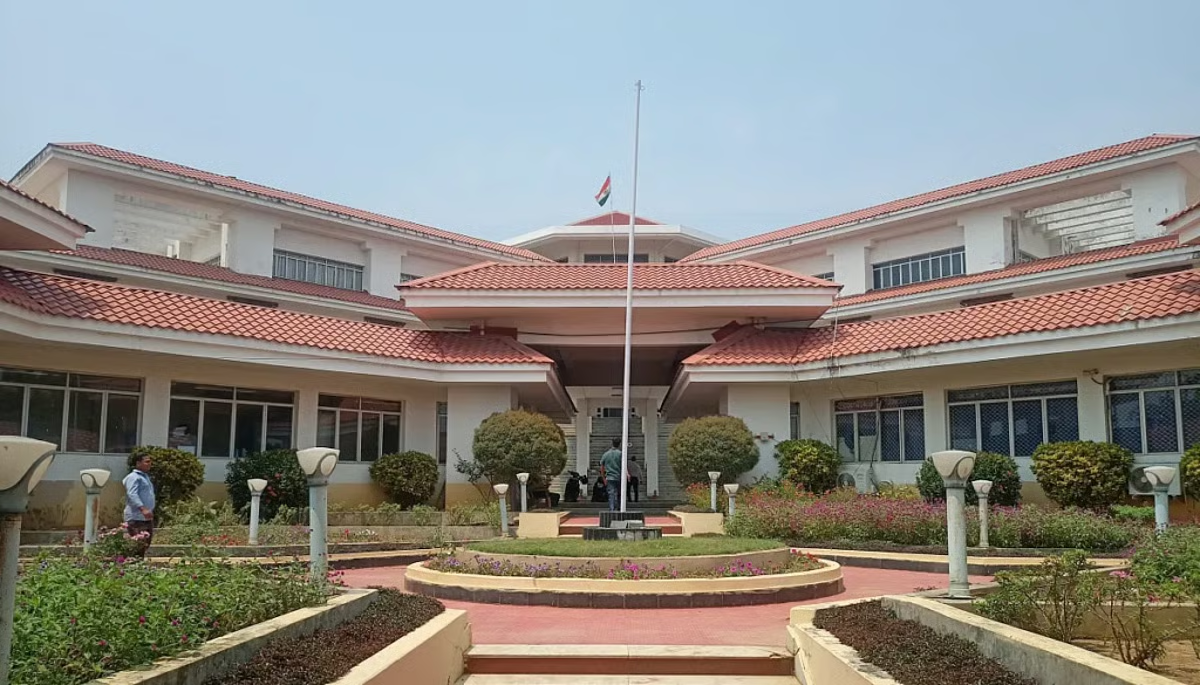
The Tripura High Court Reinstatement ruling has drawn major legal attention after the High Court quashed the state government’s decision to remove a District Consumer Commission President. The court stated that the action violated the principles of natural justice, leading to the restoration of the official’s position.
Powerful Agartala Trade Conference Boosts Tripura Growth Vision
Guwahati May Rainfall Record Broken Amid Heavy Showers
Tripura High Court Quashes Removal Order
The Tripura High Court set aside the state government’s decision to remove a District Consumer Commission President from office.
The court ruled that the removal process failed to follow proper legal procedures and violated the principles of natural justice. Consequently, the judgment restored the official to the position and raised important questions regarding administrative accountability.
The ruling attracted significant attention within legal and administrative circles across the state.
Court Cites Violation Of Natural Justice
The High Court strongly emphasized that authorities must follow the principles of natural justice while taking administrative action against public officials.
Judges observed that procedural fairness remains essential before removing an individual from an official position. Furthermore, the court indicated that failure to provide fair hearing opportunities and proper legal process can invalidate administrative decisions.
The judgment reinforced the importance of transparency and due process in governance matters.
Consumer Commission Role Remains Important
District Consumer Commissions play a significant role in protecting consumer rights and resolving disputes related to goods, services, and unfair trade practices.
These commissions help citizens seek legal remedies in consumer-related cases without lengthy judicial procedures. Consequently, appointments and removals within such bodies often attract close legal and public scrutiny.
Authorities generally follow structured procedures while managing appointments linked to quasi-judicial institutions.
High Court Reinforces Administrative Accountability
Legal experts stated that the ruling highlights the judiciary’s role in ensuring accountability within government decision-making processes.
Courts frequently intervene when administrative actions appear inconsistent with constitutional protections or procedural fairness standards. Additionally, judicial oversight helps strengthen public confidence in governance and institutional integrity.
The latest order once again underscored the importance of lawful administrative conduct.
Principles Of Natural Justice Explained
The principles of natural justice generally require fair treatment, impartial decision-making, and an opportunity to be heard before authorities take punitive action.
Legal systems across India consider these principles fundamental for maintaining fairness and preventing arbitrary decisions. Consequently, courts often review whether proper procedures were followed in disciplinary and administrative matters.
Experts described the ruling as a reminder that procedural safeguards remain essential in democratic governance.
Legal Community Discusses Judgment
The judgment sparked discussion among lawyers, legal observers, and public administration experts regarding procedural fairness and institutional governance.
Many legal professionals noted that the decision could influence future administrative proceedings involving appointments and removals within statutory bodies. Furthermore, the ruling may encourage stricter adherence to due process standards by government departments.
The case highlighted the judiciary’s continuing role in protecting legal rights and administrative fairness.
State Government Decision Faces Judicial Scrutiny
The High Court’s intervention demonstrated that government decisions remain subject to judicial review when procedural irregularities are alleged.
Courts frequently assess whether administrative authorities acted within legal boundaries and respected constitutional principles during official actions. Additionally, judicial scrutiny often strengthens institutional checks and balances within governance systems.
The ruling reinforced the idea that administrative authority must operate within established legal frameworks.
Public Confidence In Judiciary Strengthened
Several observers stated that the judgment may strengthen public trust in judicial institutions and constitutional protections.
Citizens often depend on courts to address concerns involving fairness, legality, and misuse of administrative power. Consequently, decisions emphasizing procedural justice frequently receive strong public attention and legal significance.
The ruling also highlighted the judiciary’s role in protecting institutional independence and fairness.
Administrative Procedures May Receive Greater Attention
Following the judgment, administrative departments may face increased pressure to ensure strict compliance with legal procedures during disciplinary or removal actions.
Experts explained that procedural lapses can create legal complications, institutional instability, and public controversy. Therefore, authorities may review internal systems and decision-making practices more carefully moving forward.
The case may encourage stronger procedural safeguards within public administration.
Tripura High Court Emphasizes Rule Of Law
The Tripura High Court Reinstatement ruling highlighted the continuing importance of procedural fairness, judicial oversight, and constitutional protections within administrative governance.
By restoring the District Consumer Commission President and criticizing violations of natural justice, the court reinforced the principle that official actions must follow lawful and transparent procedures. The judgment also reflected the judiciary’s crucial role in safeguarding fairness, accountability, and institutional integrity within democratic systems.
FAQs
What did the Tripura High Court decide?
The court quashed the removal of a District Consumer Commission President and restored the position.
Why did the court reject the removal order?
The court stated that the action violated the principles of natural justice.
What are principles of natural justice?
They ensure fairness, impartiality, and the right to a fair hearing before official action.
Why is the ruling important?
The judgment reinforces procedural fairness and accountability in government decisions.
What role does a Consumer Commission serve?
Consumer Commissions help resolve disputes related to consumer rights and services.