


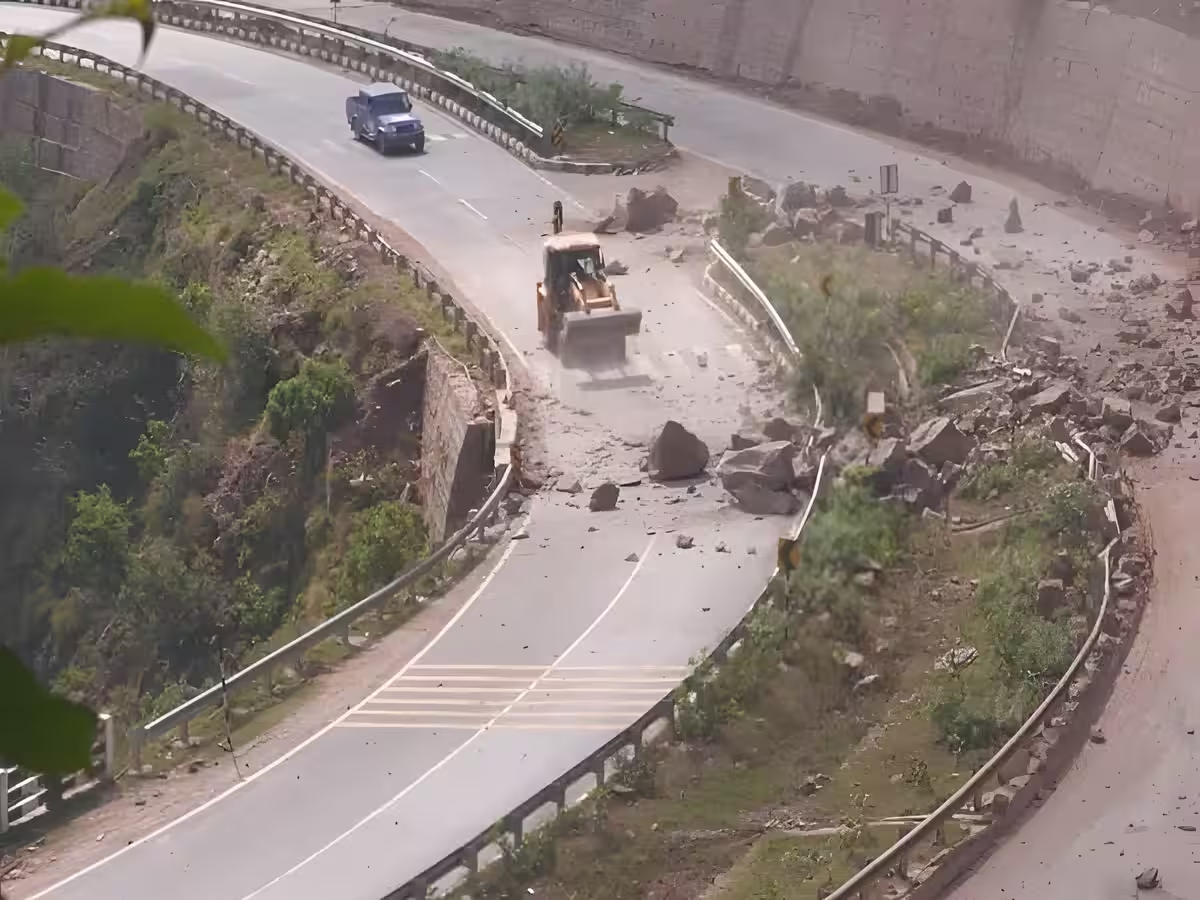
The Landslide Clearance operation on the Jowai highway has intensified after state emergency crews used controlled blasting to remove a massive boulder blocking the road. The operation aims to restore road connectivity, improve movement along the affected highway, and address the immediate obstruction created by the landslide.
Heritage Walk Tour: Shillong Groups Launch Guided Walks Covering British-Era Architecture
The Landslide Clearance operation addresses a major road obstruction on the Jowai highway after a massive boulder blocked the route. State emergency crews used controlled blasting as part of the effort to remove the obstruction.
Large rocks and boulders can create serious challenges for road crews, particularly when they become lodged on mountain highways. Moreover, removing such obstacles requires careful coordination to protect workers, road users, and nearby infrastructure.
The controlled operation represents an emergency response aimed at restoring access along the affected stretch.
However, the available information does not specify the exact location of the boulder, the size of the affected road section, or the duration of the highway disruption.
Landslide Clearance Uses Controlled Blasting on Jowai Highway
The Landslide Clearance operation involved controlled blasting to break apart or remove a large boulder blocking the Jowai highway.
Emergency crews can use controlled techniques when conventional equipment cannot safely or efficiently move a large rock. Furthermore, controlled blasting allows trained teams to manage the removal process while reducing the need for uncontrolled rock movement.
Authorities generally need to secure the surrounding area before such operations.
However, the information provided does not identify the agencies responsible for conducting the blasting or the specific safety procedures followed during the operation.
Therefore, those details remain subject to confirmation from state authorities.
The reported action demonstrates the use of a specialized clearance method to address a major road obstruction.
Landslide Clearance Aims to Restore Highway Connectivity
The Landslide Clearance effort focuses on reopening the affected portion of the Jowai highway.
Road blockages can disrupt passenger movement, commercial transportation, emergency services, and the delivery of essential supplies. Moreover, highways connecting hill communities can become particularly important when alternative routes remain limited.
Removing the boulder can therefore help restore normal movement once authorities determine that the road is safe.
However, clearing a single obstruction does not necessarily resolve all risks associated with a landslide.
Additional debris, unstable slopes, damaged road surfaces, or weakened retaining structures may require further inspection.
The available information does not indicate whether crews identified additional hazards at the site.
Landslide Clearance Requires Careful Safety Measures
The Landslide Clearance operation highlights the safety challenges associated with removing large boulders from mountain roads.
Controlled blasting requires careful planning because rock fragments can travel beyond the immediate work area if authorities do not properly manage the operation. Furthermore, emergency crews must account for nearby vehicles, pedestrians, structures, power infrastructure, and unstable terrain.
Authorities may therefore restrict traffic during the clearance process.
However, the available information does not specify whether officials imposed a temporary road closure or traffic diversion during the blasting.
Similarly, it does not provide details about the number of emergency personnel or equipment deployed.
Consequently, the precise operational arrangements remain unclear.
Landslide Clearance Addresses Weather-Related Road Risks
The Landslide Clearance operation also highlights the vulnerability of mountain highways to landslides and falling rocks.
Heavy rainfall can weaken slopes and increase the risk of debris falling onto roads. Moreover, large boulders can create sudden blockages that disrupt transportation without warning.
Emergency crews therefore play an important role in maintaining connectivity after such incidents.
However, the information provided does not identify the weather conditions that caused the boulder to block the highway.
Therefore, no specific cause should be attributed to the incident without confirmation from authorities.
The immediate priority remains clearing the obstruction and assessing the safety of the road.
Landslide Clearance Could Require Further Road Assessment
The Landslide Clearance operation may continue beyond the removal of the boulder if engineers identify damage or instability around the affected area.
Once crews clear an obstruction, authorities can inspect the road surface, surrounding slopes, drainage structures, and retaining systems. Additionally, such inspections can help determine whether vehicles can safely resume normal movement.
If officials find additional instability, they may need to introduce further protective measures.
However, the available information does not state whether engineers have completed a post-clearance inspection.
Consequently, the reopening status of the highway cannot be confirmed from the information provided.
Motorists should rely on official traffic and road advisories for current access information.
Landslide Clearance Highlights Emergency Infrastructure Response
The Landslide Clearance effort demonstrates the importance of rapid emergency responses when major highway obstructions occur.
A coordinated response can reduce the duration of road disruption and help restore access to affected communities. Furthermore, specialized equipment and trained personnel can allow authorities to address obstacles that ordinary road-clearance machinery cannot easily handle.
The use of controlled blasting reflects the scale of the reported boulder obstruction.
However, the available information does not provide an estimate of the time saved through the operation or the total cost of the clearance work.
Therefore, its broader operational impact cannot yet be quantified.
Conclusion
The Landslide Clearance operation on the Jowai highway marks a significant emergency response after a massive boulder blocked the road. State emergency crews used controlled blasting to address the obstruction and support efforts to restore highway connectivity.
Moreover, removing a large boulder from a mountainous highway requires careful safety planning and subsequent assessment of surrounding terrain. However, the available information does not specify the exact location, road closure period, agencies involved, or whether additional landslide hazards remain.
Overall, the Landslide Clearance effort demonstrates the importance of specialized emergency response for maintaining road connectivity in areas vulnerable to landslides and falling rocks. Further official updates will clarify the highway’s reopening status and any additional stabilization or repair work required.
FAQs
1. What happened on the Jowai highway?
A massive boulder blocked the Jowai highway, prompting state emergency crews to begin a clearance operation.
2. How did crews remove the boulder?
Emergency crews used controlled blasting as part of the operation to clear the large obstruction.
3. Why was controlled blasting necessary?
Large boulders can prove difficult to remove with conventional equipment. Controlled blasting can allow trained crews to break or remove such obstacles under managed conditions.
4. Is the Jowai highway fully open?
The available information does not confirm the current reopening status. Travelers should follow official road and traffic advisories.
5. Could further landslide risks remain?
Potentially. Authorities may need to inspect surrounding slopes, road surfaces, drainage systems, and other infrastructure after clearing the boulder. The available information does not confirm whether additional hazards remain.