


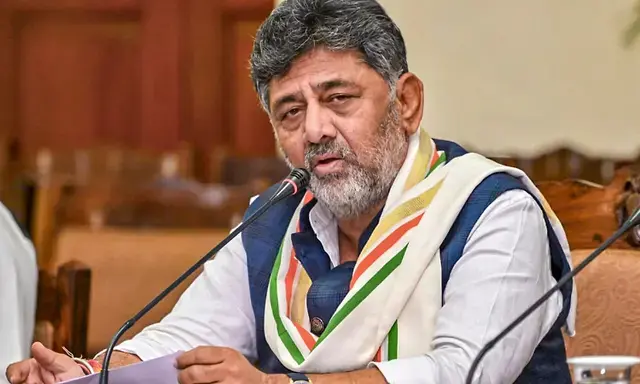
Karnataka Deputy Chief Minister DK Shivakumar has said that a commitment was made in the presence of Union Home Minister Amit Shah to protect the interests of Tamil Nadu and Puducherry, highlighting the importance of cooperation and mutual understanding among the southern states.
Shivakumar made the remarks following discussions involving leaders from the southern region, where issues related to development, regional interests and cooperation between the Centre and states came under focus.
The Karnataka Deputy Chief Minister said the discussions reflected a shared understanding that the interests of all southern states and Union Territories must be protected. He specifically referred to Tamil Nadu and Puducherry and said a commitment was made in Amit Shah’s presence regarding their concerns.
The remarks have drawn attention as leaders from southern states continue to raise issues related to federalism, resource sharing, representation and regional development.
Shivakumar Highlights Commitment Made Before Amit Shah
DK Shivakumar said that the commitment to protect the interests of Tamil Nadu and Puducherry was made during discussions attended by Union Home Minister Amit Shah.
The meeting brought together leaders and representatives to discuss issues affecting the southern region.
Shivakumar stressed that cooperation among states remains important, particularly when addressing matters that have an impact beyond individual state borders.
Southern states often face common challenges related to water resources, infrastructure, economic development and federal policies.
The Deputy Chief Minister’s statement suggested that the discussions recognised the need to consider the concerns of every state and Union Territory.
The commitment, he said, was made in the presence of Amit Shah, giving the assurance greater political significance.
Southern States Raise Common Regional Concerns
The southern region plays a major role in India’s economic development.
Tamil Nadu, Karnataka, Kerala, Andhra Pradesh and Telangana have strong contributions in sectors such as technology, manufacturing, services, agriculture and exports.
Puducherry also shares close economic and social connections with the surrounding southern states.
However, the region faces several policy and development-related challenges.
Leaders often raise concerns regarding the sharing of financial resources, infrastructure development and the balance of powers between the Centre and states.
The issue of representation has also become a subject of political discussion, particularly in connection with the future delimitation of parliamentary constituencies.
Shivakumar’s remarks reflected the importance of ensuring that the views of southern states are considered while shaping national policies.
Focus on Protecting Tamil Nadu and Puducherry’s Interests
The statement by Shivakumar specifically highlighted Tamil Nadu and Puducherry.
Tamil Nadu has frequently raised concerns on several issues, including language, federalism, resource allocation and delimitation.
The state government has argued that national policies should take into account the achievements and specific concerns of individual states.
Puducherry, as a Union Territory, also has its own administrative and development requirements.
Protecting the interests of Tamil Nadu and Puducherry, according to Shivakumar’s remarks, formed part of a broader discussion about ensuring fairness and cooperation within India’s federal structure.
The commitment made in Amit Shah’s presence suggested that these concerns were formally acknowledged during the meeting.
Amit Shah’s Role in the Southern Zonal Discussions
As Union Home Minister, Amit Shah plays an important role in coordinating between the Centre and state governments.
Meetings involving the southern states provide an opportunity for leaders to discuss regional issues directly with representatives of the Union government.
Such platforms can help governments raise concerns and seek solutions through dialogue.
Shivakumar’s reference to Amit Shah’s presence highlighted the significance of the commitment.
The Union government often acts as an important coordinating authority when issues involve multiple states.
The discussions can also help reduce misunderstandings and encourage cooperation on matters of common interest.
Cooperative Federalism Takes Centre Stage
The statement by the Karnataka Deputy Chief Minister also brought the idea of cooperative federalism into focus.
India’s federal structure requires the Centre and the states to work together on several important issues.
States have different economic strengths, geographical conditions and social needs.
A policy that benefits one region may affect another differently.
For this reason, state governments often seek greater consultation before major national decisions are implemented.
The commitment to protect the interests of Tamil Nadu and Puducherry reflects the broader demand for a cooperative approach.
Cooperative federalism does not mean that every state will agree on every issue.
Instead, it requires governments to discuss differences and work towards solutions that balance national and regional interests.
Delimitation Remains an Important Political Issue
One of the major issues discussed by several southern leaders in recent months has been the proposed future delimitation of parliamentary constituencies.
Southern states have expressed concerns that states with better population control could lose relative political representation if parliamentary seats are redistributed mainly on the basis of population.
Several southern governments have argued that states should not face political disadvantages for successfully implementing family planning and population control measures.
Tamil Nadu has been among the states that have strongly raised these concerns.
The issue has created a broader debate about representation and the future structure of Parliament.
Although Shivakumar’s statement referred to protecting the interests of Tamil Nadu and Puducherry, it comes amid this wider political discussion.
Importance of Regional Unity
The southern states have often worked together on issues where they share common interests.
Regional cooperation can strengthen their ability to raise concerns before the Centre.
At the same time, each state also has its own political priorities.
Shivakumar’s remarks suggested that dialogue and mutual understanding remain essential.
A united approach does not necessarily require identical positions on every matter.
However, states can cooperate on issues that affect the region collectively.
Infrastructure, water management, economic growth and representation are among the areas where greater coordination may prove useful.
The discussions involving Amit Shah provided an opportunity for southern leaders to present their perspectives.
Tamil Nadu’s Role in Southern Regional Politics
Tamil Nadu remains one of the most politically and economically significant states in southern India.
The state has a strong manufacturing base and contributes significantly to India’s economy.
Its government has also taken a vocal position on questions of state autonomy and federalism.
Tamil Nadu leaders have frequently argued that the Centre should respect the rights and interests of states.
The state’s concerns have gained wider support from leaders in other parts of southern India on several issues.
Shivakumar’s statement reflects this broader political context.
His emphasis on protecting Tamil Nadu’s interests indicates the importance of cooperation among southern states when dealing with national policy matters.
Puducherry’s Concerns Also Receive Attention
Puducherry was also specifically mentioned in Shivakumar’s remarks.
The Union Territory has a unique administrative structure and close links with Tamil Nadu and other southern states.
Its development needs and political concerns can differ from those of larger states.
Including Puducherry in the discussions reflects the need to consider smaller regions when addressing broader questions of development and representation.
The commitment to protect the interests of Tamil Nadu and Puducherry suggests that regional cooperation should include both large states and smaller Union Territories.
Balanced development requires attention to the needs of every part of the country.
Centre-State Dialogue Remains Important
Meetings involving Union ministers and state leaders remain important for maintaining communication.
Political differences can sometimes create tension between the Centre and individual state governments.
However, direct discussions can help leaders explain their concerns and explore possible solutions.
Shivakumar’s statement suggested that the meeting created an opportunity for such dialogue.
The presence of Amit Shah gave state leaders a direct platform to discuss regional issues with the Union government.
Regular communication can help prevent disagreements from becoming larger political conflicts.
It can also support the development of policies that take regional concerns into account.
Looking Ahead
DK Shivakumar’s statement that a commitment was made in Amit Shah’s presence to protect the interests of Tamil Nadu and Puducherry has highlighted the continuing importance of regional concerns in India’s federal system.
The remarks came amid wider discussions about development, representation and the relationship between the Centre and the southern states.
The commitment to protect the interests of Tamil Nadu and Puducherry also reflects the importance of consultation and cooperation when addressing issues that affect different regions of the country.
Southern states are expected to continue raising their concerns on matters ranging from economic development to future political representation.
The discussions involving Amit Shah provide an important platform for these issues to be addressed through dialogue.
As debates over federalism and regional interests continue, the focus will remain on whether commitments made during such meetings translate into concrete policies and decisions that address the concerns of Tamil Nadu, Puducherry and other southern states.