


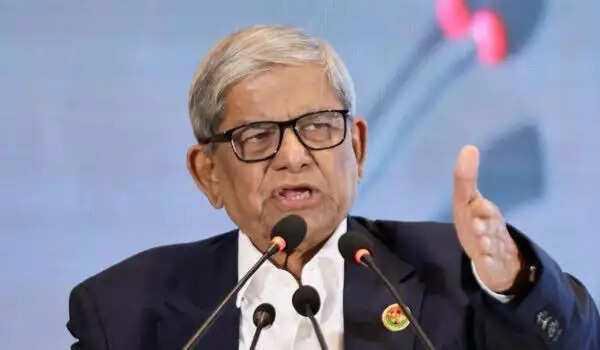
Veteran Bangladesh Nationalist Party (BNP) leader Mirza Fakhrul Islam Alamgir has been elected as Bangladesh’s 23rd president after securing a decisive victory in a parliamentary election. The 78-year-old politician defeated retired army officer and opposition candidate Oli Ahmed, marking a major new chapter in Bangladesh’s changing political landscape.
Mirza Fakhrul secured 255 votes, while Oli Ahmed received 88 votes in the election held at the Jatiya Sangsad, Bangladesh’s Parliament. The Election Commission later formally declared him elected, bringing an end to the presidential race that followed the resignation of former president Mohammed Shahabuddin last month on health grounds.
The election is particularly significant because it was Bangladesh’s first contested presidential election in decades. Previous presidential contests had largely been uncontested, with no opposition candidate challenging the nominee backed by the ruling party.
Mirza Fakhrul Wins With 255 Votes
The parliamentary vote confirmed the expected victory of the senior BNP leader.
A total of 343 valid votes were cast during the election. Mirza Fakhrul Islam Alamgir received 255 votes, while his opponent Oli Ahmed secured 88.
Oli Ahmed, a retired army colonel and chairman of the Liberal Democratic Party, contested as the candidate backed by an 11-party opposition alliance led by Bangladesh Jamaat-e-Islami.
Chief Election Commissioner AMM Nasir Uddin, who also served as the returning officer for the election, announced the result after the voting process concluded.
The Election Commission subsequently issued a gazette notification formally declaring Mirza Fakhrul as Bangladesh’s new president.
His victory gives the BNP one of the country’s highest constitutional offices following the party’s return to power earlier in 2026.
A Veteran BNP Leader Takes the Top Constitutional Post
Mirza Fakhrul Islam Alamgir is one of the Bangladesh Nationalist Party’s most experienced and recognisable leaders.
He served as the party’s secretary-general for years and became one of its most prominent voices during the period when the BNP remained in opposition under former Prime Minister Sheikh Hasina’s government.
During that time, he faced repeated arrests and several legal cases while leading and representing the BNP’s political movement.
Alamgir’s political journey, however, began long before his rise within the BNP.
He studied economics at the University of Dhaka and was involved in student politics during his younger years. He also worked as a teacher before becoming fully involved in national politics.
Over the years, he rose steadily through the BNP’s ranks and became one of the party’s most influential leaders.
Now, after decades in active politics, he has moved from a senior party position to Bangladesh’s highest constitutional office.
First Contested Presidential Election in Decades
The election of Mirza Fakhrul is also historically significant for Bangladesh.
It marked the first contested presidential election in approximately 35 years, with more than one candidate entering the race for the largely ceremonial position.
In previous presidential elections, opposition parties often did not field candidates against the ruling party’s nominee.
This time, however, the contest saw Alamgir face Oli Ahmed, resulting in a parliamentary vote between two candidates.
Although the BNP and its allies hold a strong majority in Parliament, the election attracted attention because it represented a return to a competitive presidential contest.
The BNP’s parliamentary strength meant that Alamgir entered the election as the clear favourite.
His eventual 255-88 victory reflected the ruling party’s dominant position in the current Parliament.
Election Followed Former President’s Resignation
The presidential election became necessary after former president Mohammed Shahabuddin resigned before completing his five-year term.
Shahabuddin stepped down in July, citing health reasons.
His resignation created a vacancy in the office and triggered the constitutional process for electing a new president.
Shahabuddin had been elected president in 2023 when Sheikh Hasina’s Awami League was in power.
However, Bangladesh’s political landscape changed dramatically after Hasina’s government was removed from power in 2024.
The country later went through an interim period before the BNP returned to power following the February 2026 general election.
The election of Mirza Fakhrul now represents another major development in Bangladesh’s ongoing political transition.
BNP’s Return to Power Strengthens Its Position
The BNP returned to power after winning the February 12, 2026, general election.
The party and its allies secured a two-thirds majority in Parliament, strengthening their position within the country’s political system.
The election victory also brought Tarique Rahman to office as prime minister.
With Mirza Fakhrul now elected president, the BNP has further strengthened its presence at the highest levels of the state.
However, Bangladesh follows a parliamentary system, and executive authority remains primarily with the prime minister and the cabinet.
The presidency is largely a ceremonial constitutional role, although the president serves as the country’s head of state and commander-in-chief of the armed forces.
The new political arrangement places two senior figures associated with the BNP-led government in the country’s top constitutional positions.
From Opposition Voice to President
For Mirza Fakhrul, the presidency marks a dramatic shift in his political career.
For years, he was best known as one of the BNP’s leading opposition voices.
He represented the party during a period of intense political competition and frequently spoke on issues related to democracy, elections and government policies.
His long experience made him one of the BNP’s most important national leaders.
When the party returned to power in 2026, his political standing remained strong.
The decision to nominate him for the presidency reflected the confidence of the BNP leadership in one of its most senior figures.
Following his nomination, he stepped down from his organisational responsibilities within the party as he prepared to take up the constitutional office.
Parliamentary Vote Draws Attention
The presidential election was conducted in the Jatiya Sangsad, where Members of Parliament voted to elect the country’s next president.
The result was announced after the completion of the voting and counting process.
Following the declaration, lawmakers congratulated the newly elected president.
Prime Minister Tarique Rahman congratulated Mirza Fakhrul, while opposition leaders also greeted him after the result was announced.
The atmosphere inside Parliament reflected the importance of the occasion.
The election came at a time when Bangladesh continues to undergo major political changes following the fall of the previous Awami League government and the BNP’s return to power.
For the BNP, the election represents another significant step after its victory in the February general election.
What the Presidency Means in Bangladesh
The president of Bangladesh serves as the country’s head of state.
The position is largely ceremonial under the country’s parliamentary system, while executive powers are mainly exercised by the prime minister and the cabinet.
However, the office remains constitutionally important.
The president serves as the commander-in-chief of Bangladesh’s armed forces and performs key constitutional functions.
The office can also become particularly significant during periods of political uncertainty or transition.
Mirza Fakhrul’s election therefore represents both a personal milestone and an important political development for Bangladesh.
His experience as a senior politician and his long association with the BNP will bring decades of political experience to the presidency.
A Major Political Transition for Bangladesh
The election of Mirza Fakhrul comes during a period of major political transition.
Bangladesh has witnessed significant changes since 2024, when Sheikh Hasina’s government was removed from power.
The BNP subsequently returned to government after the 2026 general election, changing the balance of power in the country.
Mirza Fakhrul’s rise to the presidency adds another important chapter to this transition.
A leader who spent years as a prominent opposition figure has now become the country’s head of state.
His election also demonstrates the BNP’s strong position in Parliament following its recent electoral victory.
The change is likely to remain closely watched both within Bangladesh and across South Asia.
Looking Ahead
The election of Mirza Fakhrul Islam Alamgir as Bangladesh’s 23rd president marks a significant moment in the country’s political journey.
The veteran BNP leader secured 255 votes in Parliament, defeating opposition candidate Oli Ahmed, who received 88 votes. The Election Commission later formally confirmed his election through an official gazette notification.
The result also marked Bangladesh’s first contested presidential election in decades and followed the resignation of former president Mohammed Shahabuddin.
For Mirza Fakhrul, the victory represents the culmination of a long political career that took him from student politics and teaching to the leadership of the BNP and now to the presidency.
As Mirza Fakhrul Islam Alamgir elected president becomes one of the defining political developments of 2026, attention will now turn to his formal assumption of office and the role he will play during Bangladesh’s latest period of political transition.