

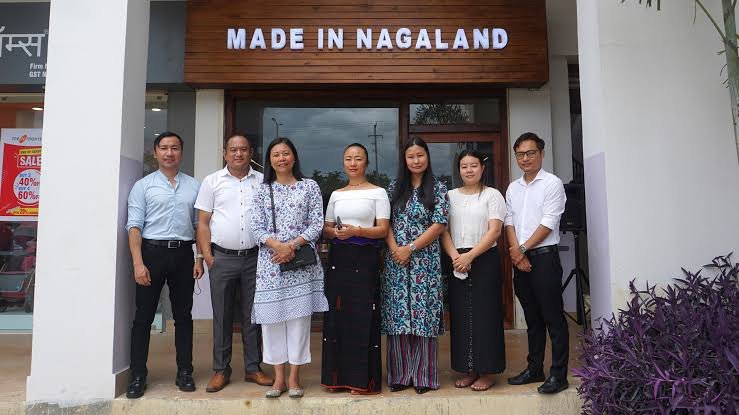
The Made in Nagaland Centre Chümoukedima was officially inaugurated on September 8 at YouthNet, 5th Mile, Chümoukedima, creating a dedicated platform for Naga entrepreneurs and locally produced goods. Nagaland Governor Nand Kishore Yadav inaugurated the centre, which aims to connect indigenous products with wider markets. Moreover, the facility seeks to strengthen entrepreneurship, preserve traditional skills and create sustainable economic opportunities.
Nagaland Olympic and Paralympic Games 2026 Set for November
Made in Nagaland Centre Chümoukedima Expands Market Access
The Made in Nagaland Centre Chümoukedima has been established by YouthNet as the third centre under the Made in Nagaland initiative. The facility provides a dedicated space where locally produced goods can be showcased, promoted and sold.
According to the Nagaland Department of Information and Public Relations, the initiative has grown considerably since its first one-stop platform launched in 2018. It began with 81 entrepreneurs and has expanded to around 350 entrepreneurs and 600 products from across the state.
Meanwhile, the newly inaugurated centre currently features more than 450 products from 95 entrepreneurs, according to MorungExpress. These include traditional shawls and mekhelas, apparel, handicrafts, jewellery, food products, soaps, footwear and souvenirs.
Therefore, the Chümoukedima centre provides producers with a physical marketplace while also helping consumers discover products made within Nagaland.
Governor Yadav said the centre could help bridge the gap between local producers and larger markets. Furthermore, he highlighted indigenous crafts, textiles, agricultural products, food traditions and artistic expressions as areas with potential to generate sustainable livelihoods when producers receive stronger market access.
Made in Nagaland Centre Chümoukedima Supports Indigenous Skills
The new facility also carries significance for preserving Nagaland’s traditional skills. Many local products combine cultural knowledge with contemporary designs, creating opportunities for artisans to turn heritage-based skills into sustainable economic activities.
Governor Yadav emphasised that traditional knowledge must remain economically viable. Consequently, stronger demand for indigenous products can help create incentives for artisans and entrepreneurs to continue developing traditional crafts.
Additionally, the Governor said the Made in Nagaland label should become associated with authenticity, quality, innovation, sustainability and trust. He called for stronger quality control, standardisation, packaging, branding and product consistency.
These areas can become increasingly important as Naga products seek customers outside the state. Moreover, reliable supply chains and digital commerce can help small producers reach consumers who cannot visit physical stores.
The initiative also has a particular focus on young entrepreneurs, women, MSMEs and rural communities. Therefore, the centre could provide an important link between grassroots producers and larger commercial markets.
YouthNet founder and Advisor for Industries and Commerce Hekani Jakhalu said the organisation was established in 2006 to encourage young people to pursue entrepreneurship and create employment opportunities. She also highlighted the importance of finance, branding, packaging and infrastructure for local businesses.
Made in Nagaland Centre Chümoukedima Connects Producers With Wider Markets
Chümoukedima’s location gives the centre an additional strategic advantage. The Governor described the area as an important gateway to Nagaland because of its proximity to Dimapur. Consequently, the centre can provide visibility to local products among residents, visitors and buyers travelling through the region.
However, the initiative extends beyond a conventional retail outlet. Governor Yadav said the centre could function as a meeting point between producers and consumers, rural enterprises and urban markets, as well as traditional knowledge and contemporary design.
Furthermore, YouthNet Director and Chief Functionary Nuneseno Chase said the initiative was working to create new pathways to markets for local entrepreneurs. The organisation has also partnered with the Nagaland Handloom and Handicrafts Development Corporation to promote Naga products through the Nagaland Emporium in New Delhi.
The initiative has also expanded into digital marketplaces. According to MorungExpress, Made in Nagaland products are being made available through platforms including Amazon, Flipkart and ONDC.
Therefore, the physical centre forms part of a wider strategy to improve market access rather than serving as an isolated retail facility.
The Nagaland government has also highlighted access to finance through the Raising and Accelerating MSME Performance scheme, or RAMP, as one avenue for supporting entrepreneurs. Additionally, assistance in branding and packaging can help local businesses prepare products for broader markets.
Made in Nagaland Centre Chümoukedima Signals Inclusive Growth
The inauguration has placed entrepreneurship and indigenous products at the centre of Nagaland’s broader economic development conversation. Governor Yadav said the initiative could become an engine of inclusive growth by connecting local talent, traditional skills and products with national and international markets.
Moreover, the initiative reflects an effort to make entrepreneurship more accessible to people outside conventional urban business networks. Rural producers, artisans, farmers and small enterprises can potentially benefit when market access improves.
At the same time, wider market access brings greater expectations around quality, consistency and supply. Therefore, continued support in product development, finance, technology, packaging and digital marketing will remain important.
The Governor called for collaboration between government departments, financial institutions, educational institutions, private enterprises, civil society and YouthNet. Such coordination could help entrepreneurs overcome challenges that individual businesses may struggle to address alone.
Meanwhile, the centre also carries a cultural dimension. Traditional textiles, handicrafts, food products and artistic expressions can reach new consumers while retaining their connection to Naga heritage.
The ultimate impact will depend on how effectively the centre converts visibility into sustained business opportunities. More entrepreneurs reaching new markets, stronger livelihoods and greater economic participation among women and young people could demonstrate the initiative’s long-term value.
Therefore, the Made in Nagaland Centre Chümoukedima represents more than a new commercial facility. It provides another platform for indigenous products, entrepreneurship and cultural heritage to connect with expanding markets.
Conclusion
The Made in Nagaland Centre Chümoukedima marks a significant expansion of YouthNet’s effort to strengthen market opportunities for Naga entrepreneurs. With hundreds of products already connected to the wider initiative, the new centre provides a dedicated platform for indigenous crafts, textiles, food products and other locally made goods. Moreover, continued support in finance, branding, quality control and digital commerce could help local enterprises reach markets beyond Nagaland.
FAQs
1. What is the Made in Nagaland Centre Chümoukedima?
The Made in Nagaland Centre Chümoukedima is a YouthNet-established platform for showcasing, promoting and retailing products made by Naga entrepreneurs.
2. When was the centre inaugurated?
Nagaland Governor Nand Kishore Yadav inaugurated the centre on September 8, 2026, at YouthNet, 5th Mile, Chümoukedima.
3. How many products are currently displayed at the centre?
MorungExpress reported that the centre currently features more than 450 products from 95 entrepreneurs across Nagaland.
4. Who benefits from the Made in Nagaland Centre Chümoukedima?
The initiative is intended to support local entrepreneurs, artisans, women, MSMEs and rural producers by improving their access to consumers and wider markets.
5. How can the Made in Nagaland Centre Chümoukedima support traditional artisans?
By providing market access for indigenous crafts and traditional products, the centre can help make traditional skills economically viable while connecting artisans with contemporary consumers.