


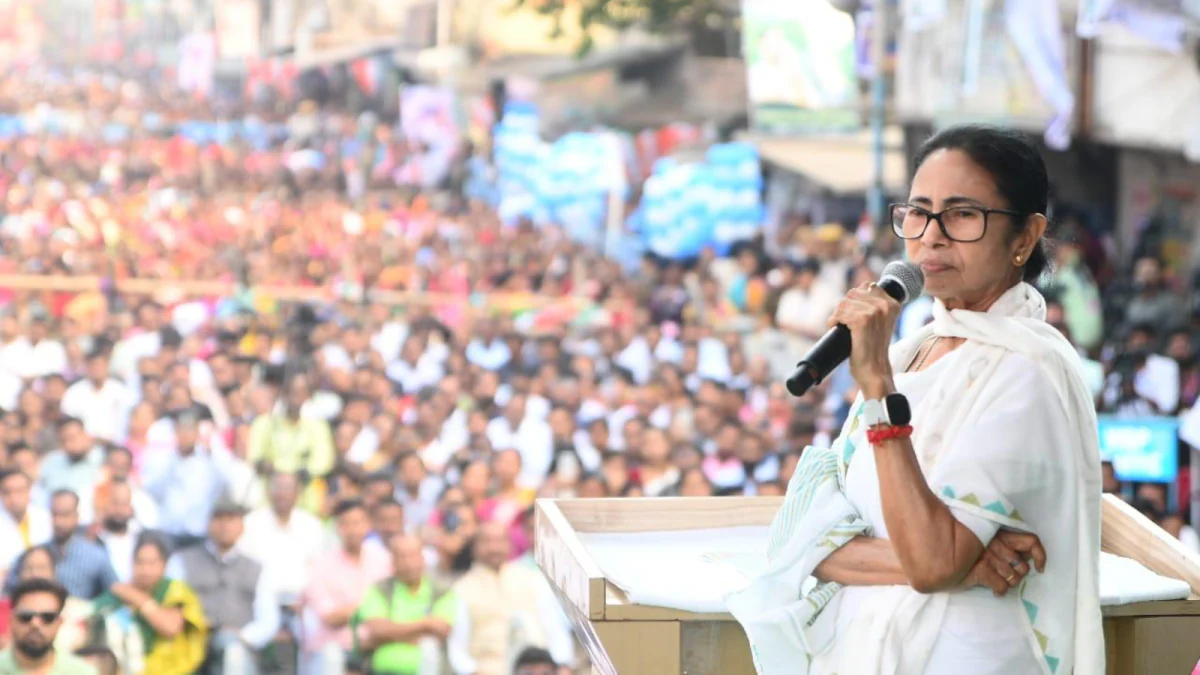
Mamata bulldozer politics criticism intensified after West Bengal Chief Minister Mamata Banerjee strongly condemned recent demolition drives and accused certain administrations of promoting what she described as “bulldozer politics.” Meanwhile, the Trinamool Congress leader warned against the increasing use of demolition campaigns as a political and administrative tool in different parts of the country. Her remarks triggered sharp political reactions as debates surrounding eviction drives, urban demolitions, and law enforcement actions continued expanding nationwide. Additionally, opposition leaders and ruling party representatives exchanged accusations over governance methods, constitutional rights, and public accountability.
The statement emerged amid growing national attention on demolition operations linked to encroachment removal, anti-crime action, and civic enforcement measures in several states. Furthermore, political analysts observed that the issue has increasingly become a major point of confrontation between opposition parties and governments supporting aggressive administrative crackdowns.
Northeast Thunderstorm Alert Triggers High Vigil
Exclusive News: Assam UCC Bill Push Ahead Of Assembly
Mamata Banerjee Targets Demolition Campaigns
West Bengal Chief Minister Mamata Banerjee publicly criticized the use of demolition drives during recent political remarks addressing governance and administrative conduct. Mamata bulldozer politics criticism therefore quickly became a major political talking point across national and regional media discussions.
Meanwhile, Banerjee argued that governments should prioritize lawful procedures and humanitarian considerations instead of relying on forceful demolition-based actions. Additionally, she alleged that certain administrations are using bulldozer operations to create fear and exert political pressure in sensitive communities.
The Trinamool Congress chief also emphasized the importance of constitutional safeguards and due legal process during civic enforcement activities. Furthermore, party leaders supporting her remarks claimed that arbitrary demolition actions may disproportionately affect economically vulnerable populations.
Earlier, demolition drives conducted in different states generated controversy regarding legality, rehabilitation measures, and procedural transparency. Consequently, Banerjee’s comments added further momentum to the broader political debate surrounding administrative enforcement policies.
At the same time, ruling party supporters in several states defended demolition operations as necessary for maintaining law, order, and urban regulation.
Political Debate Intensifies Nationwide
Political reactions escalated immediately after the West Bengal Chief Minister criticized so-called bulldozer politics. Mamata bulldozer politics criticism therefore expanded into a wider national confrontation involving governance practices, law enforcement authority, and civil rights concerns.
Meanwhile, opposition parties aligned with Banerjee accused certain state administrations of using demolition drives selectively against specific groups or communities. Additionally, several leaders demanded stronger judicial oversight and accountability during large-scale eviction or demolition campaigns.
Ruling party representatives, however, rejected the allegations and argued that civic authorities must take strict action against illegal encroachments, unauthorized construction, and criminal networks. Furthermore, government supporters maintained that lawful demolition procedures remain an important part of administrative governance.
Political analysts noted that bulldozer-related rhetoric has increasingly emerged as a symbolic issue in Indian political discourse. Consequently, statements involving demolition drives often trigger intense reactions across party lines and public platforms.
At the same time, constitutional experts emphasized that all administrative actions must operate within established legal frameworks and judicial guidelines.
Demolition Drives Continue Generating Controversy
Demolition campaigns in several states have repeatedly triggered public debate regarding due process, rehabilitation, and enforcement methods. Mamata bulldozer politics criticism therefore resonated strongly among activists, legal observers, and civil society organizations.
Meanwhile, housing rights groups argued that eviction and demolition operations should include transparent notice procedures, rehabilitation planning, and proper legal review mechanisms. Additionally, social organizations expressed concern regarding the humanitarian impact of sudden demolitions on low-income families and informal settlements.
Several legal experts highlighted that courts have periodically examined the legality and procedural validity of demolition operations linked to encroachment and law enforcement cases. Furthermore, constitutional observers stressed the importance of balancing urban regulation with individual rights and administrative fairness.
Earlier, multiple high-profile demolition operations across India attracted national media attention and generated political controversy. Consequently, the issue continues influencing broader discussions involving urban governance and state authority.
However, supporters of strict enforcement policies argued that illegal construction and encroachment create major governance, environmental, and public safety challenges requiring decisive administrative action.
Urban Governance and Enforcement Under Spotlight
The ongoing political debate also renewed attention on urban planning and civic administration challenges across Indian cities. Mamata bulldozer politics criticism therefore intersected with larger concerns involving housing, infrastructure management, and land regulation.
Meanwhile, urban development experts observed that rapidly growing cities frequently struggle with unauthorized settlements, overcrowding, and land-use conflicts. Additionally, administrative agencies often face pressure to remove encroachments affecting roads, drainage systems, and public infrastructure.
Several economists noted that urban eviction and demolition disputes may significantly affect economically vulnerable communities dependent on informal housing and local employment networks. Furthermore, policy researchers recommended stronger rehabilitation frameworks and participatory urban planning strategies.
Government officials in states conducting demolition drives argued that enforcement operations remain necessary to protect public land and maintain civic order. Consequently, authorities continue defending administrative action against illegal structures and encroachments.
At the same time, human rights advocates called for balanced policies combining enforcement with social protection measures for displaced residents.
Opposition and Ruling Parties Exchange Accusations
Political confrontation intensified as opposition and ruling parties exchanged allegations following Mamata Banerjee’s remarks. Mamata bulldozer politics criticism therefore deepened existing tensions involving governance narratives and public administration strategies.
Meanwhile, Trinamool Congress leaders accused rival governments of promoting fear-based politics through demolition campaigns and aggressive policing methods. Additionally, several opposition figures claimed that democratic governance requires greater accountability and sensitivity during administrative operations.
Ruling party leaders, however, countered that opposition criticism attempts to shield illegal encroachments and obstruct lawful enforcement action. Furthermore, supporters of demolition drives argued that strict governance measures remain necessary to combat organized land occupation and unauthorized construction.
Political commentators observed that the issue may continue influencing national political rhetoric ahead of future elections and policy debates. Consequently, bulldozer-related narratives are increasingly becoming symbolic themes in broader ideological confrontations.
At the same time, legal scholars stressed that public trust in governance depends heavily on transparent procedures and equal application of laws.
Public Reactions Reflect Divided Opinion
Public response to the controversy remained sharply divided across social and political circles. Mamata bulldozer politics criticism therefore generated extensive debate on social media platforms, television discussions, and civic forums.
Meanwhile, supporters of Banerjee’s remarks argued that governments should prioritize legal safeguards and rehabilitation instead of aggressive enforcement tactics. Additionally, several civic activists welcomed calls for greater scrutiny of demolition procedures and administrative accountability.
Others, however, defended strict anti-encroachment operations and argued that illegal structures often create safety hazards, traffic disruption, and environmental concerns. Furthermore, some residents affected by unauthorized occupation supported stronger civic enforcement measures in urban areas.
Several observers noted that public opinion frequently varies depending on local context, political affiliation, and the nature of specific demolition cases. Consequently, the controversy continues reflecting broader national disagreements regarding governance and state authority.
At the same time, policy experts emphasized the importance of institutional balance between enforcement powers and constitutional protections.
Conclusion
Mamata bulldozer politics criticism intensified after West Bengal Chief Minister Mamata Banerjee strongly condemned recent demolition drives and accused certain administrations of promoting aggressive enforcement-based governance. Meanwhile, political parties, legal experts, and civic organizations continued debating issues involving due process, urban regulation, and constitutional safeguards. The controversy further highlighted growing national divisions regarding demolition campaigns and anti-encroachment policies across India. Ultimately, the debate may continue shaping political discourse surrounding governance, civic administration, and public accountability.
FAQs
What did Mamata Banerjee criticize?
She criticized demolition drives and described them as examples of rising “bulldozer politics.”
Why is Mamata bulldozer politics criticism significant?
The remarks intensified national debate regarding demolition policies, governance methods, and constitutional safeguards.
What concerns did opposition parties raise?
Opposition leaders questioned procedural fairness, rehabilitation measures, and selective enforcement during demolition operations.
How did ruling parties respond?
Supporters of demolition drives defended them as necessary for maintaining civic order and removing illegal structures.
Why are demolition drives controversial?
Critics argue that some operations may affect vulnerable communities and require stronger legal safeguards and transparency.
Could the issue remain politically important?
Yes, analysts believe the debate may continue influencing national political and governance discussions.