


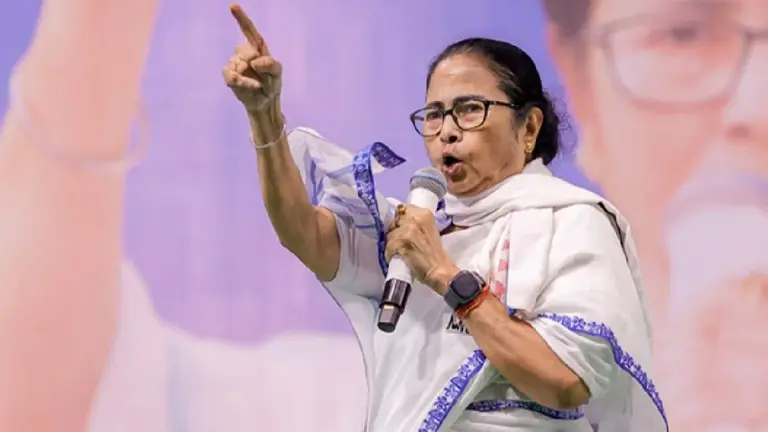
Trinamool Congress (TMC) chief Mamata Banerjee on Thursday reacted to the resignation of actor-politician Koel Mallick from the Rajya Sabha, telling party leaders who are “under pressure” to leave before the party’s July 21 Shaheed Diwas rally if they no longer wished to remain with the organisation. Her remarks came amid a continuing wave of resignations and defections that has put the party under political scrutiny following recent electoral setbacks.
Speaking to party workers and leaders, Banerjee said she respected individual decisions but made it clear that those unwilling to stay should make up their minds before the annual July 21 programme, one of the TMC’s most significant political events.
‘Those Under Pressure Can Leave’
Addressing the ongoing exodus, Banerjee said several leaders were facing external pressure and should take whatever decision they considered appropriate before the Shaheed Diwas rally.
“Those who are under pressure, please take whatsoever decision you want and go wherever you want before July 21,” she said, indicating that the party would move forward with those committed to its ideology and leadership.
Her statement was widely interpreted as a direct message to party members contemplating resignation or switching political allegiance.
Koel Mallick’s Exit Adds to TMC’s Challenges
Koel Mallick’s resignation from the Rajya Sabha marks another setback for the Trinamool Congress, which has witnessed several high-profile departures in recent weeks.
According to reports, Mallick tendered her resignation after meeting Vice President and Rajya Sabha Chairman C.P. Radhakrishnan. Her exit has intensified discussions about internal dissatisfaction and political realignments within the party.
Banerjee acknowledged that Mallick had informed the party in advance through email regarding her meeting and stated that she respected her decision despite the political implications.
July 21 Holds Special Importance for TMC
The July 21 Shaheed Diwas rally occupies a central place in the Trinamool Congress’s political calendar.
Observed every year, the event commemorates the 13 Youth Congress workers who lost their lives during a 1993 protest led by Mamata Banerjee. Over the years, it has evolved into the TMC’s largest annual political gathering, showcasing the party’s organisational strength and setting its political agenda.
By asking dissatisfied leaders to leave before July 21, Banerjee appeared keen to ensure that the event projects unity and commitment among party members.
TMC Faces Continuing Political Turbulence
The Trinamool Congress has been grappling with a series of resignations and defections following its recent political setbacks.
Political observers believe the departures have raised questions about internal cohesion within the party, while the leadership maintains that many leaders are leaving due to external pressures rather than ideological differences.
Banerjee has repeatedly asserted that the party will continue to function with dedicated workers despite the ongoing exits.
Mamata Signals Firm Stand
Rather than attempting to persuade dissenting leaders to remain, Banerjee adopted a firm stance, suggesting that only committed members should continue with the party.
Her remarks indicate that the TMC leadership intends to focus on rebuilding organisational strength ahead of future political battles while avoiding prolonged uncertainty over potential defections.
Political analysts believe the statement was aimed at sending a clear message that the party is prepared to move forward despite recent resignations.
Attention Turns to Shaheed Diwas Rally
With the July 21 Shaheed Diwas programme approaching, attention is now focused on how the Trinamool Congress responds to the recent wave of resignations.
Mamata Banerjee’s comments following Koel Mallick’s Rajya Sabha exit underscore the party leadership’s determination to project unity while drawing a line under ongoing speculation surrounding internal dissent. As preparations for the annual rally continue, the event is expected to serve as an important test of the party’s organisational strength and political messaging in the wake of recent developments.