

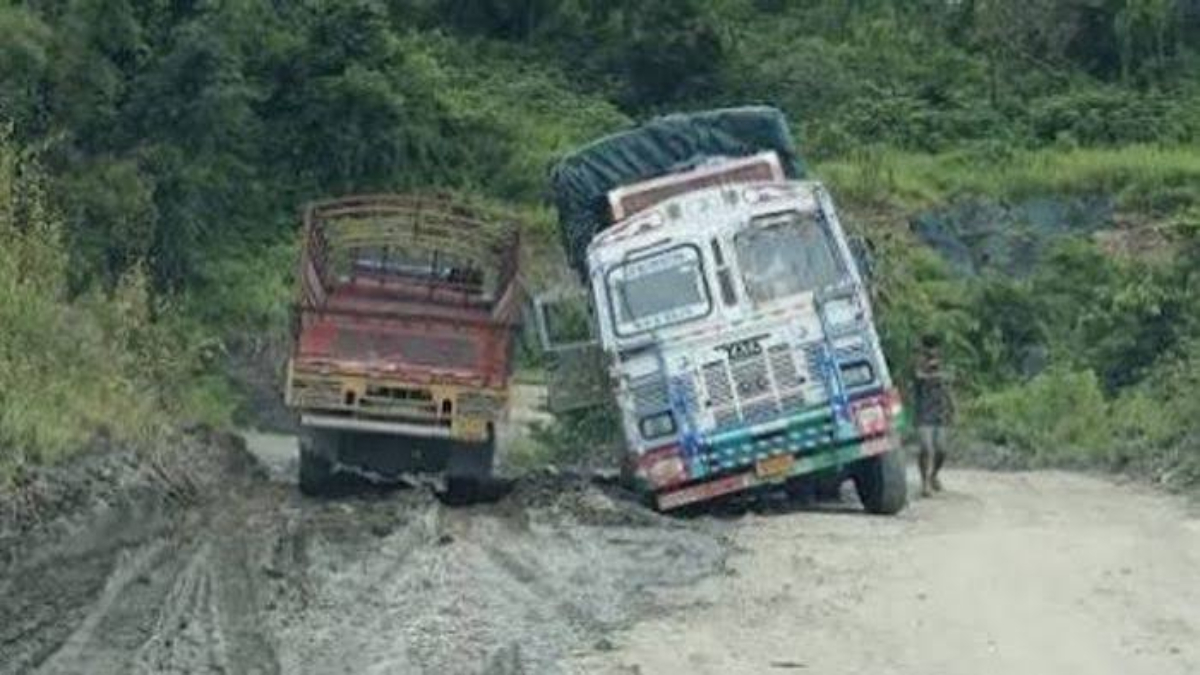
Manipur-bound heavy vehicles have been temporarily restricted from entering Kohima district after severe road damage rendered several stretches of key highways unsafe for heavy traffic. The Kohima district administration imposed the restriction with immediate effect, citing active sinking zones, landslides and road subsidence along important routes connecting Nagaland with Manipur.
The latest restrictions are expected to affect freight movement between Nagaland and Manipur, particularly along the Kohima-Mao corridor. Authorities have advised affected transporters to use alternative routes where permitted, while restoration work is carried out on damaged sections.
Manipur-bound heavy vehicles diverted through Peren
Kohima District Magistrate B Henok Buchem said all heavy vehicles travelling towards Manipur have been prohibited from entering Kohima district until further orders. Instead, transporters have been advised to divert through Peren district, subject to restrictions and regulations imposed by the competent authorities there.
The decision followed a joint inspection involving government officials, police personnel, truck owners, drivers and village representatives. The inspection identified critical damage between the New Capital Complex Area, also known as Phizo Hill Junction, and the Kidima-Pudunamei Junction.
The administration said the Kohima Bypass Package-3 stretch has developed active sinking zones, resulting in substantial road subsidence. The affected section has become unserviceable for vehicular traffic, with restoration work expected to take at least 15 days.
Road damage disrupts NH-29 and NH-2
The restrictions come amid wider deterioration of Nagaland’s highway network during the monsoon. The NH-29 stretch between DBS and the BSF Camp at Keyake has suffered extensive damage at multiple locations because of active sinking zones. Authorities have declared the section unserviceable for heavy motor vehicles.
A major landslide on August 11 further worsened the situation along the Kohima-Mao section of NH-2. The Phesama Sinking Zone was severely damaged, prompting officials to declare the affected portion unfit for both vehicular and pedestrian movement.
For Manipur-bound heavy vehicles, the restrictions are therefore aimed at preventing accidents and limiting further stress on already weakened roads and structures.
Light vehicles allowed on diversion route
While heavy traffic has been restricted, light motor vehicles can continue operating in both directions through the Phesama-Kisama/Kigwema diversion route via Rhododendron Resort. Their movement remains subject to road conditions, weather and directions issued by the authorities.
The administration has also warned pedestrians not to enter or cross the damaged sections. Active landslides, road subsidence and unstable terrain pose significant risks, particularly during periods of heavy rainfall.
The latest order adds to a series of restrictions introduced on vulnerable Nagaland highways this year. In May, the Kohima administration suspended the movement of heavy vehicles with 10 wheels and above on the Kohima-Mao section of NH-2 after structural assessments identified weak bridges at several locations.
The restriction was later revised to apply specifically to heavy vehicles above 10 wheels, partly to facilitate essential services.
Transporters face continuing challenges
The highway restrictions have raised concerns among truckers because NH-2 and NH-29 are important transport corridors for movement between Nagaland, Manipur and other parts of the Northeast.
During a July meeting, the North East Federation of Truck Owners and Drivers Union urged the Kohima administration to review restrictions and suggested regulated movement of larger trucks under controlled conditions. The federation also proposed joint monitoring, mandatory weighing of vehicles and regular updates on bridge repairs.
Authorities, however, have maintained that temporary restrictions are necessary during the monsoon to protect road infrastructure and ensure public safety.
The latest curbs on Manipur-bound heavy vehicles underline the vulnerability of Nagaland’s highways to prolonged rainfall, landslides and sinking road sections. With restoration expected to take at least 15 days on one of the critically damaged stretches, transport operators will have to follow diversion arrangements and administrative directions until normal movement can safely resume.
The situation also highlights the need for faster repairs, stronger highway infrastructure and effective monsoon preparedness across the region, as road connectivity remains vital for the movement of people, essential goods and commercial freight between Nagaland and Manipur.
Powerful Gen Sagat Singh High-Altitude Football Tournament Kicks Off in Sikkim at 13,000 Feet