

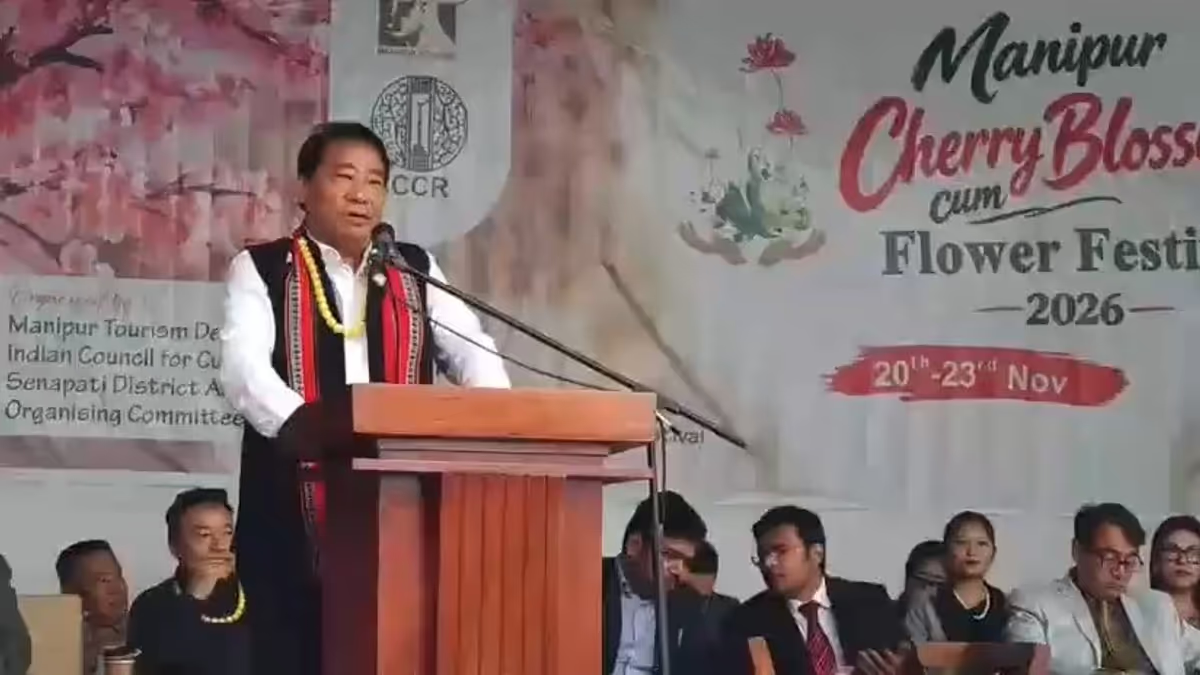
The four-day Manipur Cherry Blossom cum Flower Festival 2026 began at Motu Tubvii, Mao Gate, in Senapati district on November 20. Deputy Chief Minister Losii Dikho inaugurated the event under the theme “Blossoms of Unity and Culture”. The festival combines floral exhibitions, indigenous crafts, traditional food and cultural performances while promoting local livelihoods through floriculture. However, this year’s celebration also carries a wider message. Addressing the gathering, Dikho appealed to communities across Manipur to work towards peace, reconciliation and normalcy, stressing that development depends on a peaceful environment.
Mizoram Student Protest Targets MPSC Chairman
Losii Dikho Inaugurates Four-Day Festival at Mao Gate
Deputy Chief Minister Losii Dikho formally opened the festival at Motu Tubvii, Mao Gate, near the Manipur-Nagaland border.
The event brought together government representatives, community leaders, local entrepreneurs, artisans and visitors. Art and Culture and Tourism Minister Khuraijam Loken Singh and government spokesperson Thokchom Radheshyam Singh also attended.
Chief Secretary Rajeev Singh Thakur joined the programme as the special guest. Former Outer Manipur MP Lorho S. Pfoze and Chief Minister’s wife Yumnam Joybala Devi were among the other dignitaries.
The programme began with a moment of silence for Patsoi MLA Sapam Kunjakeshwor Singh, popularly known as Keba, who died in New Delhi after an illness.
The inauguration marked the start of four days of activities celebrating the natural beauty, cultural traditions and economic potential of the Mao region.
Deputy CM Calls for Peace and Reconciliation
In his inaugural address, Dikho urged people from all communities to work together to restore peace and normalcy in Manipur.
He acknowledged that forgiveness and reconciliation can be difficult during challenging times. Nevertheless, he encouraged people to move forward through mutual understanding and collective efforts.
The Deputy Chief Minister also referred to Chief Minister Yumnam Khemchand Singh’s responsibility for leading efforts to restore peace. He appealed to the public to support these efforts.
Dikho stressed that peace remains essential for economic growth, tourism and development.
He also said the festival should serve as a reminder of harmony and peaceful coexistence. The theme “Blossoms of Unity and Culture” reflects this message alongside the event’s celebration of local traditions.
Floriculture Creates Livelihood Opportunities for Women
Floriculture remains one of the festival’s main economic themes.
Dikho highlighted how flower cultivation and marketing have become important sources of income for households in the Mao region. Local women and youth have played a major role in developing these activities.
Flower competitions organised alongside the festival have also encouraged residents to expand cultivation and improve their products.
The Deputy Chief Minister acknowledged the contribution of local communities in sustaining the annual celebration since its beginning in 2015.
He assured government support for Self-Help Groups engaged in flower farming and vegetable vending.
Senapati district has developed a network of 1,020 Self-Help Groups with more than 11,000 members, according to information presented at the event. Many members participate in flower cultivation, vegetable marketing and other income-generating activities.
The festival therefore provides more than a tourism attraction. It also offers local producers an opportunity to display their products and connect with visitors.
Flower Exhibitions and Indigenous Crafts Attract Visitors
Exhibition stalls formed an important part of the opening programme.
Local Self-Help Groups and entrepreneurs displayed flowers, fruits, vegetables, organic food products, handicrafts and indigenous cuisine.
These stalls give visitors an opportunity to explore the region’s agricultural products and traditional skills. They also provide direct exposure for small businesses and community-based enterprises.
The festival highlights the work of local artisans and food producers. In addition, it creates a platform for women-led groups to promote their products.
Cultural performances by the Jawaharlal Nehru Manipur Dance Academy and Vessels of Grace added to the opening celebrations.
The programme also featured the unveiling of a monolith plaque and the inauguration of a Tourism Circuit Development and Mini Stadium Complex at Zhebvii, Song Song.
Four Days of Cherry Blossom Walks and Cultural Activities
The festival will continue until November 23, offering visitors several activities across the Mao region.
The programme includes cherry blossom viewing, guided walks, flower and vegetable exhibitions, handicraft displays and art bazaars.
Visitors can also explore indigenous food stalls and take part in photography competitions and art exhibitions.
A guided trek to Mount Esii, recognised as the highest peak in Manipur, is another major attraction.
Traditional games and community activities will further showcase the region’s cultural diversity.
These experiences aim to encourage visitors to spend more time in Senapati and explore its natural landscapes, local traditions and rural enterprises.
Mao Region Highlights Its Tourism Potential
Mao and the surrounding Senapati district offer opportunities for nature tourism, trekking and community-based travel.
The area features scenic landscapes, floral diversity, agricultural produce and cultural traditions. Mount Esii and nearby views of Dzukou Valley add to its tourism appeal.
The annual flower festival began in 2015 as a local initiative supported by the Song Song Youth and Student Organization. It later developed into a larger state-level event and became part of Manipur’s tourism calendar.
Local youth and women’s groups have helped sustain the celebration through flower cultivation, exhibitions and community participation.
The event now provides a platform to connect tourism promotion with local economic activity.
Community Participation Remains Central to Festival
The organisers have placed local participation at the centre of this year’s programme.
Self-Help Groups, artisans, farmers, performers and young volunteers contribute to the festival’s activities. Their involvement helps showcase the region’s products and cultural identity.
Dikho also acknowledged representations submitted by the organising committee and other stakeholders. He assured participants that their proposals would be taken up with the Chief Minister for discussion.
The festival organisers have also highlighted the need for better infrastructure and tourism facilities in the Mao region.
Improved connectivity, water supply and visitor facilities could support future tourism growth. However, the Deputy Chief Minister’s appeal also underlined the importance of peace and cooperation in achieving these goals.
Conclusion
The Manipur Cherry Blossom cum Flower Festival 2026 opened at Mao Gate on November 20 with a message of peace, unity and reconciliation. Deputy Chief Minister Losii Dikho highlighted floriculture as a source of income for local households and promised support for Self-Help Groups. The four-day celebration features flower exhibitions, indigenous crafts, local cuisine, cultural performances and a guided trek to Mount Esii. As the festival continues until November 23, it aims to promote Senapati’s tourism potential while supporting community livelihoods and cultural heritage.
FAQs
1. When did the Manipur Cherry Blossom cum Flower Festival 2026 begin?
The four-day festival began on November 20, 2026, at Mao Gate in Senapati district.
2. Who inaugurated the festival?
Manipur Deputy Chief Minister Losii Dikho inaugurated the event.
3. What is the theme of the 2026 festival?
The theme is “Blossoms of Unity and Culture”.
4. How does the festival support local livelihoods?
It promotes floriculture, flower marketing, handicrafts, indigenous food products and other community-based businesses.
5. What activities can visitors experience?
Visitors can enjoy cherry blossom walks, flower exhibitions, art bazaars, photography competitions, indigenous cuisine and a guided trek to Mount Esii.
6. When will the festival conclude?
The festival will conclude on November 23, 2026.