


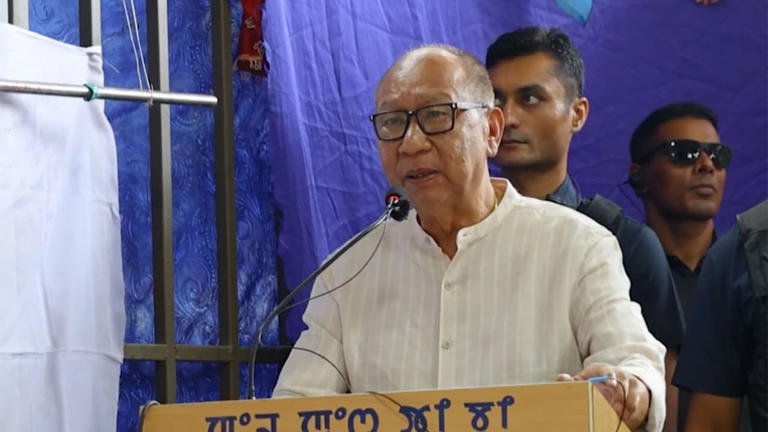
Manipur Chief Minister Yumnam Khemchand Singh has called for a collective effort by all sections of society to restore peace and rebuild trust in the state, stressing that dialogue, cooperation and reconciliation are essential to overcoming the challenges created by prolonged conflict.
The Chief Minister’s appeal comes at a time when Manipur continues to grapple with the social and political consequences of the violence that erupted in May 2023. The conflict has deepened divisions between communities, displaced thousands of people and created a significant trust deficit among different sections of society.
CM Appeals for Collective Responsibility
Addressing a gathering in Imphal, the Chief Minister emphasised that restoring normalcy in Manipur cannot be the responsibility of the government alone. He called upon political leaders, civil society organisations, community representatives, youth groups and ordinary citizens to contribute to the peace-building process.
Singh stressed the importance of putting aside differences and working towards a shared future for the state. He said collective efforts would be necessary to rebuild confidence among communities and create conditions where people can once again live without fear.
The Chief Minister’s appeal focused particularly on the need for cooperation at the grassroots level, where the impact of the conflict has been most deeply felt.
Bridging the Trust Gap Remains a Major Challenge
One of the biggest obstacles to lasting peace in Manipur is the trust gap that has developed between communities during the prolonged crisis.
The violence has left communities with deep grievances, insecurity and concerns about their future. As a result, restoring physical normalcy alone may not be sufficient to achieve sustainable peace.
The Chief Minister underlined the need to address these concerns through continued engagement and dialogue. Building trust, he suggested, would require patience and a willingness among stakeholders to listen to one another.
Political and community leaders have a particularly important role in this process, as their statements and actions can influence public sentiment. Responsible communication and efforts to prevent misinformation and inflammatory rhetoric will also be important in reducing tensions.
Dialogue and Reconciliation at the Centre of Peace Efforts
The Manipur government’s emphasis on dialogue comes amid continuing efforts to create avenues for communication between communities affected by the conflict.
The Chief Minister indicated that reconciliation would have to be a sustained process rather than a one-time initiative. Different groups need opportunities to express their concerns, discuss grievances and explore areas of common ground.
Such dialogue can help address misunderstandings and gradually rebuild confidence. At the same time, the concerns of displaced families and people affected by violence will need to remain central to any broader peace-building strategy.
A meaningful reconciliation process would also require stakeholders to recognise the suffering experienced by different communities and avoid approaches that deepen existing divisions.
Return of Normalcy Requires Public Participation
Restoring peace in Manipur is closely connected with the return of normal social and economic activity. Displacement and insecurity have disrupted education, livelihoods, businesses and community life across affected areas.
The Chief Minister’s call for collective participation therefore extends beyond security measures. A stable environment is necessary for displaced people to rebuild their lives, children to return to education and economic activity to recover.
Government initiatives can provide administrative and financial support, but rebuilding communities will ultimately depend on cooperation among citizens.
Local leaders, civil society organisations and community-based institutions can play an important role by encouraging dialogue and discouraging actions that could trigger fresh tensions.
Youth Have a Key Role in Rebuilding Manipur
The youth of Manipur are another important part of the state’s peace and reconciliation efforts.
Young people have been among those most affected by the disruption caused by the conflict. At the same time, they can become important agents of reconciliation if provided with opportunities for education, employment, sports and constructive community engagement.
The government can support this process by creating avenues for young people from different communities to interact and participate in common activities.
Shared platforms can help reduce stereotypes and create relationships based on cooperation rather than mistrust. Sports, education and cultural programmes can provide particularly useful spaces for such engagement.
Security and Development Must Move Together
While dialogue and reconciliation are critical, maintaining security and ensuring the rule of law remain essential to restoring confidence.
People need to feel secure in their homes and communities before normal life can fully return. Effective law enforcement, protection of civilians and action against violence are therefore important components of the peace process.
At the same time, development cannot be overlooked. Improved infrastructure, employment opportunities, access to education and better public services can contribute to long-term stability.
The government will therefore need to balance immediate security concerns with measures aimed at addressing the broader socio-economic challenges faced by affected communities.
Need for Responsible Political Leadership
Political leadership will remain crucial in determining the direction of Manipur’s peace process.
The Chief Minister’s appeal for collective action places responsibility on political parties and leaders across the spectrum to avoid rhetoric that could further polarise society.
A constructive political environment can create greater space for negotiations and reconciliation. Differences over policy and governance can continue through democratic institutions, but efforts to restore peace require a degree of cooperation on issues affecting the safety and future of citizens.
The upcoming political and administrative processes could therefore provide opportunities to strengthen dialogue and develop broader consensus around peace and rehabilitation.
Rebuilding Trust Will Take Time
The road to lasting peace in Manipur is likely to be gradual. The depth of the divisions created by the conflict means that trust cannot be restored overnight.
Consistent engagement, transparency and follow-through on government commitments will be important in convincing communities that peace efforts are genuine and sustainable.
The return of displaced people, rehabilitation, restoration of livelihoods and rebuilding of damaged infrastructure will also have an important role in strengthening confidence.
For peace to endure, communities must ultimately see a future in which their security, dignity and interests are protected.
Collective Effort Essential for Lasting Peace
Chief Minister Yumnam Khemchand Singh’s appeal highlights the need for a collective approach to the Manipur crisis. Government action, while necessary, will have to be supported by community participation, political responsibility and sustained dialogue.
Bridging the trust gap will remain one of the most difficult aspects of the peace process. However, continued engagement and a willingness to work together can gradually create conditions for reconciliation.
As Manipur seeks to move beyond the violence of recent years, restoring peace will require more than ending immediate tensions. It will require rebuilding relationships, restoring confidence and creating a shared vision for the state’s future. The success of that effort will ultimately depend on the willingness of all stakeholders to choose dialogue, cooperation and reconciliation over division.