


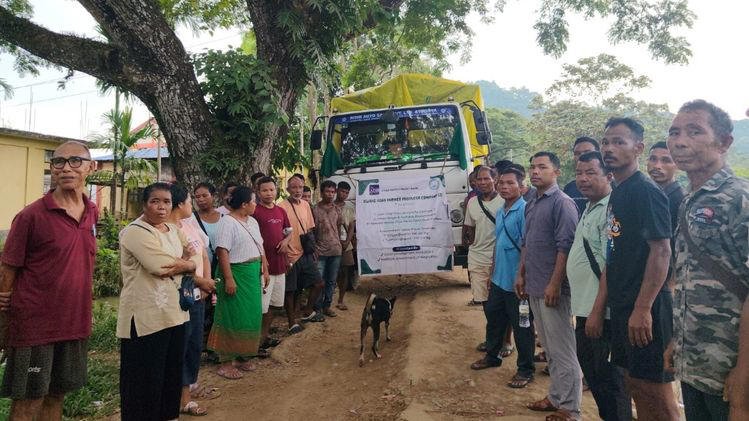
The Meghalaya government has launched a digital mandi aimed at connecting cash crop farmers directly with buyers, strengthening market access and helping agricultural producers secure better opportunities for selling their produce.
The initiative is part of the state’s broader efforts to modernise agriculture through technology and create more efficient market linkages for farmers. By bringing producers and buyers onto a common digital platform, the government seeks to reduce dependence on traditional intermediaries and improve transparency in agricultural trade.
Digital Platform to Strengthen Farmer-Buyer Linkages
The newly launched digital mandi is designed to provide farmers with a direct channel to reach potential buyers for their cash crops. The platform is expected to make it easier for farmers to identify market opportunities and connect with traders, businesses and other potential purchasers.
For Meghalaya’s farmers, particularly those growing high-value crops, access to reliable markets remains an important factor in determining income. Production alone does not guarantee better earnings if farmers face difficulties transporting produce or finding suitable buyers.
The digital mandi seeks to address part of this challenge by creating a technology-enabled marketplace where information about agricultural produce can be shared more efficiently.
Focus on Meghalaya’s Cash Crops
Meghalaya has favourable climatic conditions for cultivating a range of horticultural and cash crops. Farmers across the state produce crops that have demand in both domestic and wider markets.
However, producers in remote and hilly areas can face challenges in accessing large markets. Geographic constraints, transportation costs, limited storage facilities and fragmented supply chains can affect farmers’ bargaining power.
A digital marketplace could help bridge some of these gaps by allowing buyers to identify available produce without necessarily relying solely on conventional local trading networks.
The initiative could be particularly useful for small and marginal farmers who often have limited access to market information and large-scale buyers.
Technology to Improve Market Transparency
One of the key potential benefits of the digital mandi is improved access to market information.
Farmers can benefit from knowing about potential buyers and demand for their crops, while buyers can obtain information about the availability of agricultural produce. Such information can make transactions more organised and help reduce information asymmetry between producers and purchasers.
Greater transparency can also strengthen farmers’ negotiating position. When producers have access to multiple potential buyers, they may have more opportunities to compare offers rather than being dependent on a single local market.
The success of the platform, however, will depend on the availability of accurate and regularly updated information.
Reducing Dependence on Intermediaries
Agricultural supply chains often involve several layers between farmers and final buyers. While intermediaries can provide important services such as aggregation, transportation and market access, multiple layers can sometimes reduce the share of the final value received by producers.
The digital mandi is intended to create more direct connections between farmers and buyers. This does not necessarily eliminate the role of intermediaries, but it can provide farmers with additional avenues to market their produce.
Direct market linkages could also encourage greater competition among buyers and create opportunities for farmers to negotiate better terms.
Potential to Boost Farmers’ Incomes
Improving market access is closely linked to the government’s objective of increasing agricultural incomes in Meghalaya.
If the digital platform succeeds in connecting farmers with dependable buyers, producers could potentially receive better returns through improved price discovery and reduced transaction barriers.
The initiative could also encourage farmers to increase production of crops with strong market demand. Greater certainty about market opportunities may help producers make more informed decisions about what to grow and when to sell.
For Meghalaya’s rural economy, stronger agricultural markets could generate wider benefits by supporting farm-related businesses, transportation services, processing activities and rural employment.
Importance of Aggregation and Supply Chains
The effectiveness of a digital mandi will also depend on the physical infrastructure supporting agricultural trade.
Meghalaya’s terrain makes transportation a significant consideration. Even when farmers and buyers are digitally connected, reliable systems for collection, grading, packaging, storage and transportation are necessary to complete transactions efficiently.
Farmer groups, cooperatives and producer organisations could play an important role by aggregating produce from multiple farmers. Aggregation can make it easier for larger buyers to purchase sufficient quantities while reducing logistics costs.
Strengthening these physical supply chains alongside the digital platform will therefore be important for achieving the initiative’s long-term objectives.
Digital Literacy Will Be Crucial
For the digital mandi to reach farmers across Meghalaya, digital accessibility and awareness will be equally important.
Many farmers, particularly in remote areas, may require assistance in registering on the platform, uploading information about their produce, understanding buyer offers and completing transactions.
Training programmes and support through agricultural departments, farmer organisations and local institutions could help ensure that technology does not become an additional barrier.
Reliable internet connectivity will also be important, especially in rural and geographically difficult areas.
Supporting Meghalaya’s Agricultural Transformation
The launch of the digital mandi represents another step towards integrating technology into Meghalaya’s agricultural economy.
A successful digital marketplace can potentially improve connections between producers and markets while encouraging greater transparency and efficiency across the supply chain. It can also provide the government with better information about production and market demand, supporting more targeted agricultural interventions.
For farmers, the ultimate measure of the platform’s success will be whether it helps them sell their produce more easily and obtain better returns.
Digital Market Access Could Open New Opportunities
Meghalaya’s digital mandi has the potential to reshape how cash crop farmers interact with markets. By connecting producers with buyers through a common digital platform, the initiative seeks to overcome some of the barriers created by geographical isolation and fragmented supply chains.
However, technology alone will not solve every agricultural marketing challenge. Continued investment in roads, logistics, storage, aggregation, digital literacy and farmer support will be necessary to ensure that online connections translate into real transactions.
If these elements develop together, the digital mandi could become an important tool for expanding market access, strengthening farmer incomes and supporting the growth of Meghalaya’s cash crop economy.