

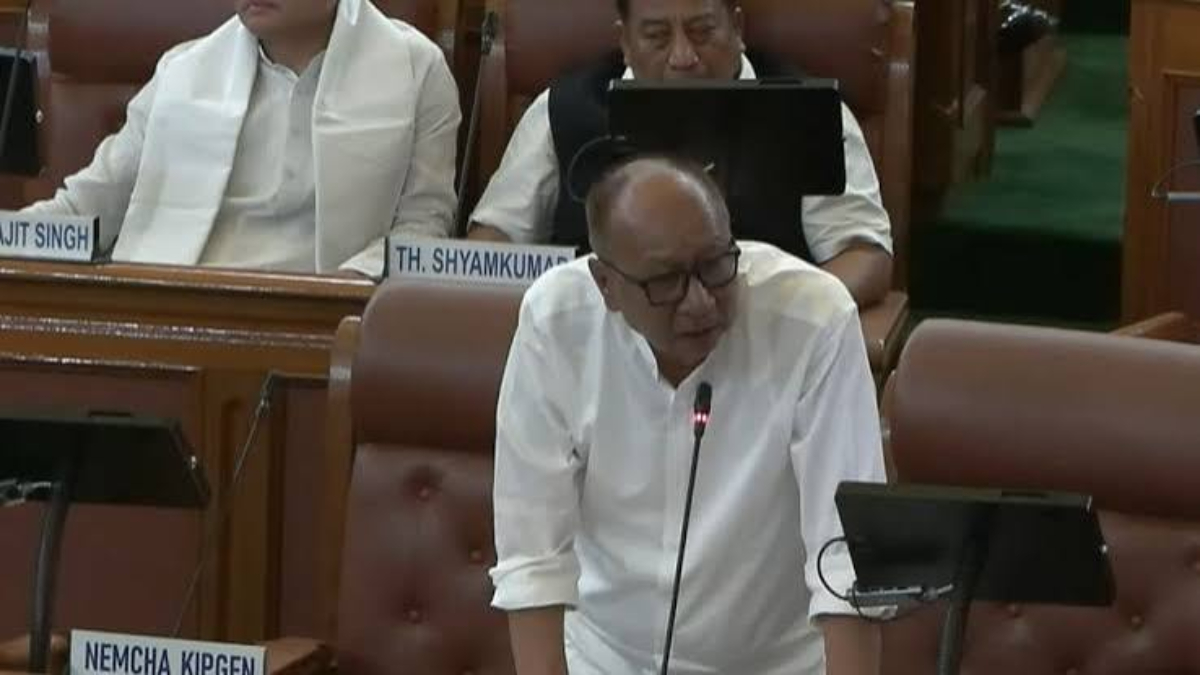
Manipur IDPs have seen significant progress in rehabilitation, with 36,000 people resettled after being displaced by the ethnic conflict that began in May 2023. Chief Minister Yumnam Khemchand Singh told the state Assembly on September 3 that around 24,000 displaced people are still living in relief camps, while government financial assistance continues for nearly 59,000 of the approximately 60,000 people affected by the crisis.
36,000 displaced people return home
Responding to a short-duration discussion moved by Congress MLA Th Lokeshwar Singh, Khemchand said the government has made substantial progress in resettling displaced families across the state.
According to the Chief Minister, around 60,000 people were rendered homeless during the crisis that erupted on May 3, 2023. Of these, 36,000 have now been resettled, leaving approximately 24,000 people in relief camps.
Khemchand credited the collective efforts and support of legislators for the progress. He also stressed that displaced people in both the hills and the valley share a common desire to return to their homes and live in peace.
The issue remains complex because resettlement is not simply about returning families to their homes. Many people who have already returned continue to face difficulties related to employment, income and damaged property.
Manipur IDPs continue to receive financial support
Despite the resettlement of 36,000 people, the state government is still providing financial assistance to around 59,000 of the 60,000 displaced persons.
Khemchand explained that people who have returned home are still struggling to rebuild their livelihoods. The continued monthly assistance is therefore intended to provide support while affected families work towards economic stability.
The government’s approach reflects the broader challenges facing Manipur IDPs. Returning home does not automatically restore the economic conditions that existed before the conflict. Families may have lost houses, belongings, jobs and sources of income during the prolonged crisis.
The state’s 2026-27 budget also outlined central assistance for housing rehabilitation. The government said Rs 119 crore had been approved for top-up support for construction of 7,000 permanent houses for internally displaced people. Another Rs 70 crore was approved as compensation for the loss of personal belongings and movable assets in 7,000 fully burnt houses, while Rs 60 crore was approved for renovation and repair of 8,000 partially damaged houses.
Focus shifts to livelihoods and mental health
The Chief Minister said financial assistance alone cannot address the impact of a conflict that has continued for more than three years. He pointed to the mental trauma experienced by affected people and said the Health Department is taking steps to address the psychological impact.
The government is also examining additional rehabilitation and livelihood measures. Khemchand said he is consulting the Planning Department on possible initiatives to help affected families rebuild their economic lives.
Labour cards issued through the Labour Department were cited as one possible avenue for providing support and improving access to employment opportunities. Such measures could become important for Manipur IDPs who have returned but remain without stable sources of income.
Consultations with displaced groups
The Chief Minister said he held discussions last month with representatives of six to seven joint associations of displaced people. The consultations were aimed at understanding their concerns and exploring additional ways to support resettlement.
He said the government remains open to suggestions from different sections and urged that the displaced persons issue be addressed without political considerations.
The consultations are significant because the needs of displaced families can vary depending on whether they remain in camps, have returned to their villages or are attempting to rebuild their livelihoods elsewhere.
Trust remains key to lasting resettlement
For Manipur IDPs, the question of returning home is closely linked to security and confidence between communities. Khemchand identified the trust deficit among communities as the biggest challenge before the government.
He said the administration is working to rebuild trust and create conditions that can support normalcy, resettlement and the restoration of social and economic activities.
The government is also focusing on restoring connectivity and trade. Khemchand said the Imphal-Dimapur-Guwahati bus service had resumed successfully, while efforts are underway to reopen the Moreh trade route. The restoration of transport and commercial links could help revive economic activity in areas affected by the conflict.
The latest figures show both progress and the scale of the remaining challenge. The resettlement of 36,000 people represents a major step, but thousands remain in relief camps and many returnees still require financial, livelihood and psychological support. For Manipur IDPs, lasting rehabilitation will depend not only on rebuilding homes but also on restoring livelihoods, community confidence and normal economic activity. The state government’s next phase of rehabilitation will therefore remain closely tied to efforts to rebuild trust and create conditions for a more stable return to normal life.
Shillong Lajong Secure Powerful 2-0 Win Over Meghalaya Police