


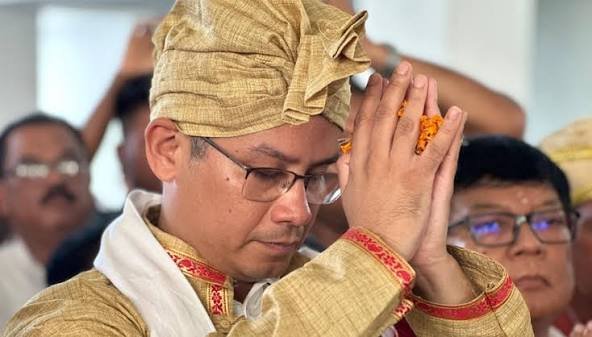
Assam Pradesh Congress Committee (APCC) president Gaurav Gogoi has reportedly suspended 14 senior Congress leaders from the Barak Valley for six years over alleged anti-party activities during the state elections. The disciplinary action represents a major organisational move by the state Congress leadership.
The suspensions could have political consequences in the Barak Valley, where the party continues to organise its electoral strategy. Moreover, the action signals that the APCC leadership intends to take a firm position against activities it considers damaging to party interests.
The affected leaders could challenge or respond to the allegations through the party’s internal disciplinary mechanisms.
Walking Out of Unity Talks: Pradyut Bordoloi Exit Exposes Tensions in Assam Opposition Alliance
Gaurav Gogoi Orders Six-Year Suspensions
The Congress suspensions in Barak Valley reportedly involve 14 senior leaders.
APCC president Gaurav Gogoi took the disciplinary action over alleged anti-party activities connected with the state elections. Furthermore, the six-year suspension period represents a substantial restriction on the leaders’ participation in party activities.
The move underlines the seriousness with which the state leadership views the alleged violations.
Barak Valley Leaders Face Disciplinary Action
The suspended leaders reportedly come from Assam’s Barak Valley, an important political region encompassing districts such as Cachar, Hailakandi, and Sribhumi.
The region holds electoral significance for major political parties. Additionally, organisational strength in the area can influence the Congress’s ability to mobilise supporters and build its election campaign.
The suspensions could therefore require the party to reorganise its local leadership structure.
Anti-Party Activity Allegations
The disciplinary action stems from allegations of anti-party activities during the state elections.
Such allegations can involve conduct that the party believes conflicts with its official electoral strategy or organisational decisions. However, the precise allegations against each of the 14 leaders would need to be established through the relevant party proceedings.
The suspensions should therefore be understood as disciplinary action based on allegations rather than proof of wrongdoing by every individual.
Congress Faces Organisational Challenge
Removing senior leaders can create both opportunities and challenges for a political organisation.
The Congress leadership may use the action to reinforce internal discipline. Moreover, the party will need to ensure that local organisational structures continue functioning effectively after the suspensions.
Replacing experienced leaders could require additional coordination in the affected constituencies.
Impact on Barak Valley Politics
The decision could influence political dynamics within the Barak Valley.
Local Congress workers may need to adjust to changes in leadership, while rival parties could seek to benefit from any organisational uncertainty. Furthermore, suspended leaders may retain personal political networks that could influence local political activity.
The longer-term impact will depend on how the Congress manages its organisational restructuring.
Party Discipline Takes Centre Stage
Political parties rely on internal discipline to maintain a consistent electoral strategy.
The six-year suspensions send a clear message that the APCC leadership intends to enforce party decisions during elections. Additionally, such disciplinary actions can help party leadership establish accountability among senior office-bearers and workers.
However, maintaining unity after disciplinary action can remain challenging.
Leadership Reorganisation May Follow
The Congress could now need to strengthen its organisational presence across the affected areas.
New leaders may receive greater responsibilities within local party units. Moreover, the party could use the situation to promote younger workers or reorganise existing committees.
Such changes could shape the Congress’s future strategy in the region.
Suspended Leaders Could Respond
The affected leaders may seek clarification or challenge the disciplinary decision through internal party channels.
They could present their positions regarding the allegations and the circumstances surrounding the election period. Furthermore, the party leadership may review individual cases if formal appeals or explanations emerge.
The process could therefore develop further in the coming months.
Broader Political Implications
The suspensions come at a time when political parties are preparing for future electoral contests and strengthening their organisational networks.
For the Congress, maintaining unity across Assam remains an important challenge. Additionally, the party will need to balance disciplinary measures with efforts to retain experienced local leadership.
The Barak Valley will remain an important region in that organisational strategy.
What Happens Next?
The immediate focus will shift toward managing the organisational impact of the suspensions.
The APCC may appoint new functionaries or strengthen existing leadership structures in the affected areas. Moreover, the suspended leaders could respond to the allegations or seek internal review of the six-year disciplinary action.
Further developments will determine whether the move strengthens party discipline or creates additional organisational challenges.
Conclusion
The Congress suspensions in Barak Valley mark a significant disciplinary action by APCC president Gaurav Gogoi, with 14 senior leaders reportedly suspended for six years over alleged anti-party activities during the state elections.
Moreover, the move highlights the Congress leadership’s emphasis on organisational discipline and electoral coordination. At the same time, the party will need to manage the political and organisational consequences of removing experienced leaders from the Barak Valley.
Overall, the six-year Congress suspensions could reshape the party’s local leadership structure and influence its political strategy in southern Assam.
FAQs
1. How many Congress leaders were suspended?
The APCC reportedly suspended 14 senior leaders.
2. How long will the suspensions last?
The reported disciplinary period is six years.
3. Where are the suspended leaders from?
The leaders are reportedly from Assam’s Barak Valley.
4. Why were they suspended?
The APCC reportedly cited alleged anti-party activities during the state elections.
5. Could the leaders challenge the decision?
They may be able to seek clarification or pursue internal party mechanisms, depending on applicable Congress disciplinary procedures.