

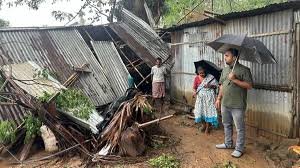
The Tripura Storm Damage Crisis has intensified after severe Kalbaishakhi winds and heavy rainfall damaged more than 1,500 houses across the state. The powerful Nor’wester storms uprooted electric poles, disrupted roads, and caused major power outages in several districts, prompting emergency response efforts from authorities.
Dramatic ADC Members Sworn In Ceremony Amid Boycott Tensions
Severe Weather and Flood Alert Hits Tripura State
Severe Kalbaishakhi Storms Batter Tripura
Tripura witnessed massive destruction after powerful Kalbaishakhi storms swept across the state with intense winds and heavy rainfall. The sudden Nor’wester weather system affected all eight districts and disrupted normal life in many regions.
Officials confirmed that strong winds uprooted trees, damaged homes, and interrupted electricity supply across multiple districts. Furthermore, several roads became blocked after fallen trees and debris covered highways and local streets.
The storms arrived with very little warning in some areas. Consequently, residents struggled to protect homes and belongings from the violent weather conditions.
More Than 1,500 Houses Damaged
According to the State Emergency Operation Centre in Agartala, the storms damaged at least 1,534 houses across Tripura. Among them, 76 houses suffered complete destruction, while 195 houses received severe damage. Authorities reported that 1,263 homes experienced partial damage.
Unakoti district emerged as one of the worst-hit regions. Officials stated that 518 houses suffered damage there alone. In addition, districts such as Dhalai, Sepahijala, South Tripura, and North Tripura also reported widespread destruction.
Families in affected villages faced major hardship because strong winds tore apart rooftops, walls, and temporary structures. Therefore, many residents required immediate assistance and shelter support.
Power Infrastructure Suffers Heavy Damage
The severe winds also caused major damage to Tripura’s power infrastructure. Officials confirmed that at least 129 electric poles were uprooted or damaged during the storms.
Electricity supply disruptions affected several districts after falling trees and broken poles damaged transmission lines. As a result, many areas experienced prolonged power outages during heavy rainfall and thunderstorms.
Emergency repair teams quickly started restoration work in affected regions. However, continuous rainfall and blocked roads slowed operations significantly. Authorities continued working to restore electricity and communication systems throughout the state.
Roads and Transportation Face Disruption
The Kalbaishakhi storms also disrupted transportation services across Tripura. Uprooted trees blocked highways and local roads in many districts, making travel dangerous and difficult.
In Agartala, severe waterlogging created traffic chaos as rainwater flooded streets and intersections. Vehicles moved slowly through submerged roads while commuters faced long delays. Additionally, some public transport services experienced temporary suspension because of unsafe conditions.
Officials launched road clearance operations immediately after the storms. Consequently, several blocked routes reopened after emergency workers removed fallen trees and debris.
Heavy Rainfall Intensifies Situation
The storms arrived alongside extremely heavy rainfall across multiple districts. Weather reports confirmed that Kamalpur subdivision in Dhalai district recorded around 159 mm rainfall during the weather event.
Meteorologists warned that intense rainfall may continue over the next few days because of active weather systems over Northeast India. Therefore, authorities fear additional flooding, landslides, and infrastructure damage if conditions worsen further.
The IMD also warned residents about lightning strikes, strong winds, and poor visibility during severe thunderstorms. As a result, local administrations urged people to remain indoors whenever possible.
Government Launches Relief Operations
Chief Minister Dr. Manik Saha stated that the government actively monitors the situation and coordinates relief measures across affected districts. Disaster response teams and district administrations remain deployed in vulnerable areas.
Authorities have started damage assessments while initiating financial assistance for affected families in some regions. Relief teams also continue clearing roads, restoring power supply, and helping displaced residents.
The administration advised people to avoid unnecessary travel during severe weather conditions. Officials also warned residents to stay away from damaged electric poles and flooded roads because of safety risks.
Farmers and Local Businesses Face Losses
The storms also damaged agricultural fields and small businesses in several districts. Reports indicated that flower gardens, vegetable farms, and roadside businesses suffered major losses because of strong winds and nonstop rainfall.
One widely discussed case involved a sunflower garden in Charilam that gained popularity as a local tourist attraction. The Kalbaishakhi storm destroyed large portions of the garden within minutes, severely affecting the owner’s income source.
Farmers expressed concern about increasing storm intensity during recent years. Consequently, many local communities now demand stronger disaster support and agricultural protection measures.
IMD Warns of Continued Severe Weather
The India Meteorological Department continues monitoring the weather situation closely. Officials predicted more thunderstorms, gusty winds, and heavy rainfall across Tripura and neighboring Northeastern states over the next few days.
The IMD warned that wind speeds may reach up to 80 kmph in some districts. Additionally, weather experts cautioned about flash floods, waterlogging, and possible landslides in vulnerable areas.
Authorities urged residents to follow official advisories carefully and prepare emergency supplies in case of prolonged disruptions.
Climate Concerns Grow Across Northeast India
The recent Kalbaishakhi storms once again highlighted the growing vulnerability of Northeast India to extreme weather events. Scientists and environmental experts increasingly warn that climate change may intensify storms, rainfall patterns, and seasonal disruptions across the region.
Urban flooding in Agartala and infrastructure damage in rural districts revealed the urgent need for stronger disaster preparedness systems. Therefore, many citizens now expect improved drainage systems, stronger electric infrastructure, and faster emergency response planning.
The disaster also demonstrated the importance of community coordination during natural emergencies. Local volunteers, emergency teams, and district officials worked together to support affected families and restore essential services quickly.
Tripura Faces Ongoing Recovery Challenge
Tripura now faces a major recovery effort after the widespread destruction caused by the Kalbaishakhi storms. Authorities continue restoring electricity, repairing damaged infrastructure, and assisting affected communities across the state.
Although no deaths were reported, the scale of destruction has deeply affected thousands of residents. As weather forecasts continue predicting heavy rainfall and storms, citizens remain alert while hoping for safer conditions in the coming days.
The disaster also serves as a reminder of the growing importance of climate resilience and disaster management across Northeast India.
FAQs
How many houses were damaged in Tripura?
Officials confirmed that 1,534 houses suffered damage during the severe Kalbaishakhi storms.
What caused the damage in Tripura?
Powerful Nor’wester winds, known locally as Kalbaishakhi storms, caused the destruction along with heavy rainfall.
How badly was the power infrastructure affected?
At least 129 electric poles were damaged or uprooted during the storms.
Which district suffered the most damage?
Unakoti district reported the highest number of damaged houses during the storms.
What warnings has the IMD issued?
The IMD warned about continued heavy rainfall, thunderstorms, strong winds, and possible flooding across Tripura.