

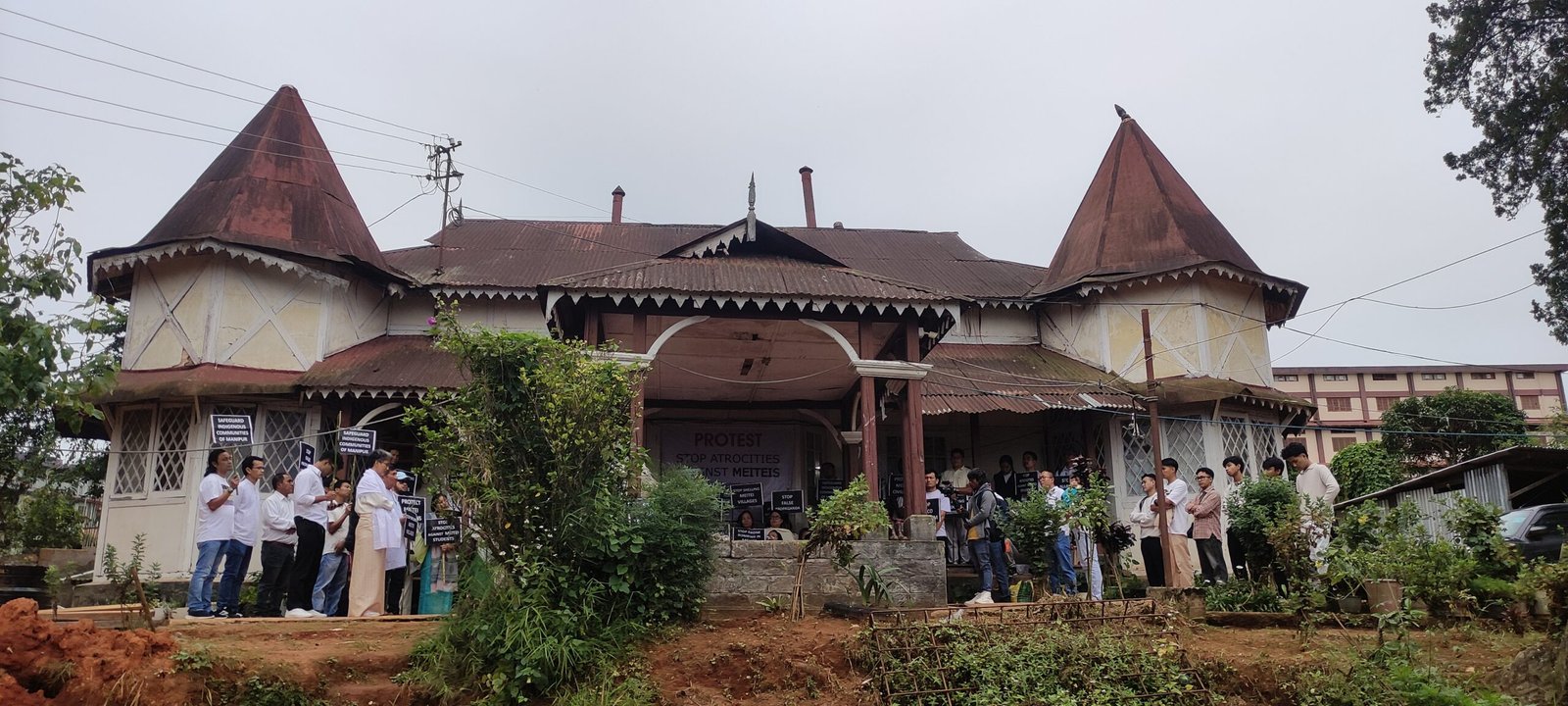
The Meghalaya cabinet has approved a draft policy for heritage building conservation in Shillong, marking a significant step toward preserving the city’s historical and architectural legacy. The policy aims to protect culturally important structures while promoting sustainable urban development. Moreover, officials stated that the framework will guide restoration, maintenance, and adaptive reuse of heritage properties. The decision reflects the government’s commitment to safeguarding Shillong’s unique identity.
Severe Landslides Cut Off Vital Road Connectivity on National Highway 6 Linking Silchar and Agartala
Boxer Lovlina Borgohain strikes Gold
Cabinet Clears Framework for Heritage Protection in Shillong
Meghalaya cabinet approves draft policy for heritage building conservation in Shillong to establish a structured approach for preserving historic structures. Consequently, the policy will identify and categorize buildings of cultural and architectural importance.
The framework focuses on documenting heritage assets across Shillong city. Moreover, it will ensure that significant structures are protected from unregulated demolition or alteration. Therefore, urban development can proceed without compromising historical value.
Officials emphasized that Shillong has a rich colonial and indigenous architectural heritage. Furthermore, many buildings reflect the city’s historical evolution. As a result, conservation efforts are being prioritized under the new policy.
Meanwhile, departments concerned with urban planning and cultural affairs will jointly implement the framework. Consequently, coordination between agencies will be strengthened.
Focus on Restoration and Adaptive Reuse of Heritage Structures
The Meghalaya cabinet approves draft policy for heritage building conservation in Shillong with a strong emphasis on restoration and adaptive reuse. Moreover, the policy encourages maintaining original architectural elements wherever possible. Therefore, heritage preservation will be balanced with modern utility.
Restoration guidelines will ensure that structural integrity and historical authenticity are preserved. Consequently, trained conservation experts will be involved in renovation projects. Such measures help maintain architectural continuity.
Furthermore, adaptive reuse will allow heritage buildings to serve modern purposes such as museums, offices, or cultural centers. As a result, these structures will remain functional while preserving their identity.
Meanwhile, funding mechanisms for restoration projects are being explored. Similarly, public-private partnerships may be encouraged.
Urban Development Balanced With Cultural Preservation
The policy reflects an effort to balance rapid urban development with cultural preservation in Shillong. Moreover, increasing urbanization has raised concerns about the loss of historic buildings. Therefore, structured conservation rules are being introduced.
Shillong’s architectural landscape includes colonial-era buildings and traditional Khasi structures. Consequently, protecting these assets is vital for maintaining the city’s identity. Such preservation contributes to cultural continuity.
Furthermore, regulated development ensures that new construction aligns with heritage zones. As a result, urban planning will become more sensitive to historical contexts.
Meanwhile, heritage mapping of the city is expected to be conducted. Similarly, zoning regulations may be updated accordingly.
Strengthening Tourism and Cultural Identity
The Meghalaya cabinet approves draft policy for heritage building conservation in Shillong, which is also expected to boost cultural tourism. Moreover, preserved heritage sites attract visitors interested in history and architecture. Therefore, the policy supports tourism growth.
Heritage conservation enhances the visual and cultural appeal of the city. Consequently, Shillong’s identity as a heritage-rich destination is strengthened. Such initiatives benefit both culture and economy.
Furthermore, guided tours and heritage walks may be promoted. As a result, local communities could gain additional income opportunities.
Meanwhile, cultural institutions are expected to play a key role in awareness generation. Similarly, educational programmes may be introduced.
Conclusion
Meghalaya cabinet approves draft policy for heritage building conservation in Shillong, marking an important step toward preserving the city’s historical and architectural heritage. Moreover, the policy ensures structured protection, restoration, and sustainable reuse of heritage buildings.
The initiative balances urban development with cultural preservation, strengthening Shillong’s identity. Therefore, it is expected to benefit both heritage conservation and tourism.
As Meghalaya cabinet approves draft policy for heritage building conservation in Shillong, it reinforces the state’s commitment to safeguarding its architectural legacy for future generations.
FAQs
1. What has been approved by the Meghalaya cabinet?
A draft policy for heritage building conservation in Shillong.
2. What is the aim of the policy?
To protect and preserve heritage buildings.
3. How will buildings be conserved?
Through restoration and adaptive reuse guidelines.
4. Which city is the focus of the policy?
Shillong.
5. What are the benefits of this policy?
It preserves culture and supports tourism development.