

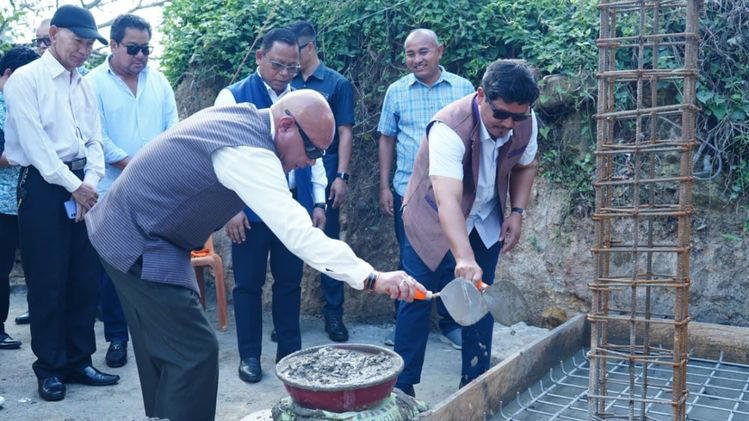
Meghalaya Chief Minister Conrad K. Sangma has laid the foundation stone for the Tura World War I memorial restoration and beautification project. The ceremony, held on November 7, marked the beginning of an initiative to honour the Garo Labour Corps who served with distinction during the First World War.
The memorial, known as the Cenotaph, stands as a symbol of bravery and sacrifice in the heart of Tura. Built to commemorate the contribution of the Garo people who joined the British Army’s Labour Corps, the monument is now set to undergo a complete transformation. The project aims to restore its historical dignity and make it a prominent heritage landmark for future generations.
Read More: Former Manipur CM Highlights Plight of Internally Displaced Persons
Honouring the Heroes of the Garo Labour Corps
Speaking at the ceremony, Chief Minister Conrad Sangma said the Tura World War I memorial reflects the courage and patriotism of the Garo Labour Corps. He emphasized that their service during the war remains a proud chapter in Meghalaya’s history. The restoration project, he said, is a way to preserve their legacy and inspire the youth to value sacrifice and service to the nation.
Sangma noted that many members of the Garo Labour Corps worked in difficult conditions overseas during the war, facing tremendous hardship. Their contribution, though often overlooked, deserves lasting recognition. The state government, he added, is committed to ensuring that the memorial becomes a symbol of collective memory and pride for the people of the Garo Hills.
A Project Rooted in Community Collaboration
The Chief Minister announced that a dedicated committee has been formed to oversee the Tura World War I memorial restoration. This committee, which includes representatives from civil society, local leaders, and heritage experts, finalized the restoration plan after months of consultation. Prominent citizens of the Garo Hills also played an active role in shaping the project’s design and purpose.
Sangma appreciated the efforts of community members for their involvement and said that the collaboration reflects the true spirit of Meghalaya. “This project belongs to the people,” he said. “Together, we are rebuilding a monument that tells the story of our shared heritage.”
Officials explained that the project will focus not only on restoring the Cenotaph but also on improving the surrounding area. The beautification plan includes landscaping, pathway construction, lighting, and installation of informative plaques narrating the history of the Garo Labour Corps.
Linking Heritage with Tourism and Education
The Tura World War I memorial restoration forms part of the state government’s broader plan to preserve historical sites and promote cultural tourism. Chief Minister Sangma said that Meghalaya has a rich legacy that must be showcased to the world. Preserving heritage sites can strengthen cultural identity while also attracting visitors to lesser-known regions.
He mentioned that similar restoration and conservation projects are being planned across the state. The government aims to connect historical landmarks through tourism circuits, allowing travelers to explore Meghalaya’s diverse cultural past. Educational tours and awareness programs will also be organized at the Tura site once the project is complete.
“This memorial is not just a structure,” Sangma said. “It is a classroom where young people can learn about the sacrifices of their forefathers and the values of courage and unity.”
Boosting Local Identity and Civic Pride
The restoration of the Tura World War I memorial carries emotional significance for the people of the Garo Hills. Local organizations have long advocated for the monument’s preservation, calling it a vital part of regional identity. The government’s initiative has therefore been welcomed as a long-awaited step toward cultural revival.
Residents hope the project will give Tura a renewed sense of pride and become a site for both remembrance and celebration. Local historians believe that restoring the Cenotaph will also encourage documentation and storytelling about the Garo people’s contributions during the war.
Chief Minister Sangma said that by reviving such heritage sites, Meghalaya is reinforcing the bond between history and community. “When we preserve our past, we strengthen our future,” he remarked.
Looking Ahead
Work on the project will begin immediately under the supervision of the state’s Urban Affairs and Tourism departments. The government has pledged adequate funding to ensure timely completion and high-quality restoration. Engineers, heritage conservationists, and local artisans will collaborate to maintain the authenticity of the original design while incorporating modern amenities.
Once completed, the Tura World War I memorial will serve as a cultural and educational hub for locals and tourists alike. Annual events, heritage walks, and school visits are expected to be part of the long-term plan to keep the site active and meaningful.
Chief Minister Sangma concluded his address by calling the project a “tribute to courage, memory, and unity.” He said the Garo Labour Corps’ story deserves national recognition and reaffirmed the government’s commitment to honouring their service.
As the foundation stone was laid, the event marked not only the beginning of physical reconstruction but also the renewal of historical remembrance in Meghalaya. The restored Cenotaph in Tura will soon stand as a proud reminder of the region’s enduring spirit and its people’s contribution to global history.
Read More: Tripura Rises as a Model of Development under CM Manik Saha