

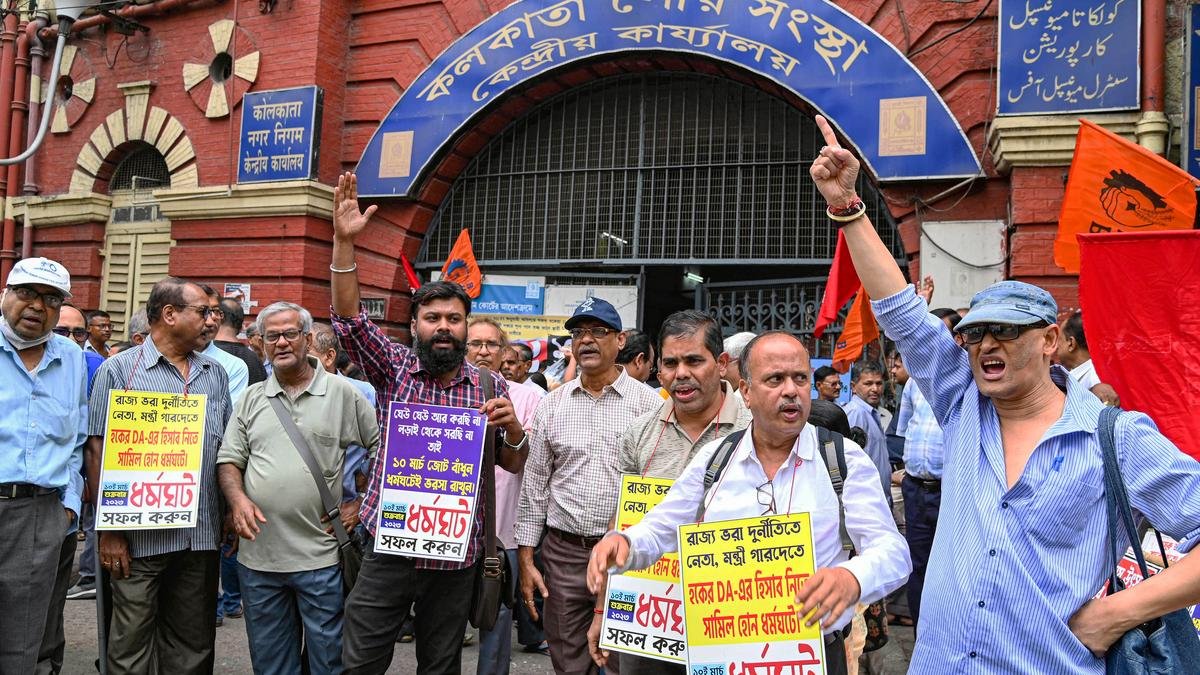
The Meghalaya Employees Hunger Strike entered a significant phase as the protest led by the Joint Committee of Meghalaya State Government Employees Associations (JCOMSWA) reached its 18th day. The development follows the latest round of discussions between employee representatives and the state government, which concluded without a breakthrough. The prolonged agitation has drawn attention across Meghalaya, with government employees seeking resolution to their demands through peaceful protest. As negotiations remain inconclusive, both the employee associations and government authorities continue to face increasing pressure to find common ground and prevent further escalation of the situation.
Meghalaya Illegal Sawmill Crackdown Intensifies
Guwahati–Shillong 1-Hour Travel Corridor: ₹8,500-Crore Greenfield Project
JCOMSWA Protest Reaches Eighteenth Day
The Meghalaya Employees Hunger Strike has now extended beyond two weeks, underscoring the persistence of the employee associations involved in the agitation. Members of JCOMSWA have continued their protest despite ongoing discussions with government officials aimed at resolving the dispute.
The hunger strike has become one of the most closely watched developments involving government employees in the state. Protesters have maintained that their demonstration is intended to draw attention to issues they consider important for the welfare and interests of state employees.
Observers note that prolonged hunger strikes often increase public attention and place additional urgency on negotiations. As the duration of the protest grows, stakeholders from various sectors are monitoring developments closely and awaiting signs of progress in the dialogue process.
Employee representatives have continued to engage with officials while maintaining the protest. The situation highlights the challenges associated with resolving disputes that involve administrative, financial, and workforce-related concerns.
The continuation of the agitation reflects the determination of the participating associations to pursue discussions while keeping their demands in public focus.
Latest Talks End Without Agreement
A recent round of negotiations failed to produce a mutually acceptable solution, leading to the continuation of the Meghalaya Employees Hunger Strike. Representatives from JCOMSWA and government officials reportedly participated in discussions aimed at addressing the concerns raised by the employee associations.
Negotiations are often viewed as a critical mechanism for resolving disputes involving public sector employees. However, reaching consensus can be challenging when multiple issues require consideration and agreement from all parties involved.
The absence of a breakthrough has resulted in continued uncertainty regarding the timeline for resolving the dispute. Both sides are expected to remain engaged in dialogue as efforts continue to identify areas of potential compromise.
Public sector negotiations frequently involve balancing administrative priorities with employee concerns. Consequently, discussions may require multiple rounds before a settlement is achieved. The latest outcome indicates that further engagement will likely be necessary before a resolution can be reached.
Stakeholders continue to emphasize the importance of maintaining constructive communication channels throughout the process. Continued dialogue remains essential for addressing concerns and avoiding prolonged disruptions.
Impact on Government Employees and Administration
The Meghalaya Employees Hunger Strike has attracted attention not only because of its duration but also because of its potential implications for government employees and administrative functioning. Employee associations often play an important role in representing workforce concerns and facilitating communication with authorities.
While the protest remains focused on specific demands, prolonged disputes can influence morale among employees and increase public interest in the issues under discussion. Observers note that peaceful demonstrations are commonly used as a means of highlighting concerns and encouraging administrative engagement.
Government officials are expected to continue evaluating the situation while exploring possible avenues for resolution. Maintaining essential public services remains an important consideration whenever employee-related disputes occur within the public sector.
The ongoing negotiations also reflect the broader importance of effective labor-management relations. Constructive engagement between employee representatives and government authorities can contribute to long-term stability and improved communication.
As discussions continue, many stakeholders hope that a mutually acceptable outcome can be achieved through dialogue and cooperation.
Calls for Renewed Negotiations and Resolution
The continuation of the protest has intensified calls for renewed efforts to bridge differences between the parties involved. The Meghalaya Employees Hunger Strike has highlighted the need for sustained engagement and practical solutions capable of addressing concerns while maintaining administrative stability.
Experts in labor relations often emphasize that successful dispute resolution depends on open communication, flexibility, and willingness to explore common ground. Negotiation processes can sometimes require extended discussions before meaningful progress is achieved.
Community members and observers have expressed hope that future talks will lead to a constructive outcome. A negotiated settlement could help reduce tensions and allow attention to return to routine administrative responsibilities.
The current situation also underscores the importance of institutional mechanisms that facilitate dialogue between governments and employee organizations. Such mechanisms can help address concerns before they develop into prolonged disputes.
As the hunger strike continues, attention remains focused on the possibility of further discussions that may help move the process toward resolution. Both parties are expected to remain engaged in efforts aimed at finding a mutually acceptable path forward.
The Meghalaya Employees Hunger Strike reaching its 18th day reflects the ongoing challenges facing negotiations between JCOMSWA and the state government. With the latest round of talks ending without agreement, the dispute remains unresolved despite continued engagement between the parties. The prolonged protest has drawn public attention to the concerns raised by employee associations and the importance of constructive dialogue in resolving workforce-related issues. As negotiations continue, stakeholders across Meghalaya are watching closely for signs of progress that could lead to a mutually acceptable settlement and bring an end to the extended agitation.
Q1. Who is leading the hunger strike?
The protest is being led by the Joint Committee of Meghalaya State Government Employees Associations (JCOMSWA).
Q2. How long has the hunger strike continued?
The hunger strike has entered its 18th day.
Q3. What happened during the latest talks?
The discussions between employee representatives and the government ended without a resolution.
Q4. What does Meghalaya Employees Hunger Strike refer to?
It refers to the ongoing protest by state government employee associations seeking resolution of their demands.
Q5. Why are negotiations important in such disputes?
Negotiations provide a structured way to address concerns and work toward mutually acceptable solutions.
Q6. What is expected next?
Further rounds of dialogue and negotiations are likely as both sides continue efforts to reach an agreement.