


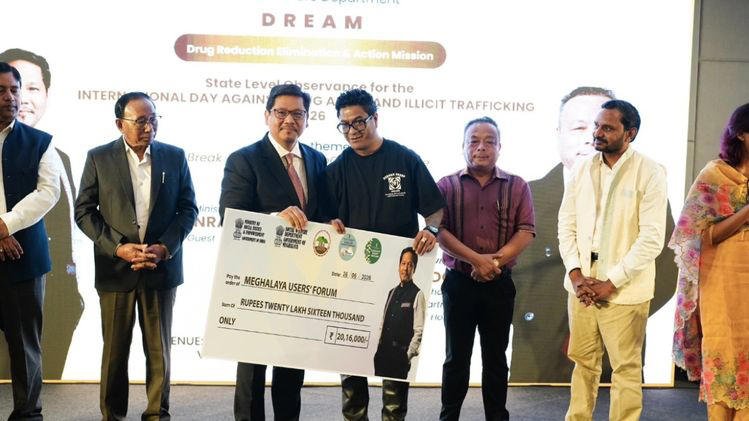
Meghalaya reaffirmed its commitment to building a drug-free society as the state observed the International Day Against Drug Abuse and Illicit Trafficking with a series of awareness programmes, public campaigns, community outreach activities, and anti-drug initiatives. Government departments, educational institutions, law enforcement agencies, healthcare professionals, civil society organizations, youth groups, and community leaders joined hands to highlight the importance of preventing substance abuse and promoting healthy lifestyles among young people.
The observance underscored the state’s continued efforts to combat drug abuse through a comprehensive approach that combines prevention, awareness, treatment, rehabilitation, and law enforcement. Officials emphasized that addressing the growing challenge of substance abuse requires sustained cooperation among government agencies, educational institutions, families, and local communities.
The programmes also reinforced Meghalaya’s commitment to protecting its youth from the harmful effects of narcotics while creating a healthier and more resilient society.
Observing the International Day Against Drug Abuse
The International Day Against Drug Abuse and Illicit Trafficking is observed annually to raise awareness about the dangers of drug abuse and encourage collective action to prevent the spread of illicit drugs.
Across Meghalaya, the occasion was marked through seminars, awareness rallies, educational campaigns, pledge-taking ceremonies, cultural programmes, and community interactions aimed at educating people about the physical, psychological, social, and economic consequences of substance abuse.
Government officials reiterated that combating drug abuse requires long-term public participation alongside strong institutional support.
The observance also provided an opportunity to recognize the contributions of organizations and individuals working towards addiction prevention and rehabilitation.
Government Reiterates Zero-Tolerance Approach
State officials reaffirmed Meghalaya’s commitment to adopting a zero-tolerance approach towards illegal narcotics and drug trafficking.
Law enforcement agencies continue to intensify operations against drug trafficking networks while strengthening surveillance, intelligence gathering, and coordination with neighbouring states and central agencies.
Authorities emphasized that effective enforcement remains an important pillar of the state’s anti-drug strategy, helping to disrupt the supply of illegal narcotics while protecting vulnerable communities.
Officials also appealed to citizens to cooperate with law enforcement agencies by reporting suspicious activities related to drug trafficking and illegal substance distribution.
Public participation, they noted, significantly enhances the effectiveness of anti-drug enforcement.
Focus on Youth Awareness
Young people remain the primary focus of Meghalaya’s anti-drug awareness campaigns.
Educational institutions across the state organized seminars, workshops, interactive discussions, and awareness programmes highlighting the risks associated with drug abuse and addiction.
Experts explained the harmful effects of narcotics on physical health, mental well-being, academic performance, and future career opportunities.
Students were encouraged to make informed choices, resist peer pressure, and actively promote healthy lifestyles within their schools and communities.
Officials emphasized that educating young people at an early stage remains one of the most effective strategies for preventing substance abuse.
Strengthening Community Participation
The government stressed that building a drug-free society requires active participation from families, community organizations, religious institutions, youth clubs, and civil society groups.
Community-based awareness campaigns play an important role in identifying individuals at risk, promoting early intervention, and encouraging those struggling with addiction to seek professional help.
Village leaders, local organizations, and volunteers participated in awareness drives aimed at fostering collective responsibility for preventing substance abuse.
Officials noted that strong community support networks contribute significantly to reducing drug-related social problems while strengthening public awareness.
The observance encouraged communities to remain vigilant and supportive in addressing addiction-related challenges.
Importance of Rehabilitation and Recovery
While law enforcement remains essential, officials emphasized that rehabilitation and recovery are equally important components of Meghalaya’s anti-drug strategy.
Healthcare professionals highlighted the importance of providing medical treatment, counselling, psychological support, and rehabilitation services for individuals affected by substance abuse.
Recovery programmes focus on helping individuals overcome addiction while facilitating their reintegration into society through education, vocational training, and community support.
Officials stressed that addiction should be addressed through compassionate healthcare interventions alongside preventive and enforcement measures.
Accessible rehabilitation services contribute significantly to reducing relapse and promoting long-term recovery.
Collaboration Across Departments
The state’s anti-drug initiatives involve coordinated efforts among multiple government departments, including health, education, social welfare, police, youth affairs, and community development.
Inter-departmental collaboration enables more comprehensive planning and implementation of awareness campaigns, treatment services, school-based education, and enforcement activities.
Officials emphasized that integrated approaches are more effective than isolated interventions in addressing the complex social, medical, and legal dimensions of substance abuse.
Regular coordination also improves resource utilization and strengthens programme implementation throughout the state.
The government continues to encourage partnerships with non-governmental organizations and healthcare institutions working in addiction prevention.
Addressing Drug Trafficking
Officials also highlighted the importance of combating illegal drug trafficking, which contributes significantly to substance abuse and organized criminal activities.
Law enforcement agencies continue conducting intelligence-based operations, border surveillance, and coordinated enforcement actions to intercept narcotics and dismantle trafficking networks.
The government remains committed to strengthening institutional capacity through improved training, modern investigative techniques, and enhanced technological resources.
Authorities noted that reducing drug availability complements prevention and rehabilitation efforts by limiting access to illegal substances.
Continued vigilance remains essential to maintaining public safety and protecting communities.
Promoting Healthy Lifestyles
The International Day Against Drug Abuse also emphasized the importance of encouraging positive lifestyle choices among young people.
Sports, cultural activities, skill development programmes, volunteerism, and community engagement were highlighted as constructive alternatives that promote physical and mental well-being.
Educational institutions and youth organizations were encouraged to create supportive environments where students can develop confidence, leadership skills, and healthy social relationships.
Officials stated that empowering young people through education, recreation, and employment opportunities contributes significantly to reducing vulnerability to substance abuse.
Promoting holistic development remains central to Meghalaya’s long-term prevention strategy.
Looking Ahead
The state government reaffirmed its commitment to strengthening anti-drug policies through sustained awareness campaigns, improved rehabilitation services, stronger law enforcement, and greater community participation.
Future initiatives will continue focusing on school-based education, youth engagement, capacity building for healthcare professionals, and institutional collaboration to address emerging challenges related to substance abuse.
Officials also emphasized the need for continuous evaluation of existing programmes to ensure that prevention and rehabilitation initiatives remain effective and responsive to changing circumstances.
The government remains committed to building partnerships that support a healthier and drug-free Meghalaya.
Conclusion
Meghalaya’s observance of the International Day Against Drug Abuse and Illicit Trafficking reaffirmed the state’s determination to create a society free from the harmful effects of narcotics. Through awareness campaigns, community participation, rehabilitation initiatives, educational programmes, and strengthened law enforcement, the government continues to adopt a comprehensive approach to preventing substance abuse and protecting future generations.
As Meghalaya advances its long-term vision of a healthier and more resilient society, collaboration among government agencies, educational institutions, healthcare professionals, families, and local communities will remain essential. By combining prevention, treatment, rehabilitation, and effective enforcement, the state aims to safeguard its youth, strengthen public health, and build a future where individuals can thrive free from the dangers of drug abuse.