


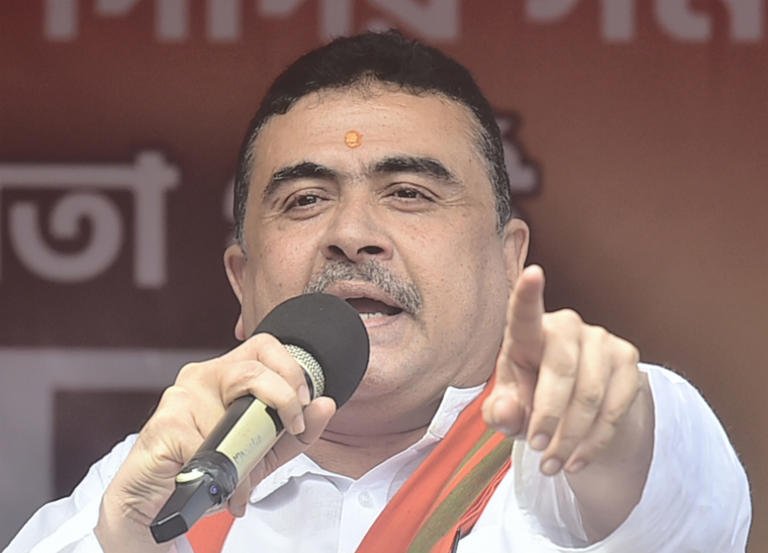
Leader of the Opposition in the West Bengal Assembly, Suvendu Adhikari, has said that the Uniform Civil Code (UCC) would be implemented in the state by following all constitutional and legal procedures if the Bharatiya Janata Party (BJP) comes to power. Speaking at a public programme, Adhikari stated that any move to introduce the UCC would strictly adhere to the framework laid down by the Constitution, established legislative processes, and judicial principles.
The BJP leader emphasized that the proposed implementation would be carried out in a transparent and lawful manner, ensuring that every procedural requirement is followed before the policy is introduced. He said the objective of the Uniform Civil Code is to establish a common framework governing civil matters while respecting constitutional provisions and democratic processes.
His remarks have added to the ongoing national discussion surrounding the Uniform Civil Code, an issue that continues to generate political, legal, and social debate across the country.
Adhikari Reiterates Commitment to UCC
During his address, Suvendu Adhikari reaffirmed his party’s commitment to introducing the Uniform Civil Code in West Bengal if elected to form the government.
He stated that the implementation would not be arbitrary but would proceed through established constitutional mechanisms and legislative procedures.
According to Adhikari, any significant legal reform requires careful planning, consultation, and adherence to due process to ensure that the law is implemented effectively and withstands constitutional scrutiny.
He emphasized that transparency and procedural compliance would remain central to the implementation process.
Stress on Constitutional Procedures
One of the key aspects of Adhikari’s statement was his emphasis on following constitutional procedures.
He noted that any legislation concerning the Uniform Civil Code would need to be framed in accordance with constitutional provisions and relevant legal requirements.
According to him, legislative proposals should undergo proper scrutiny, debate, and procedural examination before becoming law.
He stressed that constitutional governance requires governments to operate within the framework of the law while ensuring that democratic institutions function effectively.
Adhikari maintained that procedural integrity strengthens public confidence in legislative reforms.
Understanding the Uniform Civil Code
The Uniform Civil Code refers to the concept of a common set of civil laws governing matters such as marriage, divorce, inheritance, adoption, and succession, irrespective of religion.
The subject is mentioned in Article 44 of the Directive Principles of State Policy in the Constitution of India, which states that the State shall endeavour to secure a Uniform Civil Code for citizens throughout the territory of India.
However, the Directive Principles are non-justiciable, meaning they are guiding principles for governance rather than legally enforceable provisions.
Any proposal relating to the UCC continues to remain a matter of legislative and public policy discussion.
Political Significance of the Statement
Adhikari’s remarks come amid continued political discussions on governance, legal reforms, and constitutional issues in West Bengal.
The Uniform Civil Code has been one of the major policy positions articulated by the Bharatiya Janata Party at the national level, and the issue has periodically featured in political debates across several states.
Political observers note that governance reforms and legal policy issues are expected to remain prominent subjects in future electoral discourse.
Adhikari’s statement reflects his party’s position while indicating that any future implementation would follow prescribed legal procedures.
Legislative Process and Public Consultation
The BJP leader suggested that any legislative proposal involving the Uniform Civil Code would require comprehensive legal examination and institutional procedures.
Typically, legislation involves drafting, consultation, debate, legislative approval, and implementation in accordance with constitutional requirements.
Adhikari indicated that following these established mechanisms would ensure transparency and legal certainty during the implementation process.
Observers note that significant legislative reforms generally involve detailed policy discussions and legal review before enactment.
Such procedures contribute to informed decision-making and institutional accountability.
Focus on Rule of Law
Throughout his remarks, Adhikari emphasized the importance of the rule of law in governance.
He stated that every policy initiative must operate within the framework established by the Constitution and relevant legislation.
According to him, adherence to legal procedures protects democratic institutions while ensuring that public policies are implemented fairly and transparently.
The rule of law remains one of the fundamental principles of constitutional governance and guides legislative as well as executive action.
Adhikari argued that procedural compliance would be essential for any future legal reform concerning the Uniform Civil Code.
Governance and Legal Reforms
The statement also reflects the broader discussion surrounding governance reforms in India.
Supporters of legal reforms often argue that clear legislative frameworks contribute to administrative efficiency, legal certainty, and improved governance.
At the same time, significant legal reforms typically involve extensive constitutional examination, public debate, and legislative consideration.
Experts generally note that changes affecting civil laws require careful legal drafting and implementation to ensure consistency with constitutional guarantees and judicial precedents.
The legislative process remains central to achieving such objectives.
Public Debate Continues
The Uniform Civil Code continues to be one of the most widely discussed legal and political issues in India.
Different political parties, legal experts, religious organizations, civil society groups, and constitutional scholars have expressed varying perspectives on the subject.
The debate often focuses on constitutional principles, legal uniformity, individual rights, gender justice, religious freedom, and legislative competence.
Adhikari’s statement adds another perspective to this broader national discussion while emphasizing adherence to constitutional procedures.
Any future legislative proposal would likely continue to generate extensive public and parliamentary discussion.
Looking Ahead
According to Adhikari, if the BJP forms the government in West Bengal, the implementation of the Uniform Civil Code would proceed only after following every constitutional and legal requirement.
He reiterated that legislative reforms should be undertaken responsibly through established democratic institutions rather than through executive action alone.
Observers believe that discussions surrounding the Uniform Civil Code will remain part of the wider policy discourse in the state and across the country.
The future course of any such proposal will ultimately depend on legislative developments, constitutional processes, judicial interpretation where applicable, and the decisions of the government in office.
Conclusion
Suvendu Adhikari’s statement that the Uniform Civil Code would be implemented in West Bengal by following all constitutional and legal procedures underscores the BJP’s stated policy position on the issue while emphasizing adherence to due process. According to the Leader of the Opposition, any future implementation would involve established legislative mechanisms, constitutional safeguards, and transparent governance practices.
As debates over the Uniform Civil Code continue at both the national and state levels, the issue remains part of a broader conversation on legal reform, constitutional governance, and public policy. Any eventual implementation would depend on the legislative process and would be subject to the constitutional framework governing lawmaking in India.