


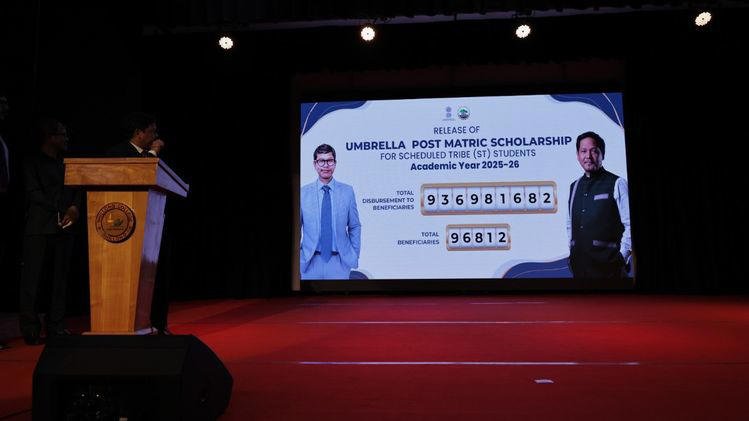
The Meghalaya government has released a scholarship instalment of Rs 93.7 crore for 96,812 Scheduled Tribe (ST) students, providing financial support to students pursuing education across the state.
The release is aimed at helping students meet education-related expenses and ensuring that financial constraints do not prevent eligible students from continuing their studies. The initiative is part of the government’s efforts to strengthen educational support for students from Scheduled Tribe communities.
The scholarship assistance is expected to provide relief to thousands of families by helping cover costs associated with higher and professional education.
Rs 93.7 Crore Released for ST Students
The state government has sanctioned and released Rs 93.7 crore as a scholarship instalment benefiting 96,812 ST students.
The financial assistance is intended for eligible beneficiaries under the state’s scholarship framework and will support students enrolled in educational institutions.
For many students, scholarships are an important source of assistance for meeting tuition fees, books, accommodation, travel and other costs associated with education.
The latest instalment is therefore expected to provide timely financial support to students and their families.
96,812 Students to Benefit
A total of 96,812 Scheduled Tribe students are set to benefit from the scholarship release.
Meghalaya has a large tribal population, and ensuring access to quality education remains an important component of the state’s development agenda.
Financial assistance can be particularly significant for students from economically vulnerable families, who may otherwise struggle to meet the cost of continuing their education.
The scholarship programme seeks to reduce such financial barriers and encourage students to remain in education.
Support for Higher Education
Scholarship assistance is especially important for students pursuing education beyond school.
Higher education often involves expenses beyond tuition, including accommodation, transportation, study materials and examination-related costs. For students travelling from rural and remote areas to pursue studies, these expenses can become a considerable burden.
The latest financial support can help eligible students manage some of these costs and continue their academic programmes without facing prolonged financial uncertainty.
The assistance may also encourage more students to pursue college, university and professional courses.
Reducing Financial Barriers to Education
One of the key objectives of scholarship programmes is to make education more accessible to students from disadvantaged backgrounds.
Financial difficulties can contribute to students discontinuing their studies or choosing courses based primarily on affordability rather than academic interest and career prospects.
By providing direct financial assistance, the government can help reduce the economic pressure faced by students and their families.
For Meghalaya, where many communities live in rural and geographically difficult areas, such support can play an important role in widening access to education.
Education as a Tool for Social Development
Investment in education has wider implications for social and economic development.
Improved access to higher education can help young people acquire skills and qualifications needed for employment and entrepreneurship. It can also contribute to the development of a skilled workforce capable of supporting the state’s economy.
Scholarships for ST students are therefore not only a form of financial assistance but also an investment in human capital.
By supporting students through different stages of education, the government can help create greater opportunities for young people from tribal communities.
Importance of Timely Scholarship Disbursement
Timely release of scholarship funds is crucial for students and educational institutions.
Delays in receiving financial assistance can create difficulties for students, particularly when they have to pay tuition fees or meet accommodation and other academic expenses.
The release of the Rs 93.7 crore instalment is expected to provide greater financial certainty to the beneficiaries.
Ensuring that the funds reach eligible students efficiently will be an important part of the implementation process.
Assistance Can Support Students From Remote Areas
Meghalaya’s terrain and dispersed settlements can create additional challenges for students seeking higher education.
Many students from remote areas have to travel to towns and cities for college and specialised courses. This can increase their living and transportation costs considerably.
Scholarship support can help offset some of these additional expenses and make it more feasible for students to continue their studies away from home.
The programme can consequently contribute to greater educational participation among students from rural and remote communities.
Encouraging Students to Continue Their Studies
Financial support can also help reduce the risk of students dropping out due to economic pressures.
For families with limited incomes, education-related expenses can compete with household requirements. A scholarship can provide students with the additional support needed to remain enrolled and complete their courses.
The government’s latest release is therefore expected to benefit not only students currently pursuing education but also their families.
Continued scholarship support can help create a more stable educational environment for beneficiaries.
Strengthening Opportunities for ST Communities
The scholarship programme forms part of broader efforts to improve educational and economic opportunities for Scheduled Tribe communities in Meghalaya.
Access to education can help young people gain qualifications that improve their prospects in government services, private-sector employment, professional careers and entrepreneurship.
Supporting students at the higher education level is particularly important because the cost of pursuing advanced studies can be significantly higher than school education.
The latest instalment demonstrates continued public investment in ensuring that eligible ST students have access to financial assistance.
Need for Efficient Implementation
While the release of funds is an important step, effective delivery will determine the programme’s impact.
Authorities will need to ensure that the scholarship reaches all eligible beneficiaries through a transparent and efficient process. Students should also have access to clear information about eligibility, documentation and disbursement procedures.
Educational institutions can play an important role in helping students complete formalities and resolve administrative issues related to scholarship payments.
Meghalaya’s Continued Focus on Student Welfare
The release of Rs 93.7 crore highlights the Meghalaya government’s focus on supporting students and expanding access to education.
With nearly one lakh ST students benefiting from the latest instalment, the programme has the potential to provide significant assistance to families across the state.
The financial support can help students meet education-related expenses, continue their studies and pursue better career opportunities.
Scholarship Support to Benefit Thousands
The Meghalaya government’s release of Rs 93.7 crore for 96,812 ST students marks a significant financial intervention in support of education.
For students facing economic challenges, scholarship assistance can make the difference between continuing their education and being forced to discontinue their studies.
The latest instalment is expected to strengthen educational participation among Scheduled Tribe students and provide relief to their families.
As Meghalaya continues to invest in human capital, sustained scholarship support, timely fund disbursement and efficient implementation will remain essential to ensuring that financial barriers do not stand in the way of students seeking to build their academic and professional futures.