

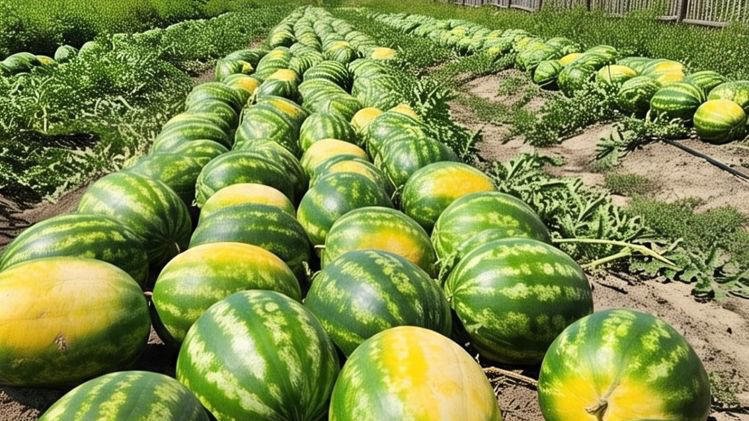
A small village in Meghalaya’s West Garo Hills has taken a bold step to confront the challenges of climate change. In a region where traditional crops are struggling due to shifting weather patterns, the residents have turned to watermelon cultivation as a climate-resilient alternative.
Read More: 6th Tripura Finance Commission begins state-wide tax review tour
Climate Change Hits Traditional Agriculture
Over the past decade, villagers in the Rongram block of West Garo Hills have noticed dramatic changes in rainfall patterns. Once known for consistent monsoon rains, the area now suffers from unpredictable rainfall, longer dry spells, and occasional floods. These changes have severely affected the traditional crops like maize, rice, and mustard.
Farmers observed that their yield was falling and their income was declining year after year. They realized that continuing with the old farming methods would not ensure food security or economic stability in the long run. Thus, they began exploring alternative crops that could thrive under changing climate conditions.
Watermelon: A Strategic Shift
In 2023, a group of farmers, with help from agricultural extension officers and NGOs, began experimenting with watermelon farming. The crop was selected because of its short growing cycle, relatively low water requirement, and ability to grow well in sandy, well-drained soils—conditions found in the region.
Unlike paddy or maize, watermelons mature in 60 to 90 days. This quick turnaround helps farmers reduce the risk of crop failure due to erratic weather. Additionally, the fruit is in high demand during summer months, which makes it commercially attractive.
Support From Agricultural Experts
To ensure success, the village partnered with the District Horticulture Department and local experts. They organized training sessions to educate farmers on best practices in watermelon cultivation, such as seed selection, mulching techniques, drip irrigation, and natural pest control.
The Agricultural Technology Management Agency (ATMA) also distributed hybrid seeds and mulching sheets to promote efficient moisture retention. The farmers were taught to prepare raised beds and use plastic mulch to reduce water loss.
By February 2024, nearly 25 farmers had dedicated portions of their land to watermelon farming. Their combined effort covered more than 12 hectares.
Boost in Income and Community Confidence
The results were encouraging. The first harvest, completed in May 2024, yielded over 90 tonnes of high-quality watermelons. Local markets in Tura, Baghmara, and even Guwahati received the produce enthusiastically. Some farmers earned up to ₹1 lakh per hectare—significantly more than what they earned from traditional crops.
This success story boosted the morale of the community. More farmers are now preparing to adopt watermelon cultivation during the next sowing cycle. In fact, the village council is considering forming a cooperative to manage large-scale production, marketing, and logistics.
A Step Towards Climate Adaptation
This shift is more than just an economic success—it reflects a growing awareness of climate adaptation in the rural Northeast. By selecting a crop that can survive variable rainfall and high temperatures, farmers have taken control of their future.
In addition, watermelon farming has lower carbon emissions compared to traditional paddy farming, which relies heavily on water and emits methane. This makes the switch not just climate-resilient but also environmentally responsible.
Challenges Remain
However, the journey hasn’t been without hurdles. Transportation continues to be a major issue, especially for perishable goods like watermelon. Farmers also face problems with fluctuating market prices and lack of cold storage facilities.
To address these, local NGOs have approached the state government for investment in cold chains and farmer training. They are also urging for better road connectivity to help farmers reach wider markets faster.
Despite these issues, the villagers remain hopeful. Their proactive approach has already drawn attention from neighboring blocks, where farmers are considering adopting similar techniques.
Policy Push Can Help
Experts believe this success should be scaled across Meghalaya. If the state government includes watermelon farming and other climate-resilient crops under schemes like Mission Organic Value Chain Development and FOCUS+, it could revolutionize agriculture in the region.
“Farmers need support, not just financially but also in the form of information, tools, and infrastructure,” said a senior horticulture officer. “This model could be replicated in other climate-vulnerable regions of the Northeast.”
Future Looks Promising
With continued support, watermelon farming could become a long-term solution to the pressing challenges of climate change in Meghalaya. It provides not only a financial cushion for rural families but also instills confidence in adapting to a rapidly changing environment.
The villagers of West Garo Hills have shown that even in the face of adversity, resilience and innovation can lead to success. Their story is a testament to the power of community-driven change and the possibilities of sustainable farming.
Read More: Aizawl-Delhi airfare: Mizoram MP flags ₹25K hike in Parliament