

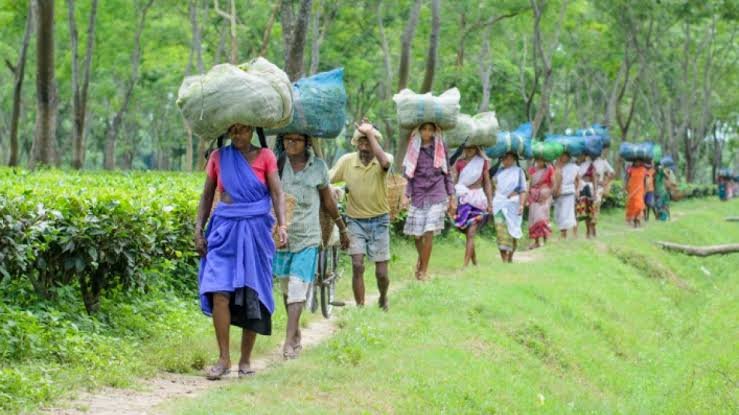
The Meghliband tea land dispute has intensified in Tripura after Assembly Deputy Speaker and MLA Ramprasad Paul alleged that portions of a tea estate had been illegally occupied and subsequently used for cannabis cultivation. Paul rejected allegations linking him or the tea garden management to the cultivation and said the disputed plots were outside the management’s control. Police recently conducted an operation at the estate and destroyed the plants found there.
The controversy has brought questions over tea estate land, alleged encroachment, local influence and law enforcement into the spotlight. Moreover, Paul has alleged that influential elements are attempting to damage his reputation by connecting the cultivation to the management of the tea garden. These claims remain allegations, while the responsibility for determining who controlled the land and who cultivated the plants rests with the appropriate authorities.
PM Modi Hails 8 Years of Ayushman Bharat, World’s Largest Health Scheme
Meghliband Tea Land Dispute Centres on Alleged Encroachment
The Meghliband tea land dispute centres on portions of the tea estate that Paul says were allegedly occupied by local residents for several years. According to his account, the plots where the cannabis plants were discovered did not remain under the operational control of the tea garden management.
Paul said he had repeatedly informed police about the alleged occupation as well as the cultivation. He further claimed that he personally remained present during two joint operations with police in which plants were destroyed on portions of the estate that he described as encroached land.
However, these statements represent Paul’s account of the dispute and do not by themselves establish responsibility for the cultivation. The ownership, possession and actual control of the specific plots would need to be established through land records, administrative inquiries and the findings of law enforcement.
A separate report on September 11 said police conducted an anti-narcotics operation at Meghliband Tea Garden in the Mohanpur subdivision and destroyed around 5,000 cannabis plants. The operation reportedly covered two portions of the tea garden.
The reported discovery has consequently intensified scrutiny of the estate and the circumstances under which the land was allegedly occupied.
Deputy Speaker Rejects Allegations Against Tea Garden Management
Paul has strongly denied any connection between the tea garden management and the cultivation. He argued that the presence of cannabis plants somewhere within the wider tea estate should not automatically be interpreted as evidence that the management was responsible.
According to Paul, the disputed plots had allegedly been forcefully occupied by local people and were therefore not under the direct control of the garden manager. He also said that the issue had previously been communicated to the local police.
Furthermore, Paul accused certain influential individuals of attempting to portray the matter in a way that would implicate him. He alleged that people unhappy with his activities were spreading misinformation without properly checking the facts.
Those accusations also require verification. A political allegation against unnamed individuals does not constitute proof of a conspiracy. Therefore, any investigation should establish who occupied the land, who exercised control over the disputed plots and who was actually responsible for the cultivation.
Paul has also urged the West Tripura district administration and police to take legal action against anyone found responsible. He said that the law should apply regardless of the person’s position or association.
Tea Estate Encroachment Raises Broader Land Concerns
The controversy comes shortly after wider concerns emerged over tea garden land in Tripura following the passage of the Tripura Land Revenue and Land Reforms (Fourteenth Amendment) Bill, 2026. A September 10 report said tea workers had raised concerns about possible encroachment and the use of tea garden land for purposes other than tea cultivation.
At Meghlibon Tea Garden, workers separately alleged that tea plants were being cut in connection with a proposed playground. They expressed concern that continued changes to tea estate land could affect tea production and the livelihoods of workers and their families.
The developments have therefore placed tea estate land management under greater public attention. Tea gardens are not only agricultural properties but also provide employment to workers and support local economic activity. Consequently, disputes over their boundaries, possession and use can affect several groups simultaneously.
The legal history of tea estate land in Tripura is also complicated. In a 2024 case concerning Hiracherra Tea Estate, the Tripura High Court discussed the historical vesting of tea estates in the state under provisions of the Tripura Land Revenue and Land Reforms Act and the distinctive legal position of tea gardens.
That background demonstrates why land disputes involving tea estates can require careful examination of historical records, leases, ownership claims and government notifications. Therefore, allegations of encroachment cannot be resolved solely through political statements or competing claims.
Police Action Puts Focus on Investigation
The police operation at Meghliband has added an important law-enforcement dimension to the Meghliband tea land dispute. The reported destruction of the plants establishes that authorities took action against the cultivation found during the operation. However, the operation itself does not establish who planted or maintained the crop.
Determining responsibility would require investigators to examine the relevant land parcels and available evidence. The central questions include who occupied the disputed areas, who exercised control over them and whether there is evidence connecting particular individuals with the cultivation.
Moreover, Paul’s claim that he had previously informed police about the alleged encroachment could become relevant to the administrative record. If such complaints were formally submitted, authorities could examine when they were made, what action followed and whether the disputed plots were inspected earlier.
The Deputy Speaker has also called for the alleged encroachment itself to be investigated. This is significant because resolving the land issue could help establish whether the plots were genuinely outside the effective control of the tea garden management.
At the same time, any investigation should maintain a clear distinction between the existence of illegal cultivation and allegations about who was responsible for it. That distinction is particularly important because the controversy has already acquired a political dimension.
Political Claims and Legal Questions Remain Separate
The Meghliband tea land dispute has developed into more than a question of land use. Paul’s allegation of a conspiracy introduces a political dimension, while the reported police operation introduces a law-enforcement dimension.
Nevertheless, these issues need to remain separate during any official inquiry. If cannabis cultivation occurred on the disputed plots, authorities must establish responsibility based on evidence. Similarly, if illegal occupation occurred, officials must determine the status of the land and identify the persons responsible according to applicable law.
Furthermore, allegations against the tea garden management should not be treated as established merely because cultivation was discovered within the broader estate. Conversely, claims that the land was occupied by outsiders should also be independently verified.
The controversy therefore calls for documentation rather than speculation. Land records, estate boundaries, administrative communications and the findings of police inquiries can provide a clearer picture of the situation.
The issue also highlights the importance of protecting tea workers and legitimate agricultural operations. If parts of a tea estate remain under disputed possession for extended periods, both production and employment can face uncertainty. Consequently, resolving the status of the land could have significance beyond the immediate controversy.
Conclusion
The Meghliband tea land dispute has intensified after Deputy Speaker Ramprasad Paul alleged that encroached portions of a tea estate were used for illegal cannabis cultivation. He has rejected allegations connecting the tea garden management with the cultivation and has argued that the disputed plots were allegedly controlled by local occupants.
Police reportedly conducted an operation at the estate and destroyed around 5,000 plants found across two portions of the garden. However, the operation does not by itself establish who was responsible for the cultivation.
The immediate focus should therefore remain on determining the status of the disputed land, identifying those responsible for any illegal activity and examining the allegations of encroachment. Moreover, any claims of political conspiracy or misinformation should be assessed through evidence rather than assumption.
The developments also underline wider concerns about the protection and proper use of tea estate land in Tripura. A transparent investigation could help clarify both the land dispute and the circumstances surrounding the reported cultivation.
FAQs
What is the Meghliband tea land dispute about?
The Meghliband tea land dispute concerns allegations that portions of a tea estate were illegally occupied and later used for cannabis cultivation. Deputy Speaker Ramprasad Paul has denied any connection between the tea garden management and the cultivation.
What did the Deputy Speaker allege?
Paul alleged that some portions of the tea estate had been occupied by local residents for several years and that the disputed plots were being used for cultivation without the management’s control. He also alleged that influential elements were attempting to malign him.
What action did police reportedly take?
Police reportedly conducted an anti-narcotics operation at Meghliband Tea Garden and destroyed around 5,000 cannabis plants found in two portions of the estate.
Has the Deputy Speaker been accused of involvement?
Reports have carried allegations from local residents questioning the circumstances surrounding the cultivation. Paul has strongly denied involvement and said the disputed plots were allegedly occupied by others. These claims require independent investigation.
Why is tea estate encroachment a wider concern?
Tea estates provide agricultural production and employment, so prolonged disputes over land possession or use can affect both workers and estate operations. Recent reports have also highlighted broader concerns about alleged encroachment and changes in the use of tea garden land in Tripura.