

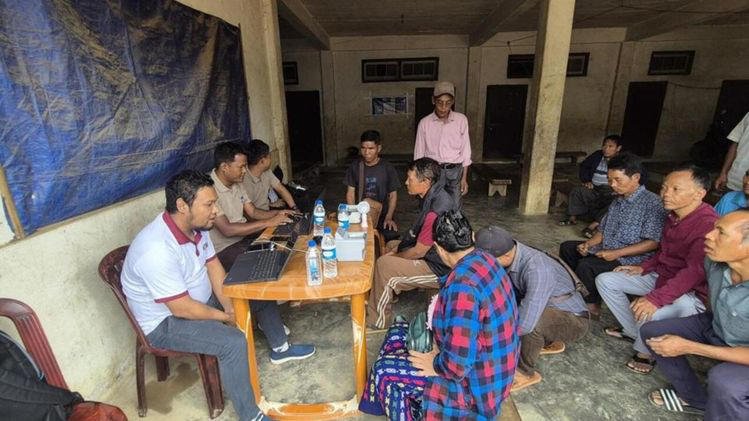
Mizoram biometric enrolment Myanmar refugees efforts reached a crucial milestone this week as officials confirmed that 58 percent of registered refugees have completed the biometric verification process. The update highlights steady progress in documenting individuals who crossed into the state following political unrest in Myanmar. Moreover, the state administration reported that connectivity challenges across remote border areas continue to slow down the remaining work.
Read More: Mizoram Shifts State University Centre to Lunglei
Mizoram Biometric Enrolment Myanmar Refugees Update Shared by Officials
The Mizoram biometric enrolment Myanmar refugees update was shared during a review of the ongoing verification exercise. Officials stated that more than half of the refugees living across relief camps and community shelters have now undergone biometric capture. These details include fingerprints, iris scans, and photographs, all of which are essential for identification and monitoring.
They added that the enrolment drive is being conducted with support from the central government. The aim is to create a clear and updated database of Myanmar nationals currently living in the state. Additionally, the biometric system helps authorities ensure transparency and prevent duplication of records.
According to officials, the process has been steady despite several operational hurdles. They emphasised that the enrolment teams continue to cover large stretches of the border districts where many refugees reside. They also noted that several groups live in difficult terrain, increasing the workload for verification teams.
Connectivity Issues Slow Down the Verification Process
A significant challenge in the Mizoram biometric enrolment Myanmar refugees project has been poor connectivity. Officials revealed that many enrolment locations lack reliable internet access, which is essential for uploading biometric data in real time. In several areas, teams need to travel long distances to find networks that support data transmission.
This issue has forced field workers to store biometric data offline before transferring it to central servers. Although this workaround ensures continuity, it slows down overall processing. Additionally, electricity fluctuations in remote villages affect the operation of biometric devices, further delaying progress.
Officials said that teams remain committed to completing the exercise despite these obstacles. They also confirmed that alternative arrangements, such as mobile hotspots and backup power sources, are being used whenever possible.
Local Communities Continue to Support Enrolment Teams
Community participation has played a significant role in the Mizoram biometric enrolment Myanmar refugees initiative. Local leaders have been coordinating with district officials to inform refugees about verification schedules and requirements. They explained that cooperation from refugees has remained strong because many see biometric enrolment as a step toward better recognition and support.
Church groups and civil society organisations have assisted by providing temporary spaces for enrolment booths and helping volunteers communicate with refugee families. Such support has improved turnout and ensured that verification teams can cover more individuals each day.
Officials acknowledged that civil society groups have helped maintain an atmosphere of trust. They said this cooperation reduces confusion and encourages smooth interaction between refugees and authorities.
Importance of Biometric Verification for Refugee Management
The Mizoram biometric enrolment Myanmar refugees exercise is crucial for managing the refugee population more effectively. Officials explained that biometric verification helps track movement, distribute relief, and maintain accurate records. This data is also vital for planning healthcare, education, and food support.
By preventing duplication, the system ensures that relief material reaches genuine beneficiaries. It also strengthens monitoring mechanisms that help authorities respond quickly during emergencies. Moreover, biometric records create a clearer picture of how many refugees remain in the state and where they are located.
The verification process also aligns with national guidelines for border management and refugee documentation. Officials noted that updated records will support better coordination with central agencies.
Mizoram Biometric Enrolment Myanmar Refugees Effort Continues Despite Challenges
As enrolment teams continue their work across remote and forested areas, officials expect progress to increase once connectivity issues are resolved. They stated that improved mobile network coverage or temporary communication infrastructure may be introduced in some locations to speed up the final phase.
The state administration reiterated its commitment to ensuring that all remaining refugees undergo biometric registration. Officials highlighted that the exercise supports security, transparency, and humanitarian planning.
Civil society leaders welcomed the update and urged authorities to ensure that the process remains humane and sensitive. Many also encouraged the government to provide additional assistance to refugees living in tough conditions.
The Mizoram biometric enrolment Myanmar refugees initiative therefore stands as a significant effort to document and support a vulnerable population. With 58 percent already enrolled and teams continuing to expand coverage, the state aims to complete the process in a structured and transparent manner.
Read More: Guwahati Prepares for First-Ever Men’s Test Match