

Mizoram has recorded the sharpest decline in water bodies among the states covered in the latest phase of the Mizoram water bodies census decline. The Second Census of Water Bodies found that the state’s recorded water bodies fell from 2,185 in the first census to 808 in the second.
The figures represent a decline of about 63%, making Mizoram the state with the largest reduction among the five states that recorded falls. The findings come from Volume II, Part II of the Second Census of Water Bodies.
The latest census compares water-body data across states and examines characteristics such as type, ownership, condition, use, storage capacity, filling status and encroachment.
Teesta River Muck Dumping Faces Major Crackdown by Sikkim High Court
Mizoram Water Bodies Census Decline Reaches 63%
The Mizoram water bodies census decline is the sharpest recorded reduction in the latest census data. Mizoram had 2,185 water bodies in the first census, while the second census recorded 808.
That means the recorded number fell by 1,377 water bodies between the two exercises. The decline amounts to roughly 63% of the earlier count. Consequently, Mizoram stands out among the states covered by the latest report.
Arunachal Pradesh recorded the second-largest decline. Its water bodies fell from 993 to 499, representing a 50% reduction. Jharkhand recorded a 19% decline, while Telangana saw its count fall by 16.19%. Rajasthan also recorded a reduction of about 15%.
The figures do not, by themselves, establish why Mizoram recorded such a large change. The census is primarily a comparative database covering different characteristics of water bodies. Therefore, the decline in the recorded count should not automatically be interpreted as proof that the same number of physical water bodies disappeared.
Differences in identification, enumeration and classification can affect census comparisons. Further analysis of the state-level data would be needed to determine the factors behind the change.
Second Census Tracks Water Resources Across States
The Mizoram water bodies census decline has emerged from a nationwide exercise designed to improve information about local water resources. The first Census of Water Bodies used 2017-18 as its reference period.
The second census was launched in April 2025 and uses 2023-24 as its reference year. The latest exercise expands the national database and allows authorities to compare multiple characteristics with the earlier census.
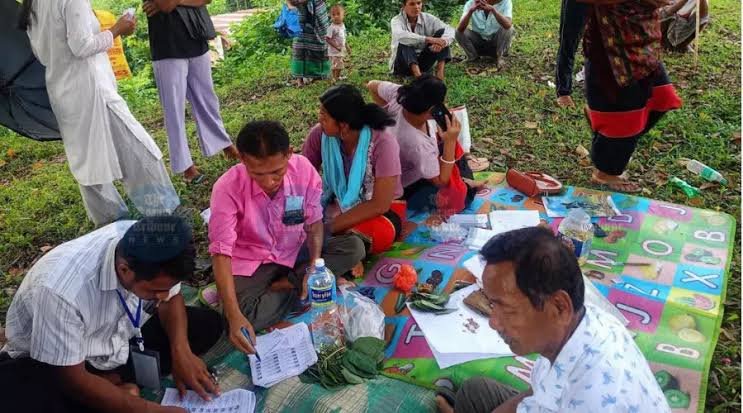
The census covers water bodies in both rural and urban areas. Enumerators collect information about the type and ownership of each water body, along with its condition and use.
Additionally, the exercise records storage capacity, filling status and encroachment. Such information can help authorities understand the availability and condition of local water resources.
The Ministry of Jal Shakti has said that reliable information on water bodies is important for planning their preservation, conservation and renovation. Data on water availability and storage can also help policymakers assess water-stressed areas and develop appropriate management strategies.
Therefore, the Mizoram figures provide more than a simple numerical comparison. They form part of a wider national effort to create a structured database for water-resource planning.
First Census Recorded 2,185 Water Bodies
The Mizoram water bodies census decline becomes clearer when compared with the detailed findings from the first census. The earlier exercise identified 2,185 water bodies in the state.
Of that total, 1,436 were located in rural areas and 749 were in urban areas. The figures show that Mizoram’s first-census water bodies were distributed across both settlement types.
The first census also found that 2,063 of Mizoram’s 2,185 water bodies were in use. The report noted that only 40 water bodies, or 1.8%, were covered in a district or state irrigation plan.
Furthermore, the first census recorded significant differences in the size and storage capacity of Mizoram’s water bodies. Around 64.5% of the 2,183 water bodies for which water-spread information was available had a water-spread area below 0.5 hectares.
In terms of storage capacity, 34.7% had capacity between 1,000 and 10,000 cubic metres. Another 28.3% had capacity above 10,000 cubic metres, while smaller categories accounted for the remainder.
The earlier report also recorded seven encroached water bodies. These included three ponds and four tanks.
Five States Record Declining Water Bodies
The Mizoram water bodies census decline forms part of a broader pattern identified in the second census. Five states recorded fewer water bodies than in the first census.
Mizoram recorded the largest reduction at 63%. Arunachal Pradesh followed with a 50% decline. Jharkhand, Telangana and Rajasthan also recorded decreases of 19%, 16.19% and about 15%, respectively.
However, several states recorded substantial increases. Maharashtra reported 4,74,548 water bodies in the second census, compared with 97,062 in the first. That represents an increase of nearly 389%.
Uttar Pradesh also recorded a major increase, with more than 2.86 lakh water bodies identified in the second exercise. Karnataka, Punjab and Jammu and Kashmir also registered increases.
These contrasting results demonstrate why the census requires careful interpretation. A large increase or decrease in the recorded number may reflect multiple factors connected with enumeration, classification and changes in the physical water-resource landscape.
Consequently, state-level comparisons should consider the wider data rather than focusing only on the headline percentage.
Census Data Could Shape Mizoram Water Planning
The Mizoram water bodies census decline could encourage closer examination of the state’s water-resource database. The latest figures give policymakers a basis for comparing the current inventory with the first census.
Such comparisons can help identify areas that require further investigation. Authorities can also examine individual water bodies to understand their present condition, ownership and usage.
Moreover, the second census provides information that can support conservation and renovation planning. The Union government has described the database as a tool for effective planning and policymaking related to water bodies.
Mizoram’s earlier census data showed that most identified water bodies were in use. Therefore, the sharp reduction in the latest recorded number warrants closer examination of the underlying state-level data.
At this stage, however, the published figures alone do not establish that 1,377 physical water bodies have vanished. Further information about enumeration methods and individual water bodies would be necessary to explain the difference fully.
The latest census can nevertheless provide a starting point for that assessment. State agencies can compare the two datasets and identify locations where water bodies were removed, reclassified, no longer identifiable or otherwise excluded from the latest inventory.
Conclusion
The Mizoram water bodies census decline has emerged as one of the most significant findings in the Second Census of Water Bodies. Mizoram’s recorded total fell from 2,185 water bodies in the first census to 808 in the second, representing a decline of 63%.
The state recorded the sharpest reduction among the five states that saw declines. However, the figures alone do not explain the reasons behind the change or confirm that the same number of physical water bodies disappeared.
The second census provides a broader database covering ownership, condition, use, storage capacity and other characteristics. Therefore, further analysis of Mizoram’s state-level data could help clarify the reasons behind the sharp change and guide future water-resource planning.
FAQs
What does the Mizoram water bodies census decline show?
The Mizoram water bodies census decline shows that the number of recorded water bodies fell from 2,185 in the first census to 808 in the second, a reduction of 63%.
How many water bodies did Mizoram record in the first census?
The first Census of Water Bodies recorded 2,185 water bodies in Mizoram, including 1,436 in rural areas and 749 in urban areas.
Which state recorded the second-largest decline?
Arunachal Pradesh recorded the second-largest decline, with its water-body count falling from 993 to 499, a reduction of 50%.
Does the 63% decline mean that 1,377 water bodies disappeared?
Not necessarily. The census records identified water bodies, and changes in enumeration, classification and other factors can affect comparisons. Further state-level analysis is needed to explain the decline.
What is the purpose of the Second Census of Water Bodies?
The census aims to build a comprehensive database covering water-body type, ownership, condition, use, storage capacity, filling status and encroachment. The information can support conservation, renovation and water-management planning.