

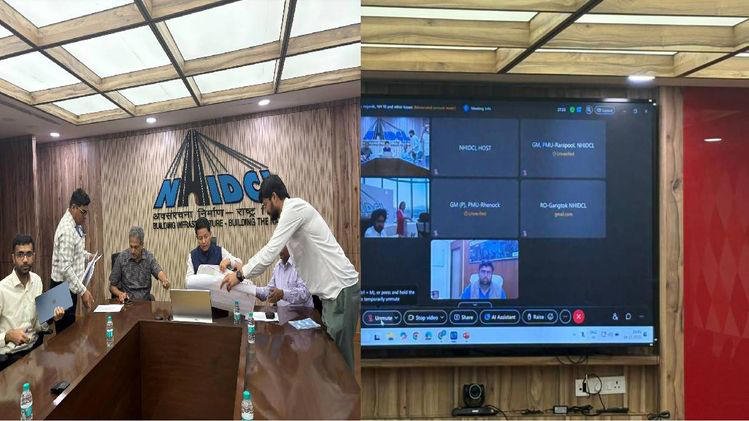
The Indra Hang Subba reviews NH-10 projects meeting in Gangtok brought renewed focus to Sikkim’s ongoing highway development works. Member of Parliament (Lok Sabha) Indra Hang Subba met senior officials from the National Highways and Infrastructure Development Corporation Limited (NHIDCL) to assess the progress of NH-10 and other major highway projects across the state. The meeting was aimed at resolving delays, ensuring quality work, and accelerating connectivity improvements vital for Sikkim’s economy and tourism.
Read More: Assam Government Offers Incentives to Promote Reading at Nalbari Book Fair
Held at the NHIDCL regional office, the review session was attended by engineers, project managers, and representatives from the Border Roads Organisation (BRO) and state departments. The MP emphasized the importance of timely project completion, given the strategic and economic significance of the national highways connecting Sikkim with the rest of the country.
“Sikkim’s growth depends heavily on road connectivity. NH-10 is our lifeline, and its proper maintenance and expansion are crucial for trade, tourism, and daily life,” Subba said.
Reviewing NH-10: Sikkim’s Lifeline
The Indra Hang Subba reviews NH-10 projects discussion primarily centered on National Highway 10, which connects Siliguri in West Bengal to Gangtok, serving as the main arterial route for transportation. Frequent landslides, erosion, and weather-related damages have often disrupted travel along the highway, affecting the movement of goods and passengers.
Officials from NHIDCL briefed the MP on the current progress of widening and slope stabilization works along several vulnerable stretches, including the Rangpo-Ranipool and Ranipool-Gangtok segments. Subba expressed concern over the pace of repairs and asked for stronger preventive measures. “Maintenance cannot remain a reactionary process. We need sustainable engineering solutions that ensure long-term stability,” he stated.
The NHIDCL team assured that geo-technical assessments and new retaining wall designs were underway. They also mentioned that modern drainage systems were being installed to reduce water accumulation, one of the main causes of road damage during monsoon seasons.
Subba urged officials to improve coordination with the Sikkim Public Works Department (PWD) and local authorities for quicker implementation. He also emphasized using local labor and materials wherever possible to create employment and support the regional economy.
Other Highway Projects Under Review
The Indra Hang Subba reviews NH-10 projects meeting also assessed the progress of other key highway projects being implemented under NHIDCL in Sikkim. These included the Gangtok-Nathula road, the Mangan-Chungthang road, and the Singtam-Tarku stretch.
Each of these routes plays a vital role in enhancing mobility and supporting the tourism and defense sectors. NHIDCL officials informed that while some sections have achieved substantial completion, challenges remain in areas affected by frequent landslides and environmental restrictions.
Subba suggested adopting a phase-wise approach to tackle difficult terrains while maintaining steady progress in other areas. He proposed the use of advanced hill-cutting machinery and modern retaining technologies to minimize environmental damage. “We must build responsibly, keeping ecological sensitivity in mind,” he said.
The MP also highlighted the importance of the under-construction highway leading toward North Sikkim, which serves as a key route for the Indian Army and border residents. He said that smoother logistics in this region would not only improve security coordination but also boost livelihood opportunities in remote areas.
Addressing Delays and Challenges
During the Indra Hang Subba reviews NH-10 projects discussion, several reasons behind the delay in project execution were identified. Officials cited issues such as land acquisition disputes, challenging topography, and prolonged monsoon seasons as major obstacles.
Subba acknowledged these challenges but stressed the need for proactive planning and better inter-agency communication. “While geographical difficulties are real, administrative bottlenecks can and must be resolved swiftly. Regular monitoring and transparent communication between agencies will ensure steady progress,” he said.
The MP recommended monthly progress reviews and asked NHIDCL to share status updates with both the central and state governments. He also encouraged the use of real-time monitoring systems to track project milestones and detect delays early.
Officials informed that new project management tools are being introduced to improve coordination among engineers and contractors. NHIDCL also plans to set up mobile response units to handle emergency repairs during landslides or road blockages.
Importance for Sikkim’s Economy and Tourism
The Indra Hang Subba reviews NH-10 projects meeting also highlighted the economic importance of better road infrastructure. Sikkim’s tourism, agriculture, and small industries depend largely on efficient transport networks. Frequent road disruptions not only inconvenience travelers but also cause significant financial losses to local businesses.
Subba noted that improved highways could bring transformative growth to Sikkim’s economy. “Tourists should be able to reach every corner of our state comfortably. Farmers must have reliable roads to sell their produce on time. Strong infrastructure builds strong livelihoods,” he said.
He urged NHIDCL to ensure that ongoing road expansion projects incorporate tourist-friendly amenities such as proper signage, view-points, and roadside safety features. Officials assured that new road designs would include safety barriers, pedestrian crossings, and better lighting systems for night travel.
The MP also discussed potential collaborations with the Ministry of Tourism to promote eco-tourism circuits once the highways are fully operational.
Call for Sustainable Development
Throughout the Indra Hang Subba reviews NH-10 projects meeting, sustainability remained a recurring theme. Subba emphasized that all road projects should balance development with environmental preservation. “Sikkim’s beauty is its greatest asset. Our roads must enhance connectivity without compromising the state’s fragile ecology,” he said.
He recommended using bioengineering methods for slope stabilization and planting vegetation along road edges to prevent erosion. NHIDCL officials agreed to incorporate such measures in ongoing and upcoming works.
The MP also called for regular consultation with local communities, particularly in areas affected by construction. He said that transparency and public participation would build trust and reduce resistance to developmental projects.
Conclusion
The Indra Hang Subba reviews NH-10 projects meeting reaffirmed the government’s commitment to improving connectivity and infrastructure in Sikkim. With NHIDCL promising faster progress and greater accountability, the discussions set the stage for renewed momentum in highway development.
MP Indra Hang Subba’s intervention reflects a hands-on approach to governance, blending regional insight with national priorities. His emphasis on sustainability, efficiency, and inclusivity highlights a vision of progress that respects both people and nature.
As Sikkim moves forward with its ambitious infrastructure goals, these projects—especially NH-10—remain central to unlocking the state’s full potential. Once complete, they are expected to transform connectivity, enhance economic activity, and strengthen Sikkim’s link to the rest of India.
Read More: Rajen Gohain Joins Assam Jatiya Parishad, Criticizes BJP Leadership