


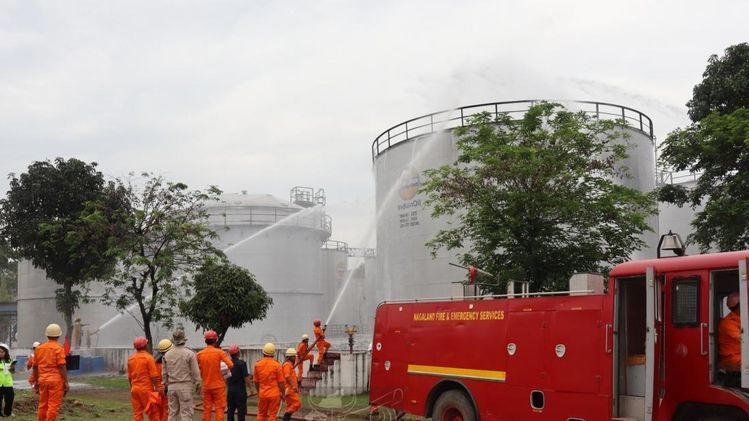
Nagaland earthquake mock drill marked a major step in disaster preparedness as Nagaland conducted a state-level exercise focusing on earthquake and extreme weather scenarios. The large-scale drill aimed to test emergency response systems and improve coordination among various agencies.
Officials stated that the exercise simulated real-life disaster situations. Therefore, it allowed authorities to assess their readiness and identify gaps in response mechanisms.
Moreover, the drill involved participation from multiple departments, including disaster management authorities, police, healthcare services, and local administration. As a result, it showcased a coordinated approach to handling emergencies.
Read More: Ratan Lal Nath Urges Women to Expose Bill Opponents
Focus on earthquake and extreme weather scenarios
The Nagaland earthquake mock drill primarily focused on two major threats: seismic activity and extreme weather events. Nagaland is located in a region prone to earthquakes, making preparedness essential.
During the drill, scenarios such as building collapses and rescue operations were simulated. Teams practiced evacuation procedures and search-and-rescue techniques. Therefore, they gained hands-on experience in handling emergencies.
In addition, extreme weather situations such as heavy rainfall and landslides were included. These events often disrupt normal life in the region. As a result, authorities emphasized the need for preparedness.
Furthermore, the drill highlighted the importance of early warning systems. Timely alerts can help reduce risks and save lives.
Coordination among emergency agencies
A key objective of the Nagaland earthquake mock drill was to strengthen coordination among agencies. Effective disaster response requires seamless communication and collaboration.
Officials noted that multiple teams worked together during the exercise. Police, fire services, and medical personnel coordinated their efforts. Therefore, the drill helped improve inter-agency communication.
In addition, command centers were activated to monitor operations. These centers played a crucial role in managing resources and directing response teams. As a result, the exercise tested decision-making processes.
Moreover, the involvement of local authorities ensured that responses were tailored to specific areas. Community-level coordination is essential for effective disaster management.
Role of community participation
The Nagaland earthquake mock drill also emphasized the importance of community involvement. Residents participated in evacuation drills and awareness activities.
Nagaland authorities encouraged people to understand basic safety measures. These include identifying safe zones and following evacuation routes. Therefore, public awareness is a key component of preparedness.
In addition, volunteers played an active role in the exercise. They assisted in rescue operations and supported affected individuals. As a result, the drill highlighted the value of community support.
Furthermore, awareness campaigns were conducted alongside the exercise. These initiatives aimed to educate citizens about disaster risks and response strategies.
Importance of disaster preparedness
The Nagaland earthquake mock drill underscores the importance of disaster preparedness in vulnerable regions. Natural disasters can cause significant damage if proper measures are not in place.
Preparedness involves planning, training, and resource allocation. Therefore, regular drills are essential to ensure readiness.
In addition, preparedness helps minimize loss of life and property. Quick and effective response can reduce the impact of disasters. As a result, such exercises play a critical role.
Moreover, disaster preparedness contributes to resilience. Communities that are well-prepared can recover more quickly. Therefore, the benefits extend beyond immediate response.
Use of technology in disaster management
Technology played a significant role in the Nagaland earthquake mock drill. Authorities used modern tools to enhance response capabilities.
Communication systems were tested to ensure quick information flow. Real-time updates helped coordinate efforts effectively. Therefore, technology improved efficiency.
In addition, mapping and tracking tools were used to monitor affected areas. These tools provide accurate data for decision-making. As a result, response strategies can be optimized.
Furthermore, early warning systems were integrated into the exercise. These systems can alert communities about potential threats. Consequently, they help prevent casualties.
Challenges identified during the drill
The Nagaland earthquake mock drill also revealed certain challenges. Identifying these issues is an important step toward improvement.
One challenge was ensuring timely communication across all teams. Delays in information flow can affect response efforts. Therefore, strengthening communication systems is necessary.
In addition, logistical issues such as resource distribution were observed. Efficient allocation of resources is crucial during emergencies. As a result, authorities will work on improving this aspect.
Moreover, reaching remote areas remains a challenge. Nagaland has difficult terrain, which can hinder response efforts. Therefore, special strategies are required.
The drill provided valuable insights into these challenges. Addressing them will enhance future preparedness.
Future roadmap for disaster management
Following the Nagaland earthquake mock drill, authorities outlined plans to strengthen disaster management systems. Continuous improvement is essential for effective preparedness.
Officials emphasized the need for regular drills. These exercises help maintain readiness and improve skills. Therefore, similar initiatives will continue.
In addition, training programs will be expanded. Personnel need to stay updated with the latest techniques and technologies. As a result, capacity building becomes a priority.
Moreover, infrastructure development will play a key role. Strengthening buildings and communication networks can reduce risks. Consequently, long-term planning is essential.
The government also plans to enhance community engagement. Educating citizens can improve overall preparedness. Therefore, awareness initiatives will be increased.
Conclusion
The Nagaland earthquake mock drill represents a significant effort to enhance disaster preparedness in Nagaland. By simulating real-life scenarios, the state has tested its readiness to handle emergencies.
The exercise highlighted the importance of coordination, technology, and community participation. While challenges remain, the insights gained will help improve response systems.
In conclusion, disaster preparedness is a continuous process. With regular drills and proactive measures, Nagaland can strengthen its resilience against earthquakes and extreme weather events.
Read More: Tripura Assembly Special Session on Women’s Reservation