

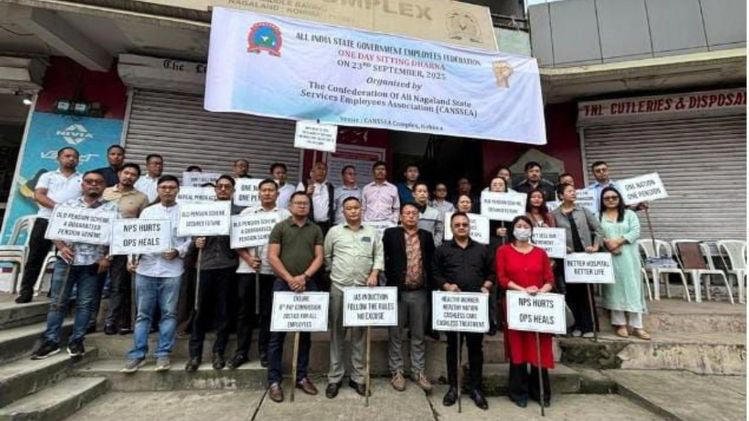
Nagaland government employees have announced a three-day pen down strike beginning October 14, 2025, over the ongoing controversy surrounding the induction of IAS officers into the state administration. The strike, which will affect multiple departments, reflects the growing discontent among employees who believe the IAS induction threatens their seniority and service rights.
The decision was taken after extensive deliberation by employee unions representing clerical, ministerial, and departmental staff across Nagaland. The move has drawn attention from the state government and civil society, as it could disrupt routine government functioning and public services.
Read More: Assam’s Shraddhanjali Scheme: Dignified Repatriation of Deceased
Background of the IAS Induction Row
The row began when the Nagaland government announced plans to induct a new batch of IAS officers into key administrative positions. Many state employees argue that this move overlooks existing seniority lists and disrupts the career progression of long-serving staff.
Employee unions claim that the IAS induction could dilute their roles in decision-making processes and erode the influence of locally recruited personnel in administrative matters. The dispute has escalated despite several rounds of negotiations between unions and government representatives.
Details of the Strike
The three-day pen down strike will see government employees abstaining from official duties across departments, including revenue, education, health, and public works. While essential services such as hospitals and emergency response units will continue functioning, most routine office work will be halted.
Union leaders have emphasized that the strike is peaceful and symbolic, aiming to pressurize the government into reconsidering the IAS induction plan. Employees will continue to report to their workplaces but will refrain from performing administrative or clerical tasks.
Demands of the Employees
The primary demands driving the strike include:
- Review of IAS Induction: Employees seek a review of the recent IAS induction to ensure that it does not bypass seniority or existing service norms.
- Protection of Seniority: They demand that the government safeguard the career progression and promotion rights of state employees.
- Consultation with Staff: Employees want to be consulted in administrative decisions affecting their roles and responsibilities.
- Transparency in Recruitment: Calls have been made for greater transparency in the recruitment and placement of IAS officers within Nagaland’s administrative framework.
Reactions from the State Government
The Nagaland government has acknowledged the employees’ concerns but has urged unions to engage in dialogue before resorting to strikes. Officials have stated that the IAS induction is part of a broader strategy to enhance administrative efficiency and governance in the state.
Government sources indicate that discussions are ongoing to address employees’ apprehensions while maintaining the plan for integrating IAS officers into the administration. Both sides are reportedly preparing for talks before the commencement of the strike on October 14.
Public and Political Response
The announcement of the strike has triggered reactions from political parties, civil society, and the general public. Some local leaders have expressed support for the employees’ protest, highlighting the need to protect the interests of state service personnel.
Meanwhile, citizens have expressed mixed reactions, with some concerned about potential disruptions in government services. Public awareness campaigns have been initiated to inform citizens about the expected effects of the strike and the essential services that will remain operational.
Impact on Government Services
The pen down strike is expected to affect routine operations in government offices, including documentation, processing of applications, and administrative decision-making. While hospitals, police, and other emergency services will continue to operate, citizens may experience delays in non-urgent government-related work during the three-day period.
Departments have been advised to manage workloads in advance and prioritize critical services to minimize disruption. The strike may also influence ongoing projects and policy implementation if extended beyond the planned three days.
Future Prospects and Negotiations
Union leaders have indicated that the strike is a preliminary measure to draw attention to their concerns. They have expressed willingness to hold further discussions with the government if their demands are addressed satisfactorily.
The government, on its part, is expected to hold negotiations with union representatives to resolve the IAS induction row amicably. Both parties have emphasized the importance of dialogue to prevent prolonged disruption and maintain administrative efficiency.
The three-day pen down strike by Nagaland government employees from October 14 highlights growing tensions over the IAS induction row. With unions demanding protection of seniority and consultation in administrative matters, the strike is a significant demonstration of employee unity and concern for state service rights.
As the state prepares for this strike, stakeholders are closely watching how the government and unions navigate this dispute. The outcome could set a precedent for future administrative reforms and employee relations in Nagaland, emphasizing the delicate balance between governance efficiency and safeguarding the interests of long-serving state personnel.
Read More: Bengal Floods: Elephants Rescue Tourists as Jaldapara Bridge Collapses