

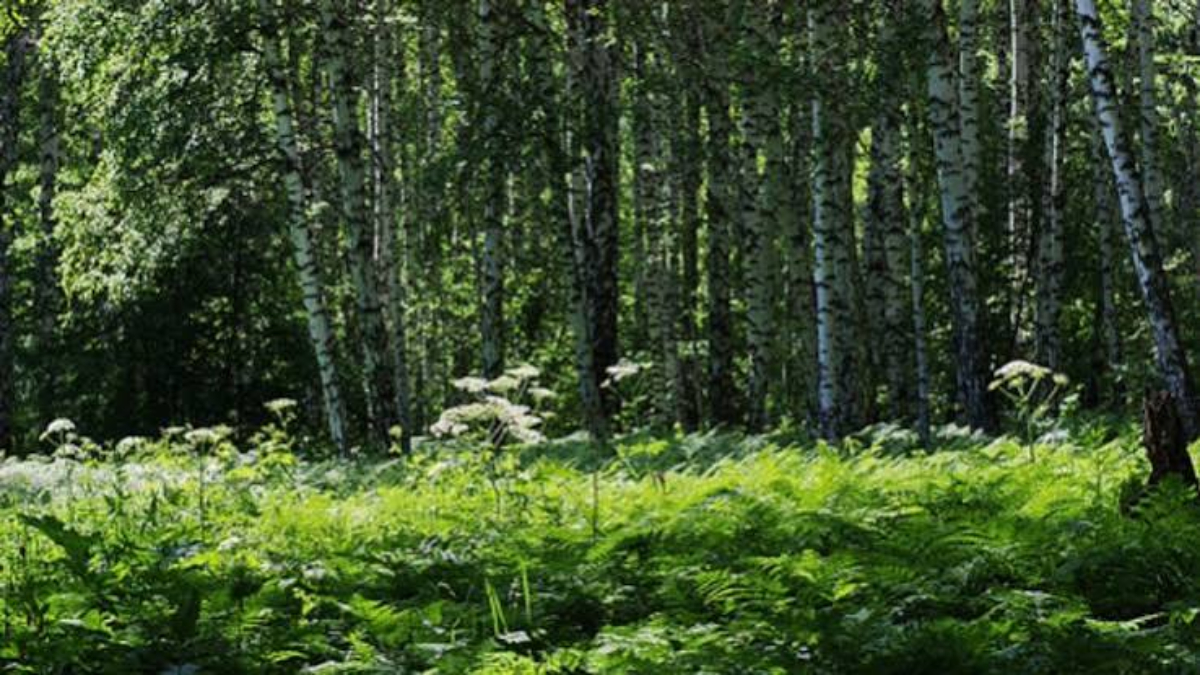
Nagaland forest cover stands at around 73 per cent of the state’s geographical area, far above the national average of about 21–22 per cent, Principal Secretary for Environment, Forest and Climate Change Y Kikheto Sema said during a biodiversity consultation in Kohima on September 23. The remarks came as Nagaland began a fresh effort to revise its State Biodiversity Strategy and Action Plan, with officials calling for stronger community participation in conservation.
Nagaland forest cover remains among the country’s highest
Sema, who also chairs the Nagaland State Biodiversity Board, highlighted the state’s extensive forests and rich biodiversity during the stakeholder consultation on the revision of the Nagaland State Biodiversity Strategy and Action Plan.
Official state statistics based on the 2023 assessment put Nagaland’s forest cover at 12,222.47 square kilometres, or 73.72 per cent of its total geographical area. The forest cover includes 1,256.38 square kilometres of very dense forest, 4,461.81 square kilometres of moderately dense forest and 6,504.28 square kilometres of open forest.
At the district level, Sema said Peren has the highest forest coverage, exceeding 91 per cent, while Tuensang has the lowest at around 51 per cent. The figures underline the variation in forest resources across the state.
The national comparison also highlights Nagaland’s position. The national forest-cover figure was 21.71 per cent in the India State of Forest Report 2021, according to government data.
Community ownership puts conservation responsibility on people
Despite the high forest percentage, officials warned that protecting Nagaland’s natural resources cannot depend on the Forest Department alone. Sema said the department owns less than five per cent of the state’s total forest area because of Nagaland’s distinctive landholding system.
Additional Principal Chief Conservator of Forests Supongnukshi said communities and individuals hold ownership over almost all forests and natural resources in the state. He stressed that this ownership also carries responsibility for sustainable resource management.
Supongnukshi also said around 60–70 per cent of Nagaland’s population depends on forests and their resources for livelihoods. Rising population pressure and growing dependence on forest resources, he said, have increased the need to review existing conservation strategies.
Forest loss raises fresh biodiversity concerns
The latest consultation also highlighted a worrying trend despite the state’s substantial forest resources. Supongnukshi said Nagaland has experienced around a 10 per cent decline in forest cover over the past 10 to 15 years.
He warned that forest degradation and deforestation can directly affect flora and fauna. The concern is particularly significant because researchers have yet to identify and document several species found in the state. Losing habitats before scientists fully understand them could result in the disappearance of species and ecological resources that may have wider importance.
The warning adds urgency to the ongoing revision of the state biodiversity strategy. Officials said the exercise provides an opportunity to assess existing resources, identify pressures and develop conservation measures suited to Nagaland’s social and ecological conditions.
Jhum cultivation remains part of the debate
Traditional jhum, or shifting cultivation, also featured prominently in the discussions. Sema said the practice remains closely linked to Naga culture and festivals and cannot simply be discontinued.
At the same time, he acknowledged concerns over its current economic and ecological sustainability. Shorter fallow periods can affect soil fertility, while changes in land use can put additional pressure on biodiversity. Officials called for more research into indigenous agricultural systems rather than relying only on models developed for other parts of the country.
Around 70 per cent of Nagaland’s population lives in rural areas and remains engaged largely in agriculture and allied activities. With limited scope for large and medium-scale industries, sustainable agriculture and natural-resource management remain important to rural livelihoods.
New biodiversity strategy seeks wider participation
The revised biodiversity action plan is being developed through consultations involving government departments, academic institutions and organisations working in conservation. The process aims to align Nagaland’s conservation efforts with national and global biodiversity priorities.
Sema also called for biodiversity and waste management awareness within families and schools. He urged churches and other community institutions to contribute to conservation efforts, while recognising the Nagaland Baptist Church Council’s role in promoting biodiversity protection.
The state’s high forest cover gives Nagaland an important ecological asset, but recent warnings show that the figure alone does not guarantee long-term protection. With communities owning much of the forest resource, officials are increasingly stressing shared responsibility, scientific documentation and sustainable use.
The ongoing biodiversity strategy revision is therefore expected to focus not only on protecting existing forests but also on addressing the pressures that are gradually changing Nagaland’s ecosystems. The challenge will be to preserve the state’s rich natural heritage while supporting the livelihoods and traditions of the communities that depend on it.
Rima Das Busan Film Festival Jury Role Marks Major Milestone