

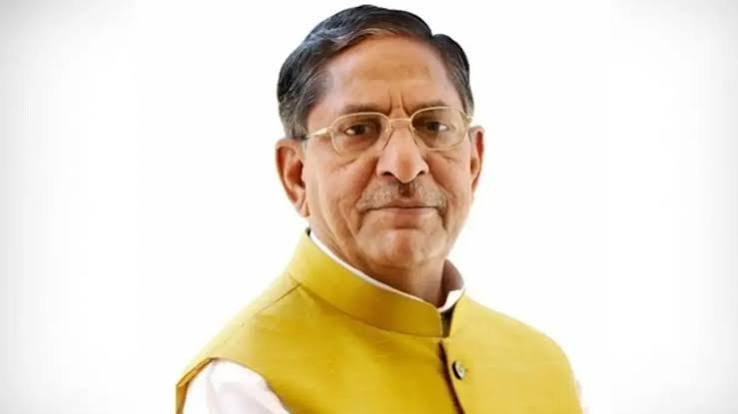
Nagaland Governor Nand Kishore Yadav chaired the North East Zone Cultural Centre (NEZCC) Board of Governors meeting in Dimapur on November 20, 2026. The meeting focused on preserving the Northeast’s diverse cultural heritage and strengthening the Centre’s role in supporting traditional artists and cultural practitioners. Meanwhile, Nagaland University hosted a two-day International Seminar on Ecotourism, Livelihood and Development in Northeast India from November 19 to 20. The two events brought attention to cultural preservation, sustainable tourism and community-based development across the region.
Mizoram Student Protest Targets MPSC Chairman
Governor Leads NEZCC Board Meeting in Dimapur
Governor Nand Kishore Yadav chaired the NEZCC Board of Governors meeting at the Centre’s complex in Dimapur on Friday.
As NEZCC chairman, he welcomed members representing the participating states and highlighted the organisation’s role in preserving and showcasing Northeast India’s cultural diversity.
He said the region’s traditions, languages, music, dance, art, crafts and indigenous knowledge systems form an important part of its identity.
Moreover, he stressed that NEZCC must look beyond organising cultural festivals and programmes. The Centre should also document traditional practices and help communities pass their knowledge to future generations.
The Governor encouraged board members to review ongoing activities and identify priorities for improving the Centre’s work.
NEZCC Focuses on Cultural Preservation and Youth Participation
During the meeting, Yadav emphasised the need to create meaningful opportunities for artists, artisans and cultural practitioners.
He called for stronger platforms where traditional performers and craftspeople can present their work and sustain their practices.
The Governor also highlighted the importance of involving young people in cultural activities. He said younger generations should take pride in their roots while remaining open to learning about other communities.
Furthermore, he noted that cultural exchanges can strengthen mutual understanding and national integration. He connected this approach with the spirit of Ek Bharat Shreshtha Bharat.
The meeting provided an opportunity for representatives to discuss the Centre’s activities and suggest ways to improve its effectiveness.
Yadav expressed confidence that cooperation among participating states would help NEZCC protect and promote the Northeast’s cultural heritage.
Nagaland University Hosts International Ecotourism Seminar
Alongside the NEZCC meeting, Nagaland University organised a two-day International Seminar on Ecotourism, Livelihood and Development in Northeast India.
The Departments of Sociology and Geography jointly organised the seminar at the university’s Lumami campus from November 19 to 20. The North Eastern Council and Nagaland Government’s Tourism Department also supported the programme.
The seminar brought together academics, policymakers, researchers, tourism practitioners and students.
Participants examined how tourism affects local livelihoods, community rights, cultural practices and the natural environment.
The discussions also explored how governments and communities can develop tourism without placing excessive pressure on local resources.
Experts Discuss Community Rights and Sustainable Tourism
The seminar examined ecotourism through social, political, economic, cultural and environmental perspectives.
Nagaland University Vice-Chancellor Professor Jagadish K. Patnaik highlighted the need to balance development with environmental protection and indigenous livelihoods.
Environmental activist Ashish Kothari delivered the keynote address. He discussed biodiversity, development policies and alternative approaches to sustainable growth.
Kovi Meyase, Commissioner and Secretary of the Nagaland Tourism Department, outlined opportunities in ecotourism, cultural tourism and community-based tourism.
He highlighted practical measures such as promoting homestays, supporting local entrepreneurship, improving infrastructure and reducing plastic waste.
Speakers also stressed that local residents should participate in tourism decisions and receive a fair share of the benefits.
Seminar Highlights Livelihoods, Land and Environmental Protection
The seminar’s discussions explored the relationship between community rights and environmental resources.
Participants considered questions involving land ownership, local participation, labour, representation and the commercialisation of cultural and natural assets.
The programme featured nine technical sessions and nearly 40 paper presentations, according to the seminar report.
A roundtable discussion also allowed participants to exchange views on tourism policy and community interests.
Professor Lanusashi Longkumer, the programme convener, highlighted the close relationship between land and community identity. He also cautioned that changes to cultural heritage can weaken collective memory.
The discussions reinforced the importance of protecting traditional knowledge while creating sustainable livelihood opportunities.
Community-Based Tourism Offers Opportunities for Nagaland
Nagaland has several destinations where tourism and conservation initiatives involve local communities.
During the seminar, speakers referred to places such as Khonoma, Dzuleke, Dzukou Valley and Mount Saramati.
These destinations offer opportunities for nature tourism, village experiences, trekking and cultural engagement.
However, participants also discussed challenges facing the sector. These include limited road connectivity, transport difficulties, inadequate waste management and a shortage of trained tourism workers.
The availability and quality of homestays also emerged as an important issue.
Speakers emphasised that tourism growth should not undermine traditional practices or restrict community access to natural resources.
Instead, local participation, conservation and fair distribution of income should guide future development.
Cultural Heritage and Ecotourism Share a Common Development Goal
The NEZCC meeting and the Nagaland University seminar addressed different areas of regional development. However, both highlighted the importance of protecting community knowledge and cultural identity.
NEZCC’s work focuses on preserving traditions and creating opportunities for cultural practitioners. Meanwhile, the ecotourism seminar examined how local knowledge, natural resources and community participation can shape sustainable tourism.
Together, the discussions underline the importance of placing local communities at the centre of development planning.
For Nagaland and the wider Northeast, this approach can help connect cultural preservation with livelihood opportunities and environmental conservation.
Conclusion
Nagaland Governor Nand Kishore Yadav’s NEZCC Board of Governors meeting in Dimapur on November 20 highlighted the need to preserve Northeast India’s cultural traditions and involve younger generations. At the same time, Nagaland University’s international seminar at Lumami examined the links between ecotourism, community rights and livelihoods. Both events brought attention to the importance of community participation, cultural continuity and sustainable development across the region.
FAQs
1. Who chaired the NEZCC Board of Governors meeting?
Nagaland Governor and NEZCC Chairman Nand Kishore Yadav chaired the meeting on November 20, 2026.
2. Where did the NEZCC meeting take place?
The meeting took place at the North East Zone Cultural Centre complex in Dimapur, Nagaland.
3. What is the main role of NEZCC?
NEZCC works to preserve, promote and showcase the cultural heritage of Northeast India.
4. Where was the international ecotourism seminar held?
Nagaland University hosted the seminar at its Lumami campus from November 19 to 20, 2026.
5. Which departments organised the seminar?
Nagaland University’s Departments of Sociology and Geography jointly organised the event.
6. What were the seminar’s main themes?
The discussions covered ecotourism, community rights, livelihoods, environmental conservation, land ownership and sustainable development.