


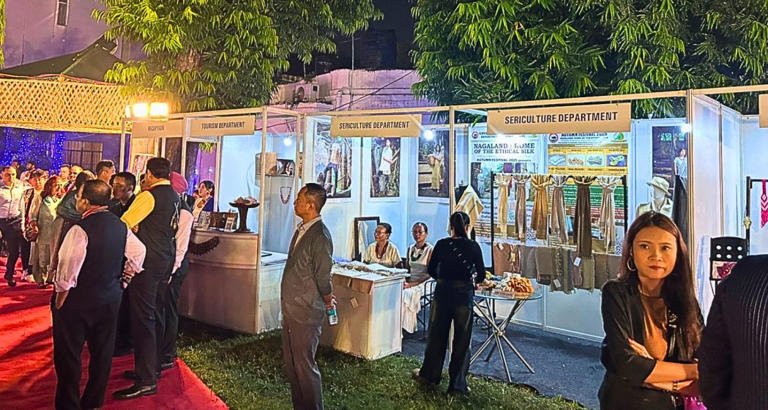
Nagaland’s vibrant culture took center stage at Delhi’s annual Autumn Festival, captivating visitors with its folk music, traditional dance, exquisite crafts, and authentic Naga cuisine. The event, held at the Indira Gandhi National Centre for the Arts (IGNCA), celebrated India’s cultural diversity, with Nagaland as one of the key highlights.
Organized by the North Eastern Council in collaboration with the Ministry of Tourism, the festival offered Delhiites a glimpse into the rich artistic and traditional heritage of the Northeastern state. Visitors from across the country gathered to experience the distinctive charm of Nagaland culture at Delhi Autumn Festival, where heritage met modern celebration.
Read More: Assam CM Hints at Ban on Veer Lachit Sena Amid Rising Intimidation Cases
A colourful showcase of Naga heritage
The festival opened with a spectacular performance by the cultural troupe from Nagaland, featuring traditional dances like the Zeliang and Sumi war dances. Dressed in vibrant traditional attire, performers portrayed stories of bravery, community, and connection to nature—core elements of Naga identity.
Nagaland’s folk musicians filled the venue with rhythmic beats of traditional log drums and soothing tribal songs. The audience responded with enthusiasm, clapping along and recording moments that captured the state’s spirit of unity and resilience.
Handcrafted ornaments, bamboo products, shawls, and cane baskets displayed at the artisan stalls attracted art lovers and collectors. Visitors appreciated the intricate craftsmanship and eco-friendly artistry that reflected the sustainable practices embedded in Naga life.
Tourism officials said that the event served as a platform to introduce Nagaland’s unique culture to a wider audience. They emphasized that the state’s diversity—comprising 17 major communities—makes it one of India’s richest cultural landscapes.
Culinary delight for visitors
No celebration of Nagaland culture at Delhi Autumn Festival would be complete without food. The Naga food stalls became one of the most crowded spots at the event, offering dishes such as smoked pork with bamboo shoot, axone chutney, sticky rice, and millet beer.
Food enthusiasts praised the distinct flavors and traditional cooking techniques that reflect the region’s close bond with nature. Many Delhi residents, unfamiliar with Naga cuisine, found the dishes refreshing and wholesome.
Chefs from Nagaland shared insights into how traditional recipes are passed down through generations. They highlighted the importance of locally sourced ingredients and slow-cooking methods that preserve both flavor and nutrition.
Promoting tourism and cultural exchange
Nagaland’s participation in the Autumn Festival also aimed to boost tourism. Representatives from the Nagaland Tourism Department set up an interactive stall offering travel brochures, videos, and guided information on famous destinations like Kohima, Mokokchung, and the Dzukou Valley.
They also showcased the Hornbill Festival, often referred to as the “Festival of Festivals,” which draws visitors from across the globe every December. Tourism officials said that Nagaland culture at Delhi Autumn Festival provided an ideal opportunity to attract more travelers to the state.
Speaking at the event, a senior tourism officer noted, “Nagaland is a land of stories, colors, and traditions. Through festivals like this, we connect with the rest of India and the world. Our goal is to make cultural tourism a bridge for mutual understanding.”
Art, fashion, and contemporary expressions
Apart from traditional art forms, the festival featured a fashion segment that merged tradition with modernity. Naga designers presented collections inspired by traditional weaves, showcasing how heritage continues to influence contemporary creativity.
Young models walked the ramp in modern silhouettes blended with traditional motifs, earning appreciation for promoting indigenous artistry. This segment demonstrated how Nagaland culture at Delhi Autumn Festival is evolving—preserving its roots while embracing innovation.
A special art exhibition displayed paintings and photographs capturing Nagaland’s landscapes, festivals, and daily life. Artists from the state shared their inspiration drawn from nature and community living, emphasizing how culture and creativity intertwine in their homeland.
Strengthening bonds through culture
The festival also acted as a bridge between Northeastern and mainland Indian communities. Visitors from different backgrounds interacted with Naga artisans, musicians, and chefs, exchanging ideas and experiences.
Several attendees said the event helped them understand Nagaland’s traditions more deeply. “It’s fascinating to see how each dance and song carries meaning. This experience makes me want to visit the state,” said a Delhi-based student.
Cultural experts at the festival stressed that such events promote national unity by fostering appreciation for India’s cultural diversity. They added that Nagaland’s participation reflects the broader effort to integrate Northeastern culture into the national mainstream.
Government support for cultural promotion
Officials from the Ministry of Tourism and the North Eastern Council praised Nagaland’s vibrant participation. They reaffirmed the government’s commitment to promoting cultural festivals that highlight the heritage of Northeast India.
Ministerial representatives noted that events like the Nagaland culture at Delhi Autumn Festival not only preserve traditions but also open economic opportunities for artisans, performers, and entrepreneurs. They said the government plans to organize similar exhibitions in other major cities.
CM of Nagaland, Neiphiu Rio, in a recorded message, appreciated the efforts made to bring the state’s culture to the capital. He said such platforms help bridge perceptions and showcase Nagaland’s contribution to India’s cultural mosaic.
A festival of pride and connection
As the evening concluded, performers and visitors joined in a lively community dance, symbolizing the harmony and warmth that define Naga culture. The sight of people from diverse regions celebrating together truly embodied the essence of unity through culture.
For many, the Nagaland culture at Delhi Autumn Festival was not just a display but an experience—one that blended tradition, artistry, and hospitality into an unforgettable celebration. It reminded everyone that India’s strength lies in its diversity, where every culture, no matter how distant, adds to the country’s collective identity.
The festival closed with an invitation for visitors to experience Nagaland firsthand at the upcoming Hornbill Festival. With its success, organizers promised to make the event an annual cultural bridge between Delhi and the Northeast—celebrating stories, songs, and flavors that make Nagaland truly unique.
Read More: Himachal Confirms Thriving Snow Leopard Population of 83